
We support the agri-food sector in its meaningful digital transformation



What alternative sources can we use to obtain protein-rich ingredients and foods in a sustainable way?
Which technologies can help us?
What do consumers think about this?
Gaining a better understanding of innovative protein sources is a challenge, and at IRTA we aim to lead this knowledge in southern Europe.
Over the past few decades, the food industry has been actively developing new ingredients and products rich in alternative proteins. This is due to:

Food has a significant environmental impact. Diversifying the sources of protein consumed by humans and animals can help reduce the environmental impact of their production and distribution.

It is a priority in Europe. Research and innovation in this area are priorities for the European Commission looking ahead to 2030. It considers this as a way to contribute to food self-sufficiency and also to the protein transition, which consists on diversifying dietary protein sources to make diets more balanced and sustainable.

It is a social demand. For ethical, sustainability, or health reasons, the public is increasingly interested in consuming foods that contain high-quality protein and do not come from land or sea animals.
However, our understanding of these alternative protein sources is still limited, and there is still a long way to go in developing innovative ingredients and foods for animal and human consumption.
Mainly: legumes, grains, nuts, and other seeds (chia, hemp, sunflower)
Such as, for example, fruit that cannot be sold, or the pulp left over from juice production
Microalgae (very small and single-celled) and Macroalgae (larger and multicellular)
Adults or larvae
New protein-rich ingredients or products for animal or human consumption
Mainly: legumes, grains, nuts, and other seeds (chia, hemp, sunflower)

That are processed to become
Innovative, high-protein products or ingredients for animal or human consumption
Such as, for example, fruit that cannot be sold, or the pulp left over from juice production

Which are processed, through biorefining or bioconversion, to become
Innovative, high-protein products or ingredients for animal or human consumption
Microalgae (very small and single-celled) and Macroalgae (larger and multicellular)

That are grown and processed to be
Innovative, high-protein products or ingredients for animal or human consumption
Adults or larvae
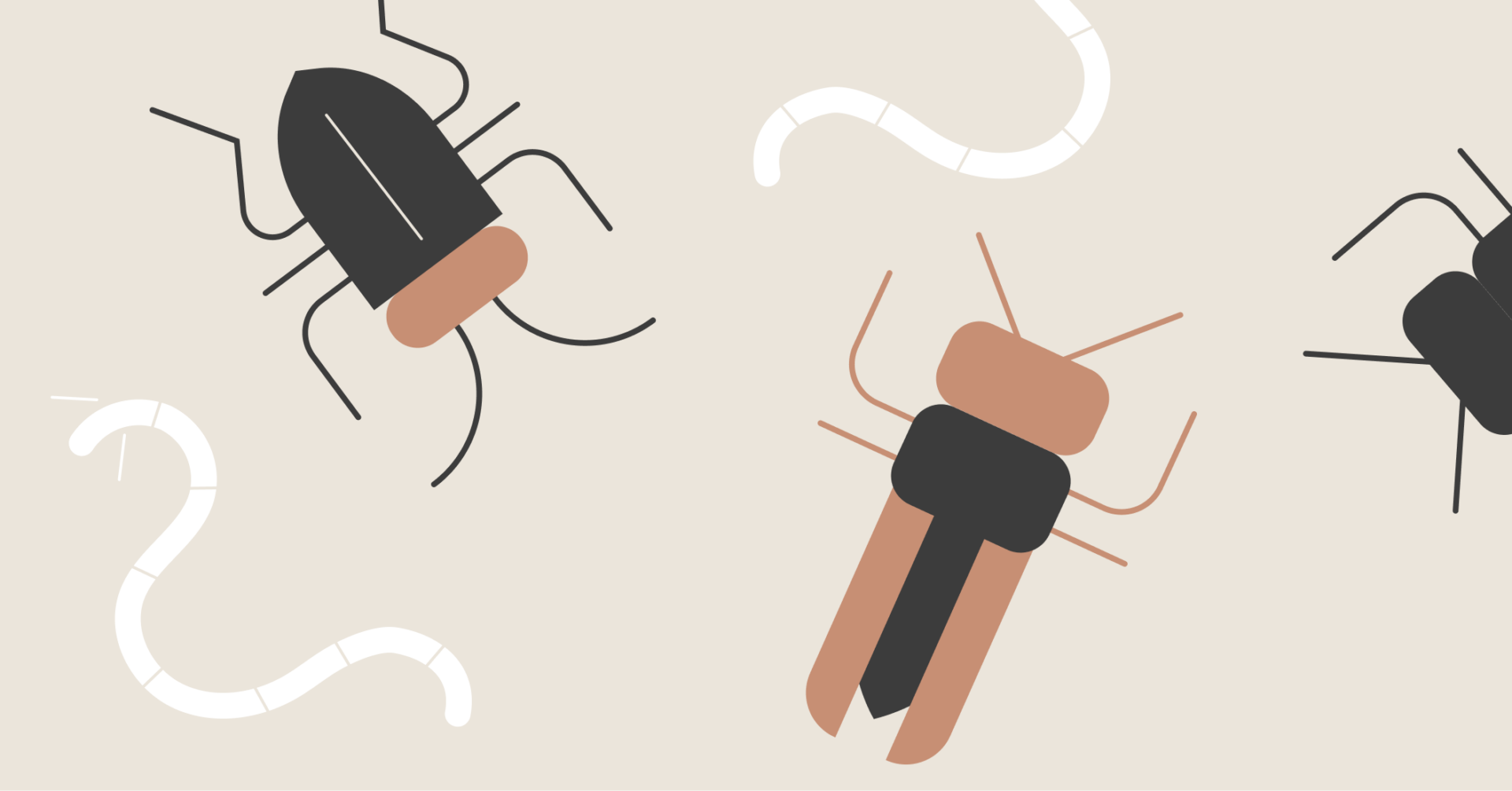
That are raised and processed to be
Innovative, high-protein products or ingredients for animal or human consumption
At IRTA, we are committed to promoting the diversification and sustainability of protein-rich ingredients and products for human and animal consumption.
We conduct research and innovate in this field to:
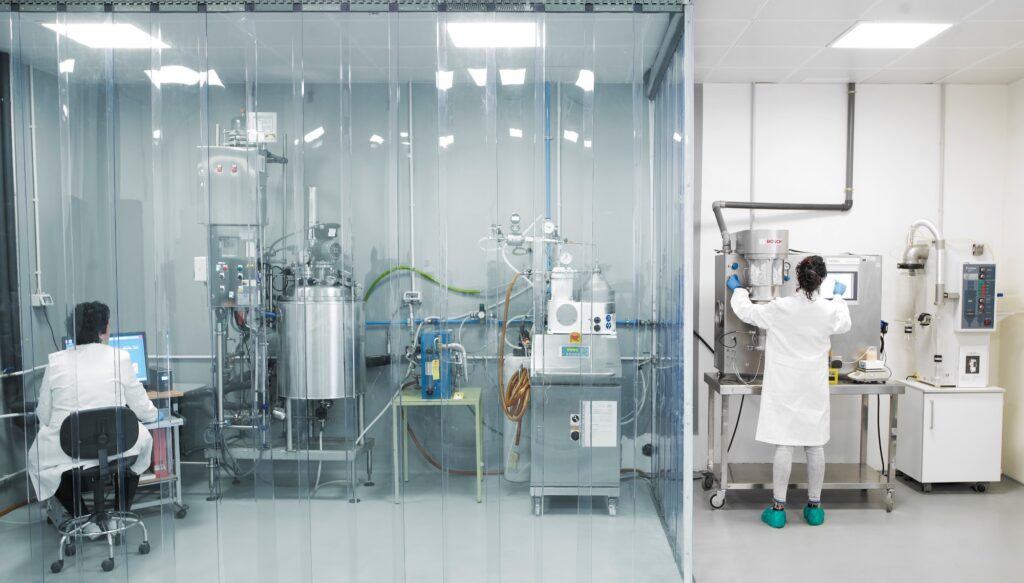
With these objectives in mind, we integrate the entire value chain: from primary production and processing in the food industry, to food quality and safety, encompassing regulatory aspects, environmental impact assessment, economic viability, and social acceptability.
From a systemic and interdisciplinary perspective, we work to create new competitive, sustainable value chains tailored to the region, which strengthen the resilience and leadership of the Catalan agri-food sector.
Our current areas of focus are:
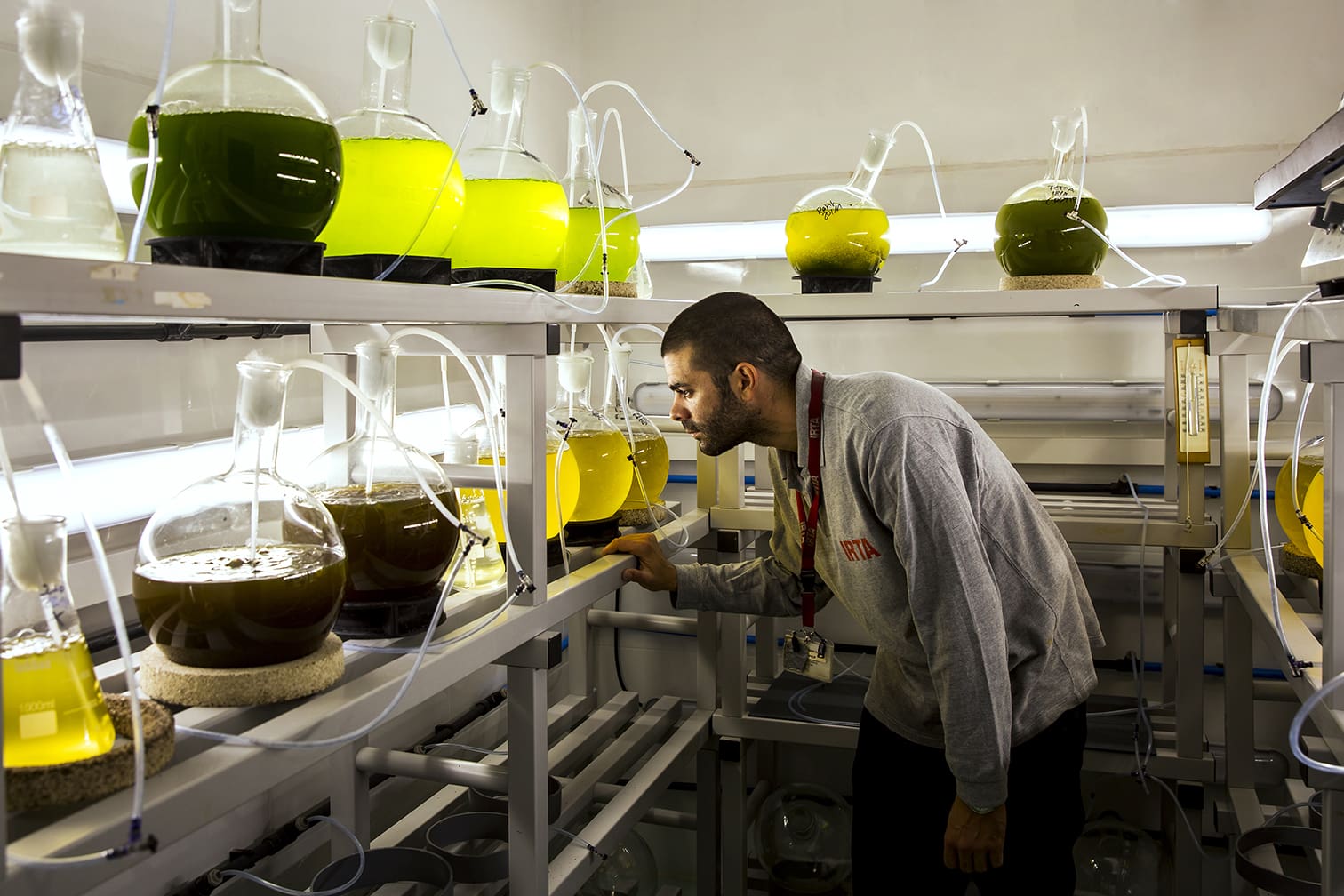
We are studying how to produce the raw material, known as biomass, to create protein-rich foods from these innovative sources.
We want to know which plants, algae, insects, or microorganisms are best suited for this purpose and how to process them.
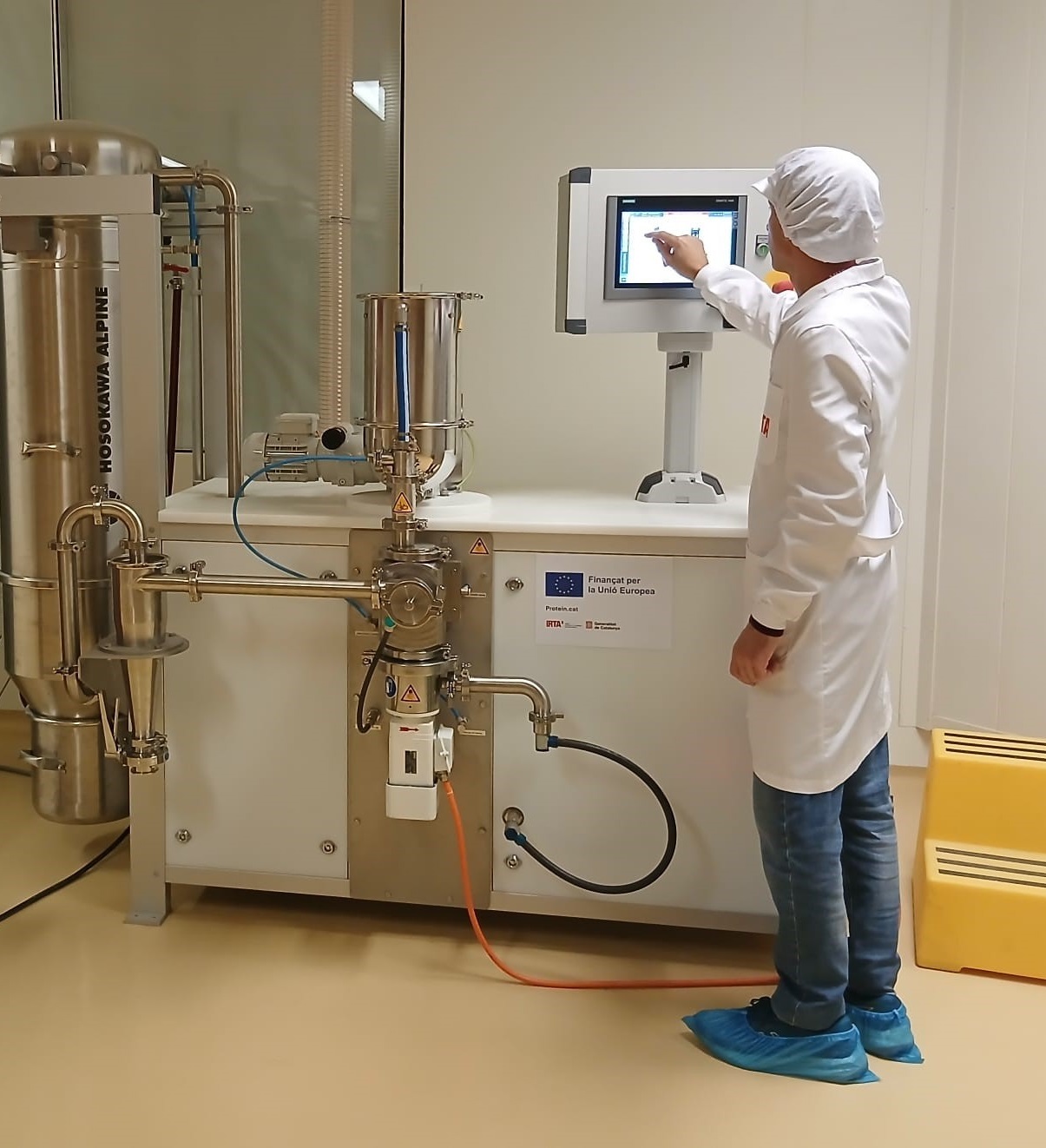
We explore how to convert biomass into specific food ingredients.
For example, chickpea isolate can be used to make mayonnaise as a substitute for eggs.
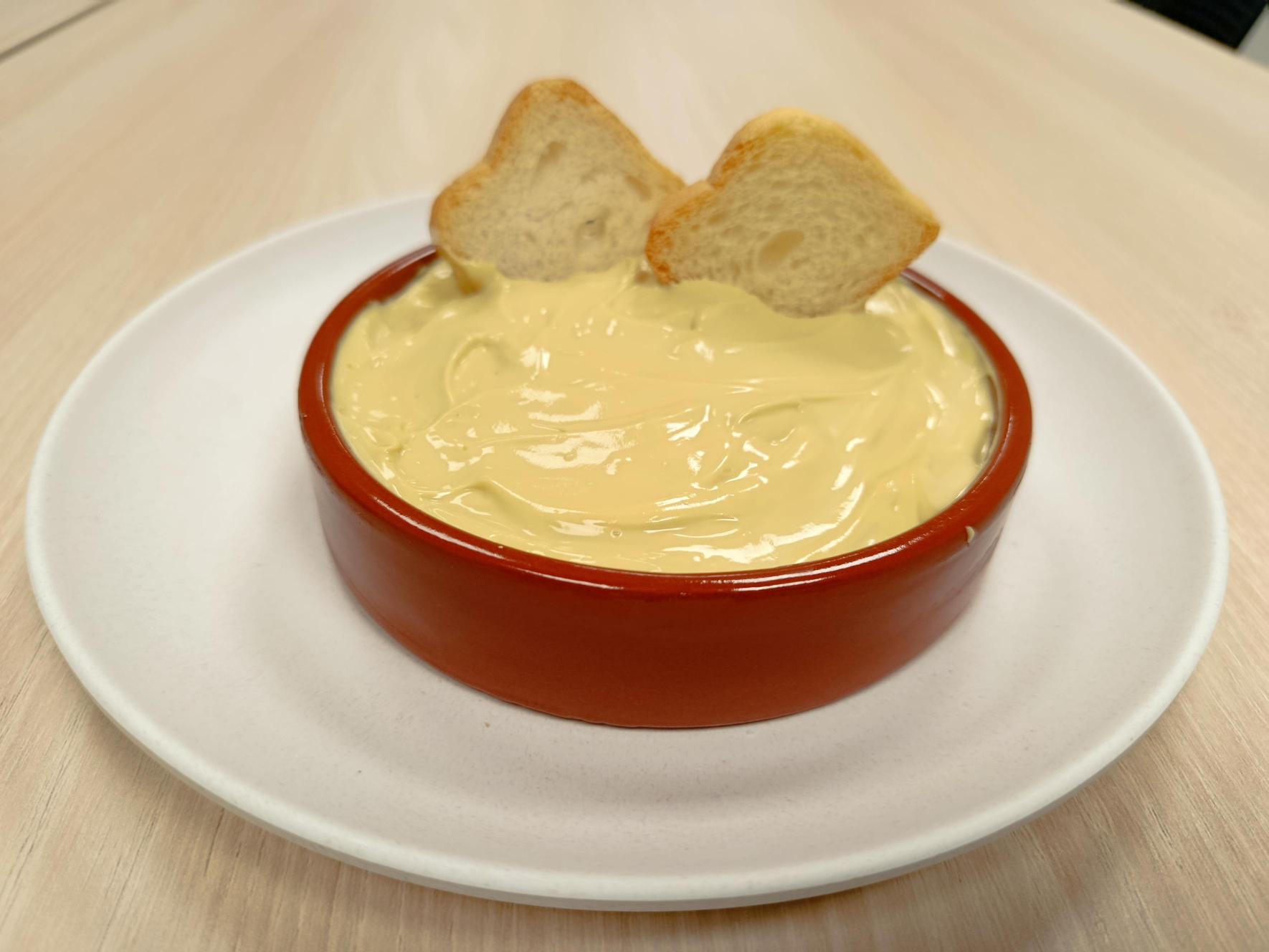
We are researching how to incorporate these ingredients into food and animal feed to ensure that the final product is high-quality and safe.
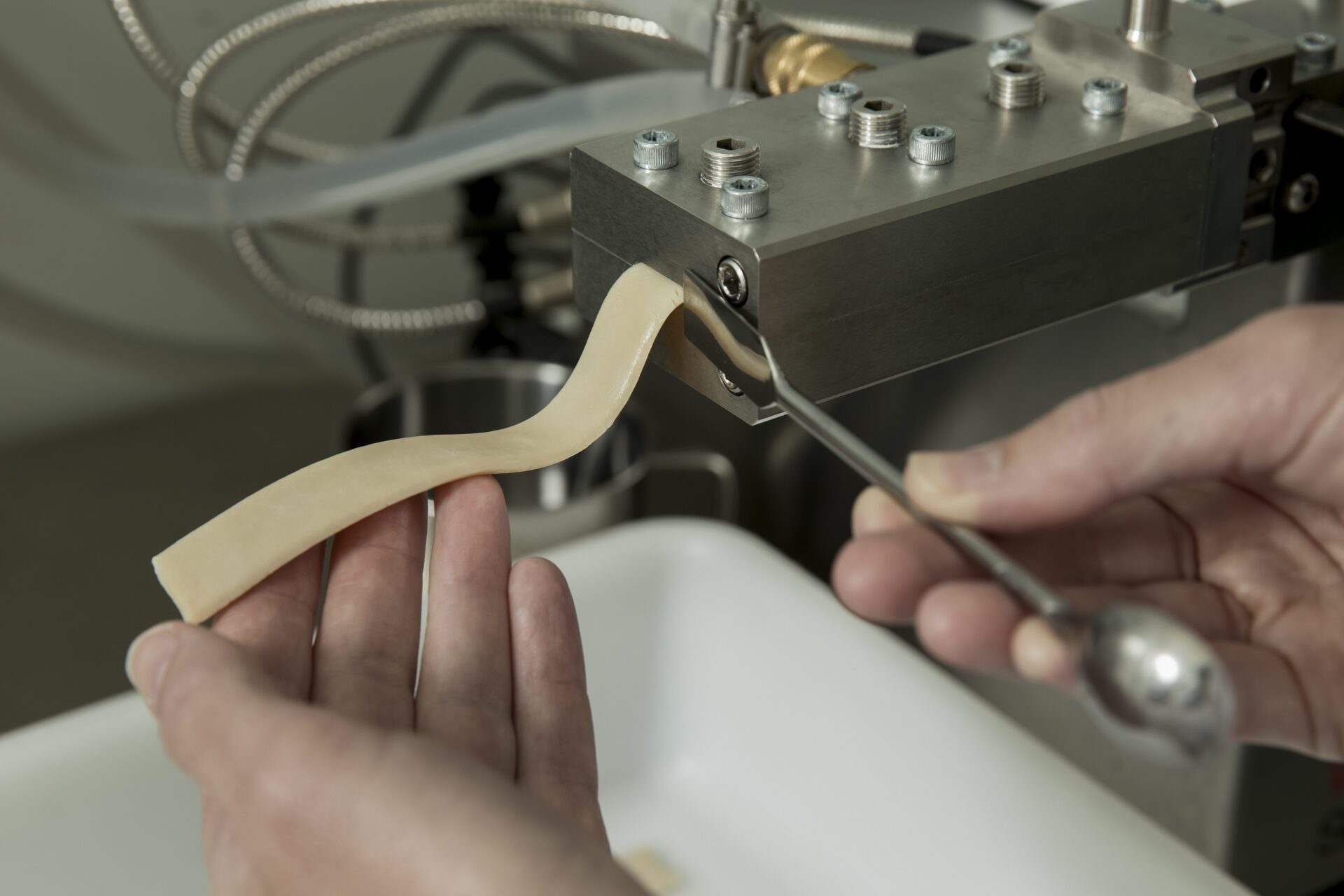
For example, microalgae in vegan cheese (like the one in the picture) or in an egg substitute. Or insect meal in fish feed.
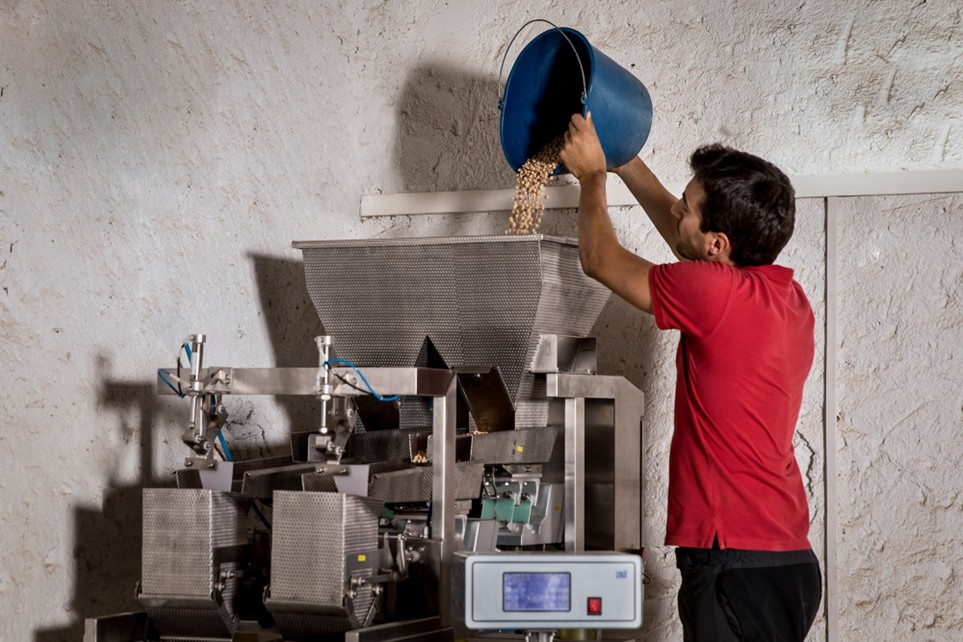
We want to know what innovative sources of protein can be produced most successfully in our region.
It must be economically and environmentally viable for producers and the agri-food industry.
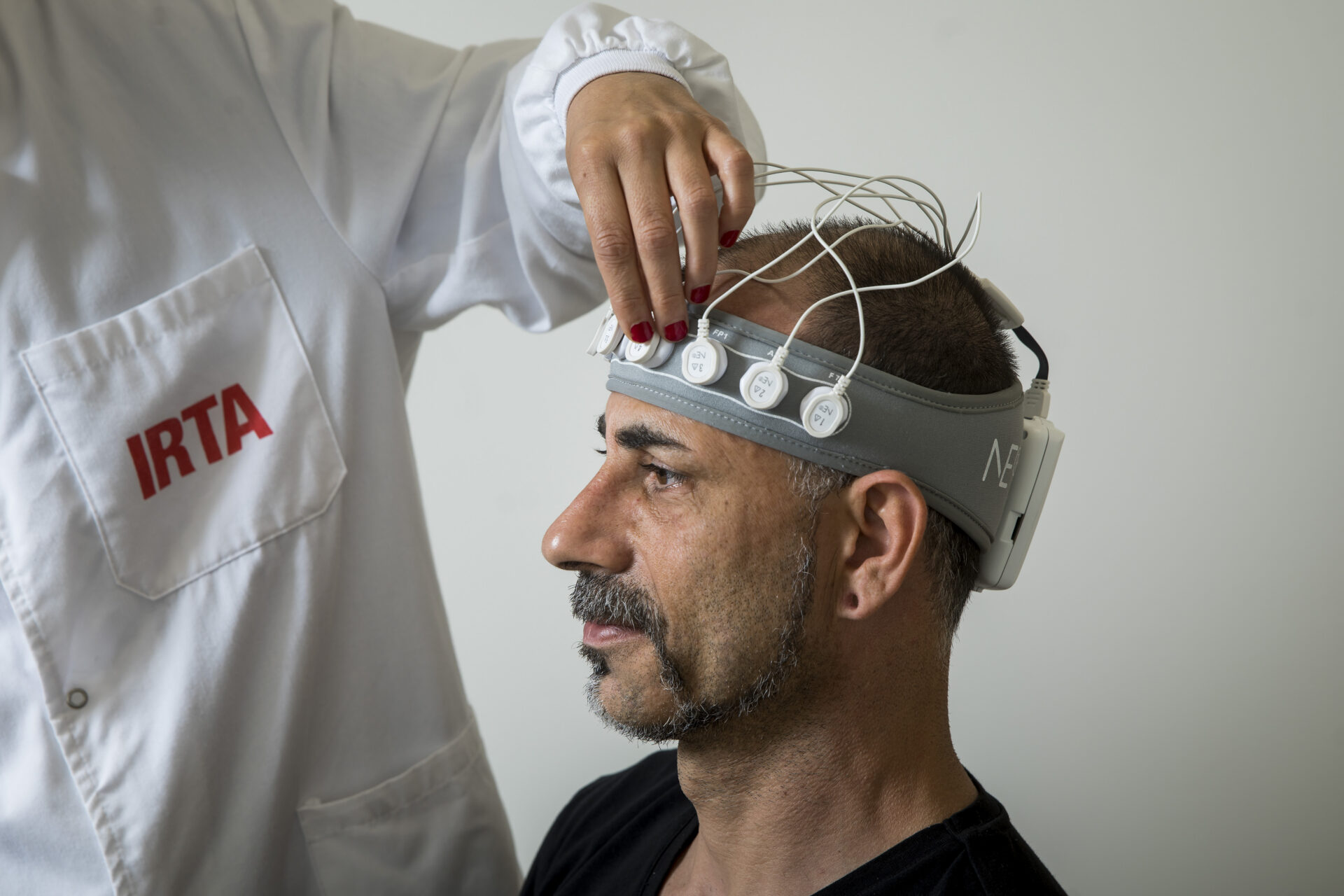
We co-create and optimize products with consumers and key stakeholders in the food system.
We combine traditional methods, such as surveys, in-depth interviews, and focus groups, with physiological measures, such as eye tracking, electrodermal activity, heart rate, facial expression recognition, and electroencephalograms.
This allows us to understand both the conscious and emotional processes involved in consumer decisions.
And we don’t do it alone: we do it in partnership with organizations, companies, and governments, because we are convinced that working together and with generosity is the only way to address the major challenges of our time.
Start date: 01/09/2025
End date: 31/08/2029
Project Code: I1421_16364
Acronym: ALLIANCE

Start date: 01/06/2023
End date: 31/05/2027
Project Code: I1377_13863
Acronym: LOCALITY
Start date: 01/09/2022
End date: 31/08/2026
Project Code: I1333_12504
Acronym: GIANTLEAPS
Start date: 01/09/2024
End date: 31/08/2027
Project Code: I1396_15419
Acronym: LUPIFERM
Start date: 01/09/2022
End date: 28/02/2026
Project Code: I1350_12890
Acronym: SENSANALOG
Start date: 05/06/2023
End date: 05/06/2026
Project Code: V2428_14754
Acronym: CUSENS _NUCLISR+D_Biosensor de coure útil en fulla
Start date: 01/06/2024
End date: 05/05/2026
Project Code: V3240_16447
Acronym: FAVAPROT
Start date: 01/04/2024
End date: 31/03/2027
Project Code: A3227_15733
Acronym: BLUEBOOST
Start date: 01/09/2025
End date: 31/08/2029
Project Code: I1426_16811
Acronym: TextuRise
Start date: 01/09/2025
End date: 31/08/2029
Project Code: V1177_16850
Acronym: AGELIKEAPRO
Start date: 01/10/2019
End date: 31/12/2023
Project Code: I1269_8902
Acronym: ProFuture
Start date: 01/05/2021
End date: 31/10/2024
Project Code: V1134_10596
Acronym: LOCALNUTLEG Fase_2
Start date: 01/09/2021
End date: 31/05/2025
Project Code: I1323_11494
Acronym: LUPIPROTECH
Start date: 03/08/2021
End date: 30/09/2024
Project Code: I1347_12291
Acronym: GO: Analegs.cat
Start date: 03/08/2021
End date: 11/11/2024
Project Code: I1343_12286
Acronym: GO: Liquats
Start date: 03/08/2021
End date: 30/09/2024
Project Code: I1342_12258
Acronym: GO: CURATS-VEGGIES
Start date: 01/09/2023
End date: 31/08/2027
Project Code: I1387_14243
Acronym: SafeMAAP
Start date: 19/05/2022
End date: 30/09/2024
Project Code: A2582_13241
Acronym: ATENEAA
We support the agri-food sector in its meaningful digital transformation
We work with the territory to improve water management
We study how to improve the health of Catalan agricultural soils
We promote the bioeconomy to reduce the sector’s environmental impact
We want healthy, strong animals that rarely need antibiotics
We are preparing to tackle new pests and diseases
We work to strengthen the resilience of the Catalan wine sector

