The IrriPAS demonstration project has deployed a network of farms across Catalonia to validate, under real-world conditions, monitoring and decision-support tools that help optimise the use of water and nutrients, contributing to more efficient and sustainable agriculture
The efficient use of water and fertilisers is one of the major challenges currently facing the Catalan agricultural sector. In a context marked by recurring drought episodes, the need to adapt to climate change and increasing environmental requirements linked to water quality, the IrriPAS demonstration project has spent two years bringing tools and technologies closer to the sector to promote more sustainable irrigation and fertigation management.
The project has created a demonstration network of agricultural holdings distributed throughout Catalonia with the aim of showcasing, validating and transferring practices aligned with the Sustainable Agricultural Production (SAP) model.
The initiative has brought together commercial farms, experimental centres and training institutions from the country’s main agricultural regions, including Pla de Lleida and Les Garrigues, Camp de Tarragona, Terres de l’Ebre, Maresme, Gironès and the Pyrenees. This territorial deployment has made it possible to evaluate technologies across a wide range of crops, irrigation systems and real agronomic conditions.
Throughout the project, monitoring systems based on soil moisture sensors, plant microtensiometers, smart water-consumption meters, electrical conductivity sensors, suction probes for nutrient monitoring and digital decision-support tools such as IrriDesk have been deployed or reinforced. These technologies make it possible to accurately determine crop requirements and adjust irrigation and fertilisation based on objective data obtained directly in the field.
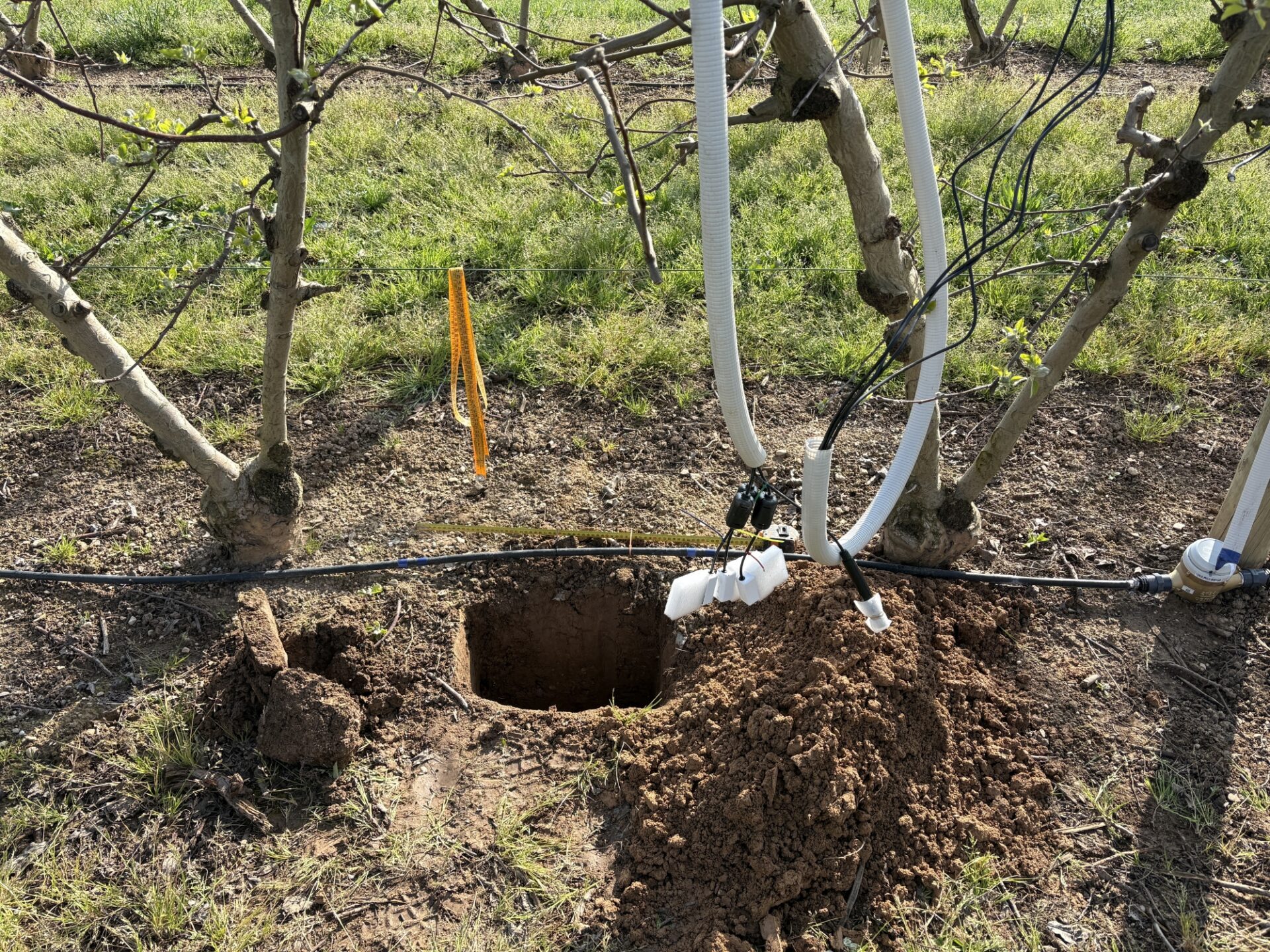
The network has included crops as diverse as apricot, peach, pistachio, apple, grapevine, hazelnut, citrus fruits, horticultural crops, field cereals and forage crops. In some cases, activities have focused on specific challenges such as irrigation management in saline-sodic soils, fertigation monitoring or assessing the use of reclaimed water in crops sensitive to salinity.
Below are some examples:
In the Pla de Lleida and Les Garrigues regions, the project has worked with crops such as apricot, peach, flat peach, apple, grapevine and pistachio. These farms have been equipped with soil moisture sensors, smart water-consumption meters, trunk microtensiometers and digital decision-support tools such as IrriDesk, enabling irrigation scheduling based on field data. In some cases, such as a flat peach farm in Aitona, specific issues related to soil salinity and low water infiltration capacity have also been studied, complemented by soil and leaf analyses and sampling campaigns to characterise soil water behaviour.
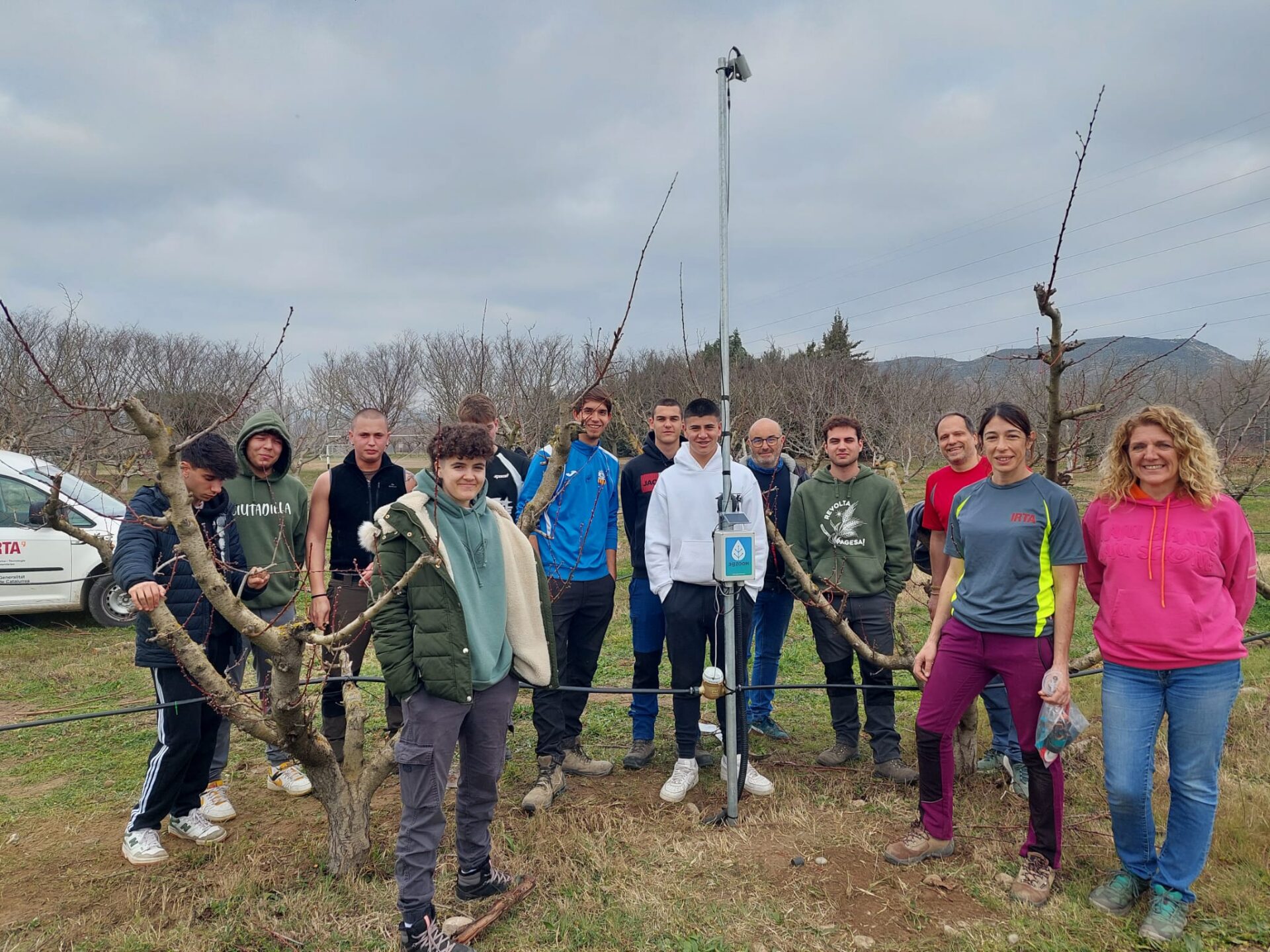
The project has also had a strong training component. At the Alfarràs Agricultural School, for example, students have been directly involved in installing monitoring equipment, collecting samples and monitoring crops, gaining practical knowledge of sensor technologies and data-driven irrigation scheduling.
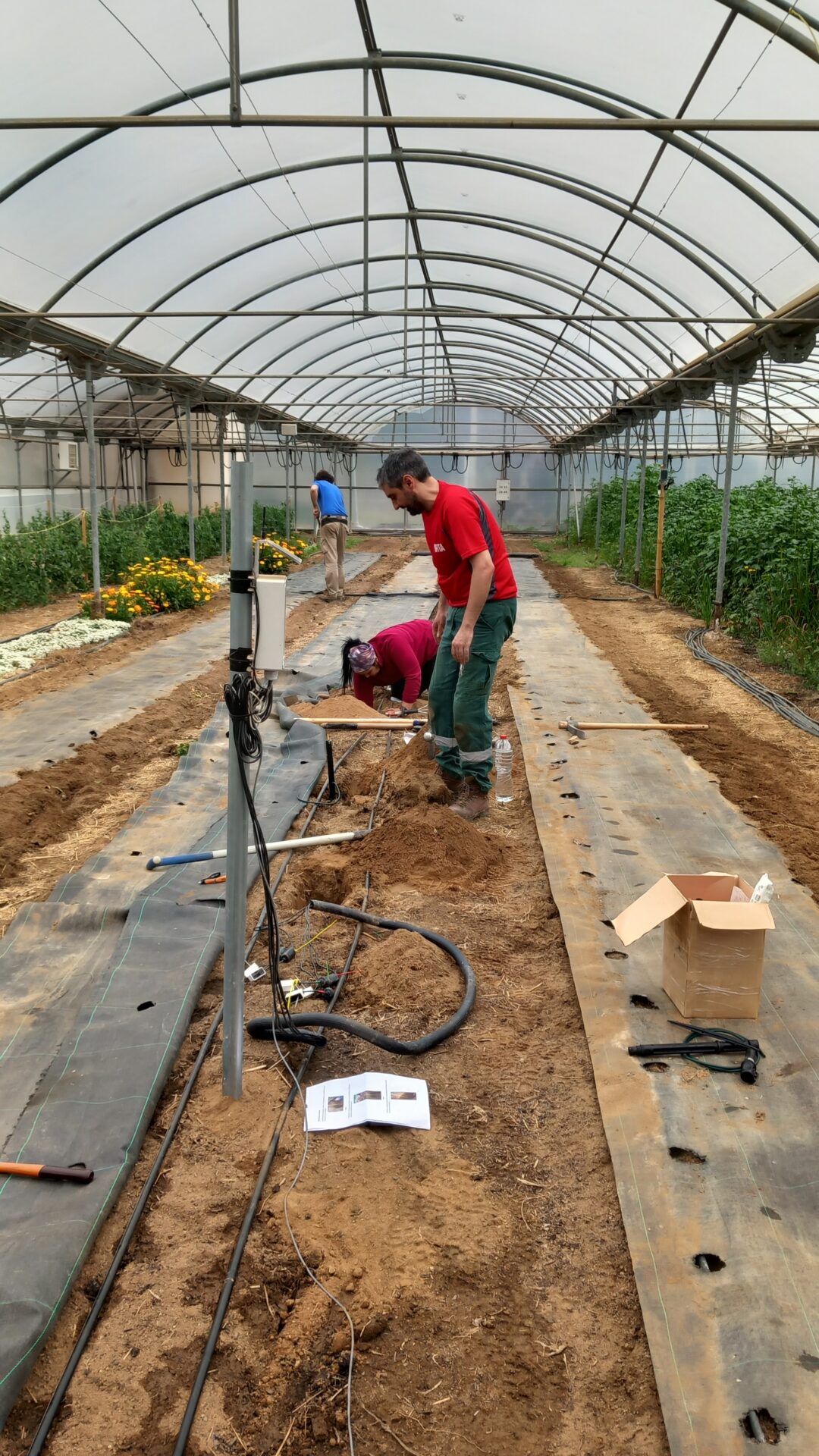
In the Camp de Tarragona, field trials have been carried out to assess irrigation management under scenarios involving the use of reclaimed water. In hazelnut orchards and vineyards in the Alt Camp, as well as at the Reus Institute of Horticulture and Gardening, electrical conductivity sensors, tensiometers and fertigation monitoring systems have been installed to study the potential effects of salinity on particularly sensitive crops and generate practical technical knowledge for farmers and advisers.
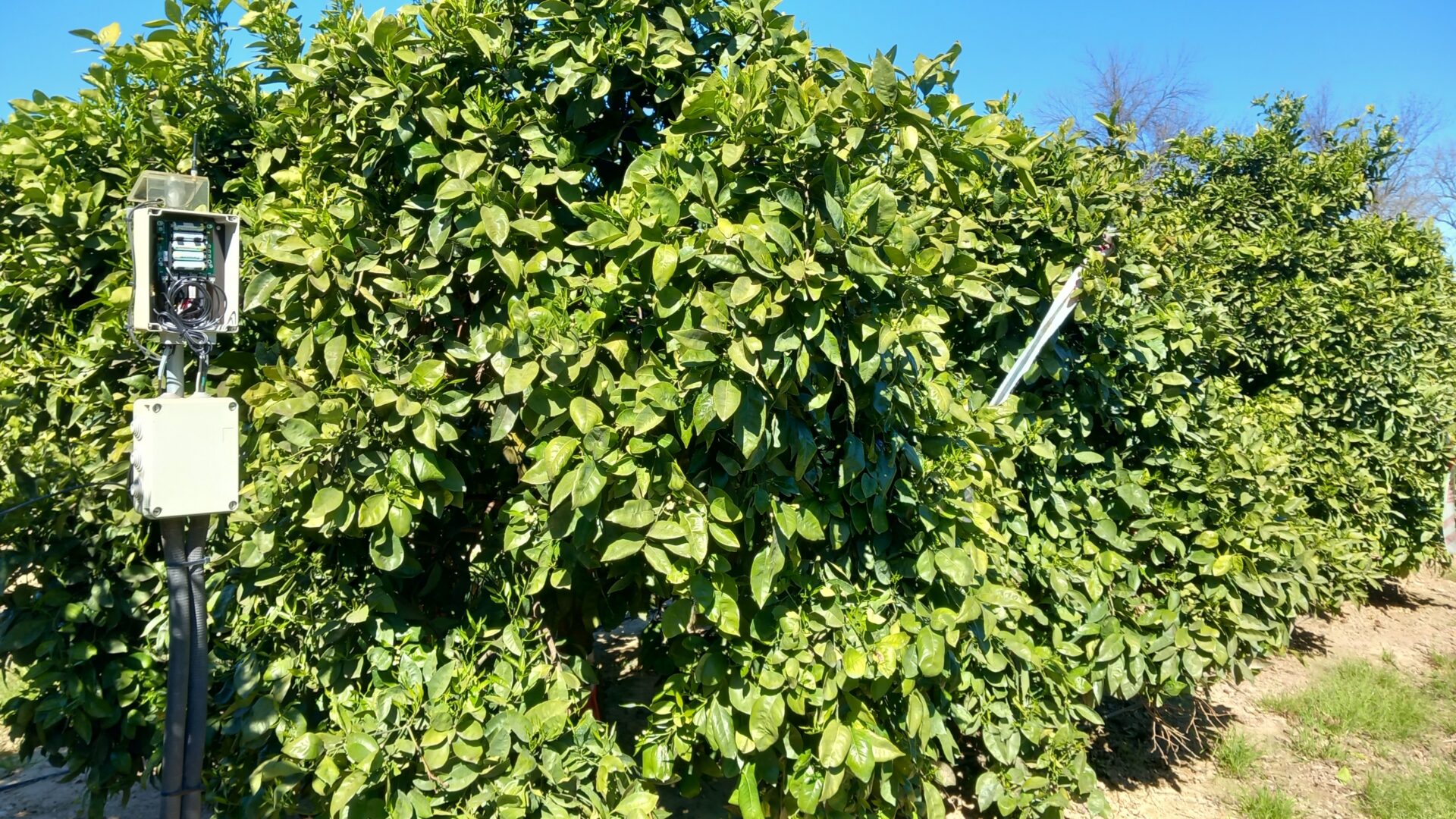
In the Terres de l’Ebre, IRTA’s experimental citrus farm has incorporated new plant and soil monitoring tools, including trunk microtensiometers and suction probes at different depths, with the aim of achieving more precise irrigation and nutrient management.
The project’s activities have also extended to the Maresme, where the Cabrils Agricultural School has strengthened its infrastructure for fertigation monitoring through suction probes, drainage collection devices and soil characterisation; to the Gironès, with several trials in maize crops irrigated by drip, sprinkler and centre-pivot systems; and to the Pyrenees, where an alfalfa hay meadow has been monitored to study water availability in mountain forage systems.
In addition to commercial farms, the project has benefited from the active participation of agricultural schools and training centres, where students have been involved in sensor installation, data management and monitoring activities, helping to transfer knowledge to future professionals in the sector.
One of IrriPAS’s main objectives has been to turn these farms into leading demonstration sites for the agricultural sector. To achieve this, the project has organised technical workshops, training activities, practical demonstrations and digital dissemination tools, including an interactive map that provides access to technical information on the different farms within the network.
Collaboration with cooperatives, plant health associations (ADV), irrigation communities, companies and educational centres has helped expand the geographical reach of the project’s activities and foster knowledge exchange between farmers, advisers and researchers.
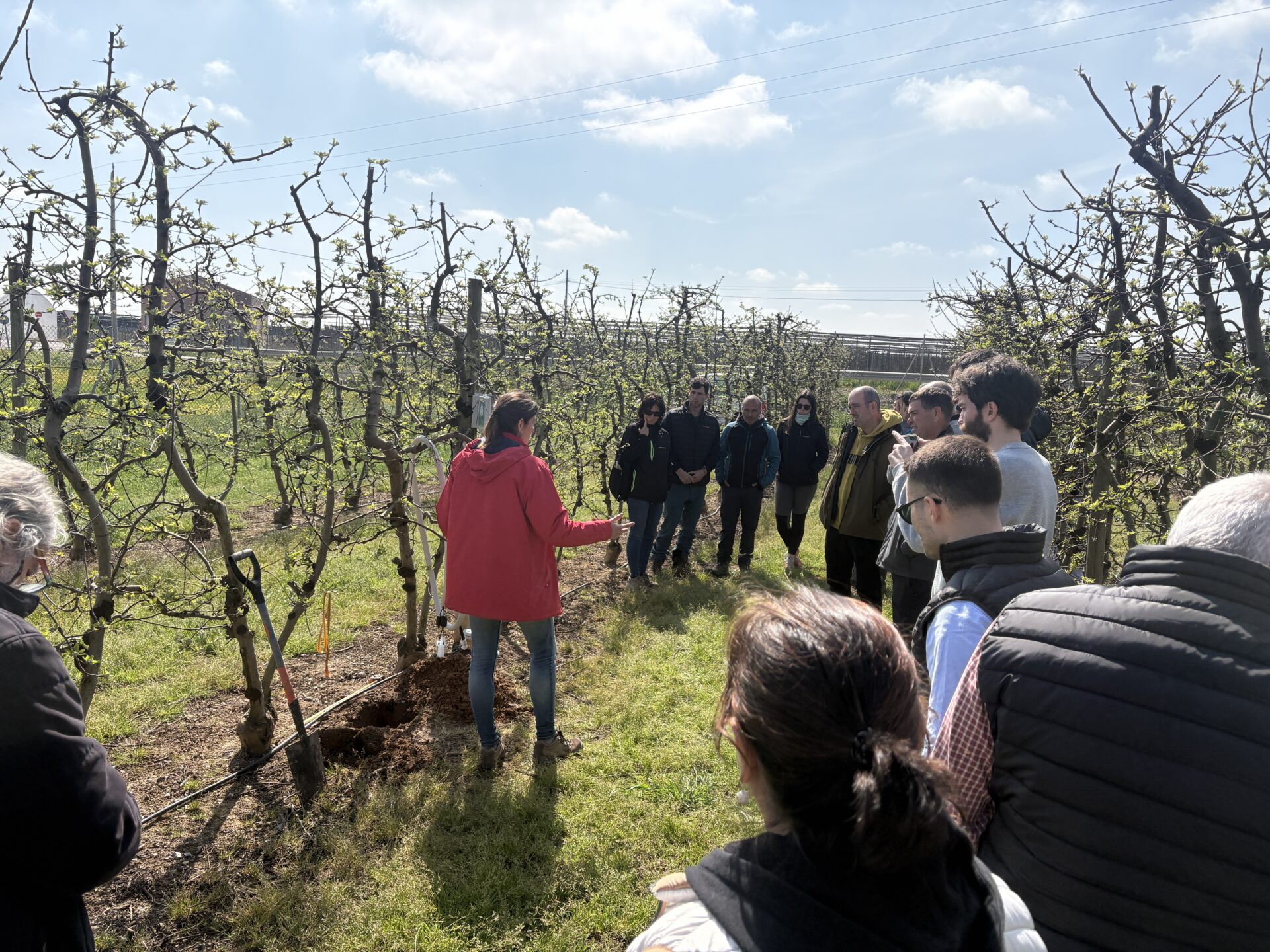
Ana Pelechá, IRTA technician and project coordinator, believes that “IrriPAS has enabled the creation of a network of demonstration farms distributed throughout Catalonia, validating irrigation and fertilisation monitoring and decision-support tools under real field conditions. The results obtained provide a solid foundation for moving towards a more sustainable, data-driven agriculture adapted to the future challenges facing irrigated farming.”
The project’s findings show that integrating soil, plant and water-consumption sensors with digital decision-support tools enables more precise management of available resources and contributes to improving water- and nutrient-use efficiency. The experience has also demonstrated the feasibility of implementing real-time monitoring and communication systems in agricultural holdings with highly diverse characteristics.
The results provide farmers and technical advisers with new tools to address, with greater confidence, the challenges arising from water scarcity, rising fertiliser costs and the environmental requirements associated with the agriculture of the future.
Activity under the CAP Strategic Plan 2023–2027 co-financed by: