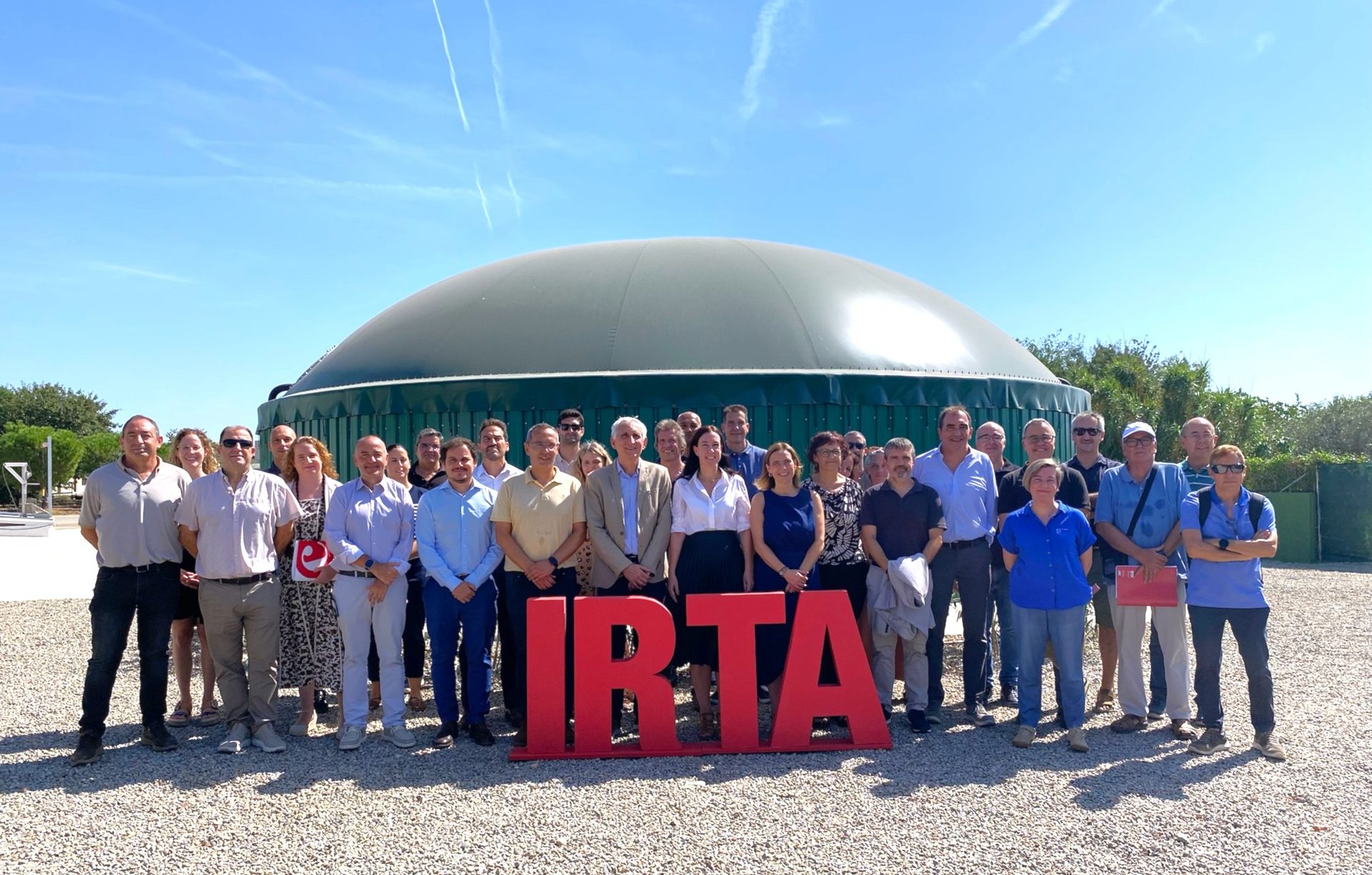
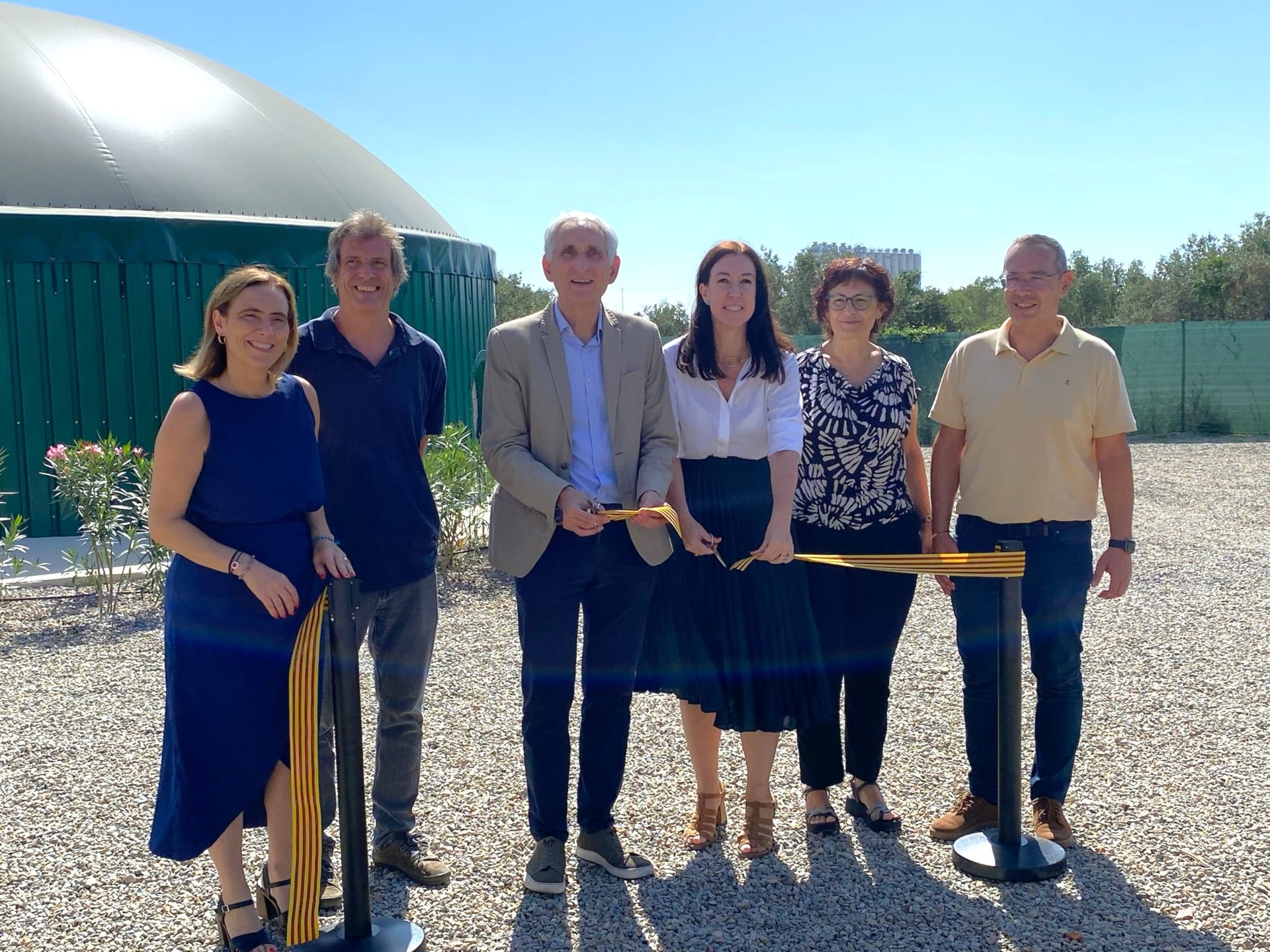
Located at Mas Bové, it is the first in Catalonia and in the Spanish state to be managed by a public research institute while serving a farm.
It will allow pilot tests and scientific studies in the field of renewable energy and organic waste, and is open to the public.
The plant will generate a flow of thermal energy for self-consumption equivalent to what 165 Catalan households use annually.
If you want to know all the details about the state of biogas in the country and IRTA’s commitment to this facility, consult the monograph IRTA Mas Bové Biogas Plant
S’acaba un estiu on la nova realitat climàtica s’ha fet notar: l’escalfament del planeta ha afectat de ple la societat catalana. La necessitat de minimitzar els gasos d’efecte hivernacle (GEH) que afegim a l’atmosfera és, doncs, urgent i inqüestionable. En aquest context, el Departament d’Agricultura, Ramaderia, Pesca i Alimentació, mitjançant l’IRTA, ha presentat avui una nova instal·lació científica i experimental destinada a potenciar la bioeconomia i mitigar el canvi climàtic des del sector agroalimentari català: la planta de biogàs de l’IRTA Mas Bové, a Constantí (Tarragona).
Es tracta de la primera planta de Catalunya i de l’Estat espanyol gestionada per un institut de recerca públic mentre dona servei a una granja. Això vol dir, d’una banda, que la instal·lació s’alimenta de les dejeccions dels porcs (purins) i de l’aviram (gallinassa) que es crien a Mas Bové, i de l’altra, que no busca el benefici comercial, sinó el progrés del coneixement científic i del sector agroalimentari català. Per tant, s’hi podran dur a terme estudis de recerca i projectes pilot que serien complicats de desenvolupar en una planta convencional.
The presentation of the plant was attended by the Director General of Agriculture and Livestock of the Department of Agriculture, Livestock, Fisheries and Food, Rosa Altisent, and the Director General of IRTA, Josep Usall. Also present were August Bonmatí, head of the Biosystems Sustainability program at IRTA, and Belén Fernández, coordinator of IRTA’s strategic scientific objective focused on boosting the bioeconomy in the Catalan agri-food sector.
It is estimated that in Catalonia, 12% of GHG emissions are generated by agriculture and livestock farming. Almost half of this percentage corresponds to the management of livestock manure, which is applied directly to fields as fertilizer in 84% of cases. These manures must be managed in the best possible way to minimize GHG emissions and the contamination of soils and aquifers.
Controlled digestion of livestock manure in biogas plants, instead of storing it in lagoons or tanks to be applied to fields later, significantly reduces the GHGs they emit. Additionally, as a result of the biogas production process, quality organic fertilizers that contribute to soil health can be obtained, as well as recovered water, a relevant resource in the face of the expected recurrence of drought conditions.
En la línia dels objectius europeus i estatals, la Generalitat va aprovar el 2024 l’Estratègia catalana del biogàs i l’Estratègia catalana del digestat, que preveuen un important desplegament de plantes de biogàs a Catalunya en els pròxims anys, i que calculen que, el 2030, les dejeccions ramaderes (especialment purins porcins, fems de boví i gallinassa) suposaran gairebé un terç de la matèria orgànica que alimentarà les plantes de biogàs al territori català.
Per la seva banda, l’IRTA també té l’objectiu científic estratègic de potenciar la bioeconomia al sector agroalimentari català. En aquest marc, l’organització comptarà aviat amb dues plantes experimentals de biogàs. La primera és la que es presenta avui a l’IRTA Mas Bové, i la segona, de mida més petita, s’està construint al costat de la granja de vacum de l’IRTA Monells.
In line with European and state objectives, the Generalitat approved the Catalan Biogas Strategy and the Catalan Digestate Strategy in 2024, which provide for a significant deployment of biogas plants in Catalonia in the coming years, and estimate that, by 2030, livestock manure (especially swine slurry, cattle manure, and poultry litter) will account for nearly a third of the organic matter that will feed the biogas plants in the Catalan region.
For its part, IRTA also has the strategic scientific objective of promoting the bioeconomy in the Catalan agri-food sector. In this context, the organization will soon have two experimental biogas plants. The first is the one being presented today at IRTA Mas Bové, and the second, smaller plant, is being built next to the IRTA Monells cattle farm.
“This experimental plant is an example of how research and innovation can address the challenges of the livestock sector and turn waste into new resources, such as renewable energy, organic fertilizers, and reclaimed water. It is, therefore, a tool for advancing the circularity and sustainability of farms,” explained Altisent. “This initiative is part of the Government’s strategy to promote biogas in Catalonia, with 25 million euros in the latest grant call, which is in addition to the 46 million mobilized in 2024. We want to promote a locally rooted biogas model, with appropriately sized plants that utilize nearby resources and meet the needs of the livestock sector itself,” he added.
“Considering that agriculture and livestock farming represent 32% of the estimated potential for biogas production in Catalonia, the launch of two experimental biogas plants is a priority research and innovation line for us,” Usall stressed.
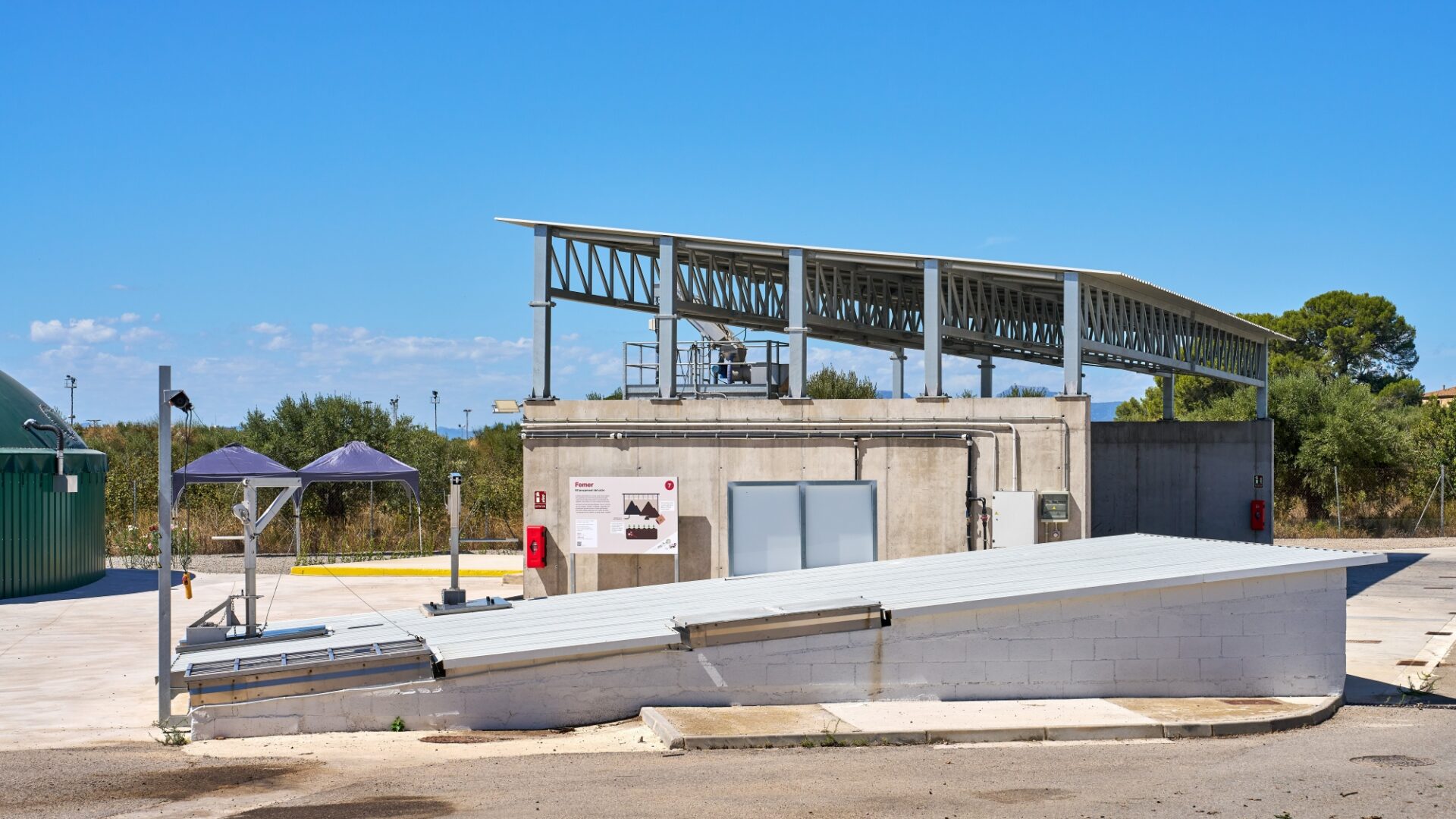
The IRTA Mas Bové biogas plant will allow, among other things, to define new protocols and test new products for improving biogas production; validate emerging technologies at pilot scale; test company prototypes; study the production of high-value-added products (such as biofertilizers or biostimulants) from the digestion of manure; and conduct research inside the digester where biogas is produced to optimize its generation or to capture the CO2 resulting from its combustion.
Additionally, it is expected that this facility will gradually become a talent platform for training specialists in biogas plants.
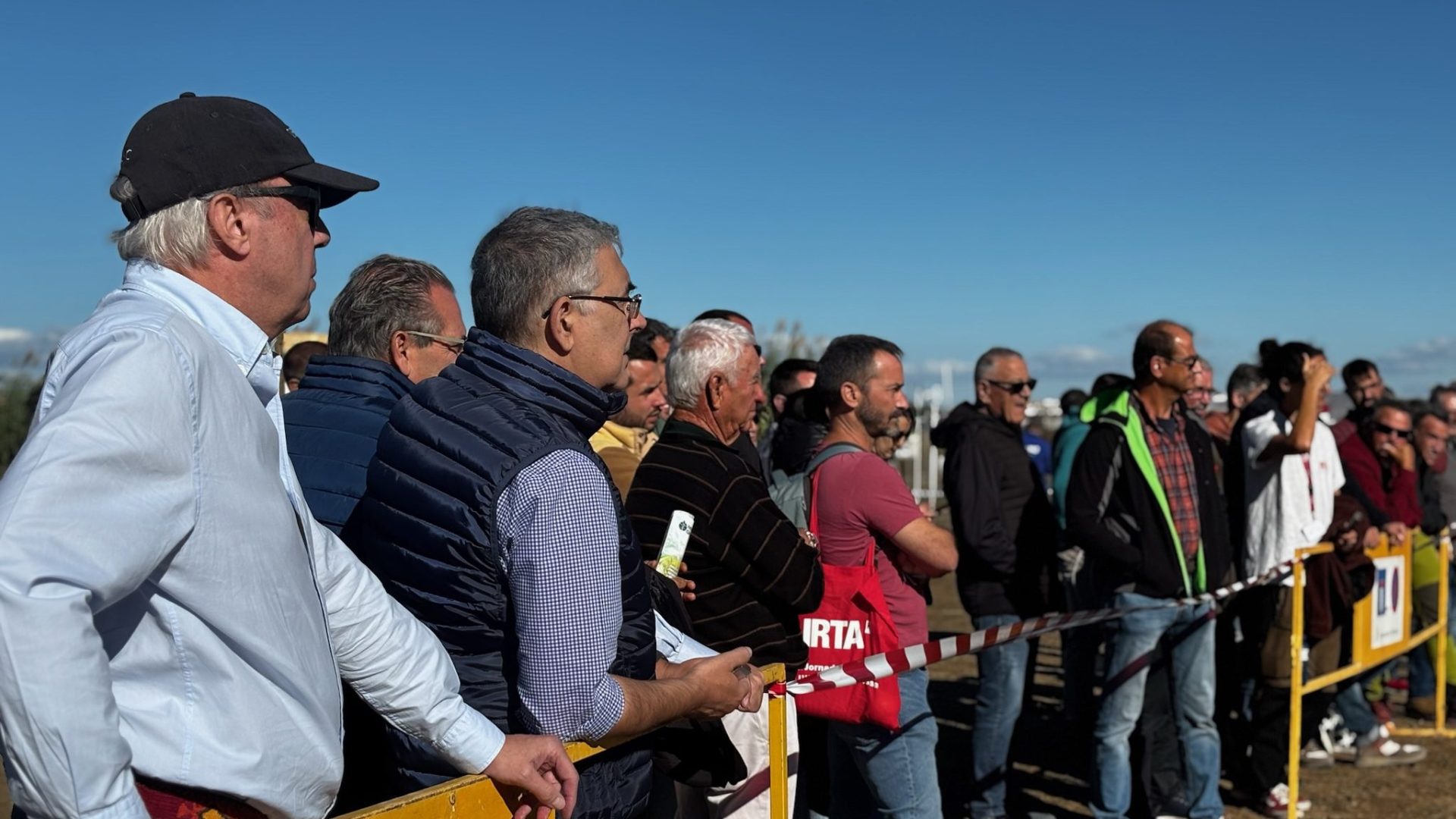
Another benefit that the Mas Bové biogas plant will bring to the sector and society is that it will offer open information regarding its operation. Guided tours for the public and demonstration tours for the industry are planned. Likewise, it will be a powerful tool for knowledge transfer to the scientific community and the industry.
Biogas plants come in many different sizes and types. One aspect that distinguishes them is the organic waste that feeds them: in addition to agricultural residues, they can also be sludge from wastewater treatment plants; the organic fraction of municipal waste, or agro-industrial organic waste, to name a few examples.
Another aspect that distinguishes them is how they use the renewable energy, electrical or thermal, generated from burning the biogas: they can use it for self-consumption or also inject it into the grid.
Additionally, there are plants that purify biogas to obtain biomethane, a fuel very similar to natural gas but renewable, which can be commercialized by injecting it into the gas grid or by using it as a fuel for transportation. In the current geopolitical context, it is considered a very relevant option.
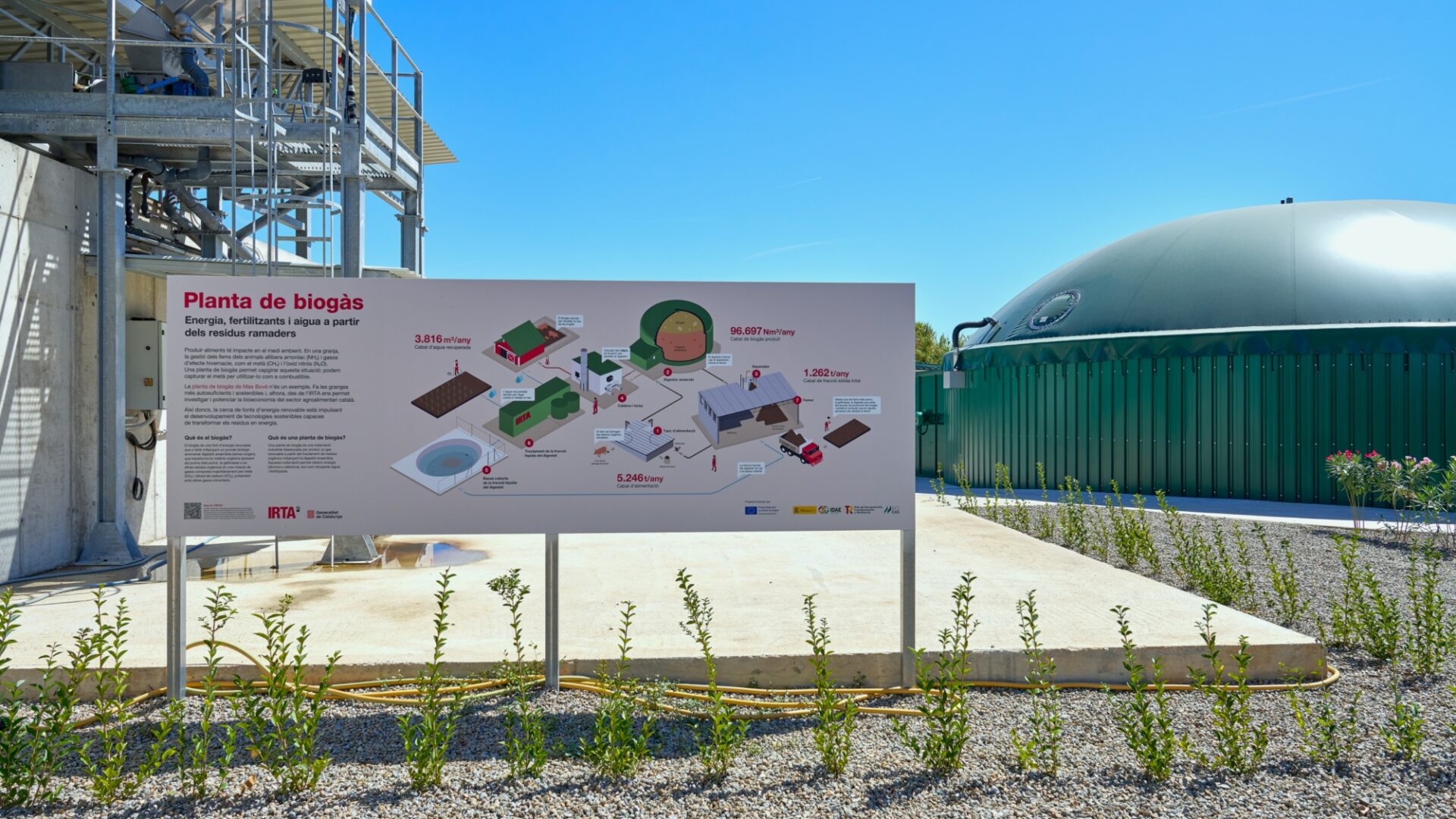
In the case of the Mas Bové plant, the biogas is used to produce thermal energy for on-site consumption. Its defining characteristics are:
The Mas Bové plant is fed with more than 5,200 tons of organic matter each year. In total, the biogas produced has a flow of 96,697 Nm³ per year, equivalent to 58,000 liters of diesel fuel or the annual energy consumed by about 165 households.
The project represented an investment of more than 660,000 euros, nearly 100,000 of which came from a grant from the Institute for the Diversification and Saving of Energy (IDAE), awarded through the 2022 call for unique biogas plant projects.
“This project goes far beyond producing renewable energy. Everything we get from it ties into our strategic scientific objectives and the major local and global food challenges: we valorize waste; we enhance soil health and guarantee food security with quality organic fertilizers and other value-added products; we manage water sustainably and prevent groundwater contamination; we are betting on digitalization and data to drive the sector forward, and we are open to collaboration opportunities to advance research and innovation,” detailed Belén Fernández.
While they are much more widespread in Europe, the installation of biogas plants in Catalonia and the Spanish State is still in an initial phase.
“It is essential to size the projects very well and to involve the local people and institutions. In the case of centralized agri-industrial waste plants focused on collective management, their function must be to improve the environmental sustainability of their area of influence; to obtain high-value-added products from the digestate; and to benefit the community,” concluded August Bonmatí.
Outreach video about the project
With the support of the Tarragona Provincial Council: