“The creation of the world’s first organoid bank to study pathogens and predict future pandemics” is one of the twenty most outstanding scientific contributions of 2025 in the field of life sciences and health innovation, according to Biocat’s annual report on the Catalan Bioregion. In this report, Biocat highlights both the main lines of research conducted in the country in life sciences and health and the sector’s major global figures from different perspectives. In this context, the IRTA’s contribution is included among the contributions of the hundreds of research entities that make up the Catalan Bioregion.
5,000 samples of 46 animal species available to the scientific community
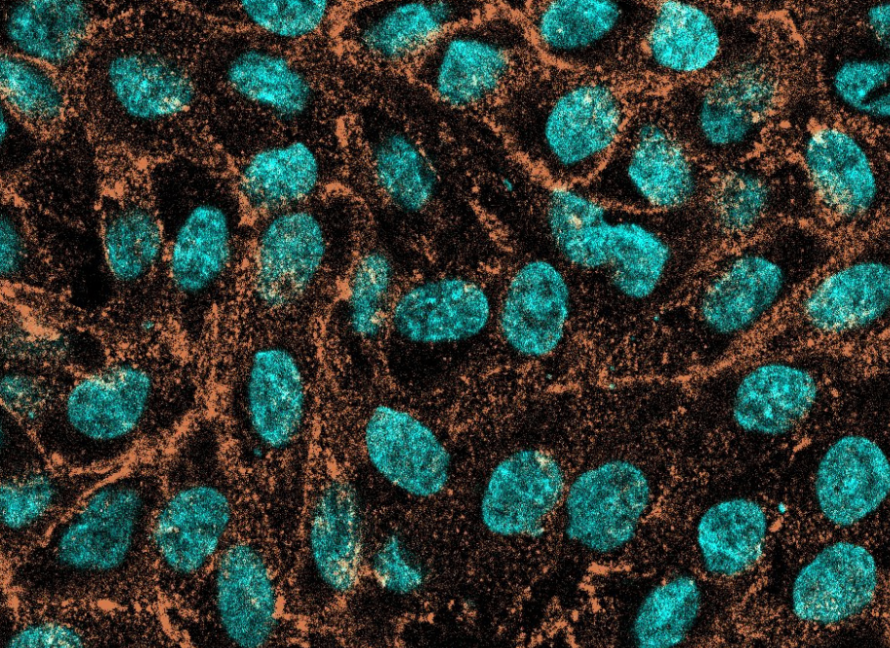
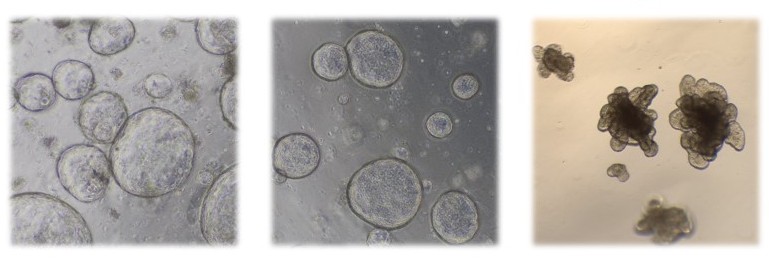
The organoid biobank of IRTA-CReSA (Centre of Research in Animal Health), now called the Zoorganoids™ Platform™ of IRTA-CReSA, contains a wide range of organoids (advanced in vitro models), primarily respiratory and intestinal, derived from livestock, companion, and wild animal species such as pigs and poultry.
This platform is a cutting-edge opportunity for the ethical and efficient evaluation of therapeutic and nutritional compounds, that is, to guide biomedical research toward a more ethical and sustainable future from a One Health perspective.
The Organoid Platform is part of one of IRTA’s strategic priorities for the next decade: opening new lines of cutting-edge research, that is, research that will be much needed in the not-too-distant future. Within this framework, IRTA is also committed to boosting its activity in gene editing.
The origins of this platform date back to 2023 with the Farmbank project, led by IRTA-CReSA researchers Júlia Vergara-Alert and Karl Kochanowski. This bank has continued to grow and develop into the platform it is today, with around 5,000 cryopreserved samples (2,800 organoid vials, plus tissue and fibroblast samples) from 46 animal species. Currently, Gerardo Ceada is its head.
Catalonia ranks first in Europe for projects per million inhabitants and second for funding per million inhabitants
IRTA contributes to growing and strengthening the BioRegion ecosystem, which includes around a hundred research entities and more than 1,600 companies, 468 of which are startups and scaleups. This ecosystem as a whole benefits all the actors involved and boosts science, innovation, and the economy of Catalonia.
In fact, in 2025, Catalonia maintains its leadership in the country, with a very significant share of investments directed toward R&D. According to the Bioregion report for 2025, this strength is further reinforced by human capital: Catalonia has 26,000 annual graduates in scientific fields and more than 18,000 research professionals, facilitating the establishment of over 30 health-related technology hubs in recent years, with the corresponding impact on new jobs.
Other notable data from the report show that Catalonia also reaffirms its leadership in attracting competitive European funding: it has participated in 297 Horizon projects in life sciences and health (2020–2024) and ranks 1st in Europe for projects per million inhabitants and 2nd for funding per million inhabitants. Regarding ERC grants, the most prestigious on the continent, it has accumulated 64 projects and remains among the top European positions per capita. The full report can be found here.
What is the Biocat?
Biocat is the driving force of the health innovation ecosystem in Catalonia, working to scale and consolidate the sector by generating economic and social impact and positioning the BioRegion of Catalonia as an international benchmark. It was founded in 2006 at the initiative of the Generalitat of Catalonia and the Barcelona City Council as a public-private foundation, and its governing bodies include representatives from all public and private sector stakeholders.
Since 2006, Biocat has been tracking and giving visibility to the sector’s evolution through the BioRegió de Catalunya Report, its flagship publication.



Endemic Respiratory Bacteria and AMR Ramon y Cajal researcher