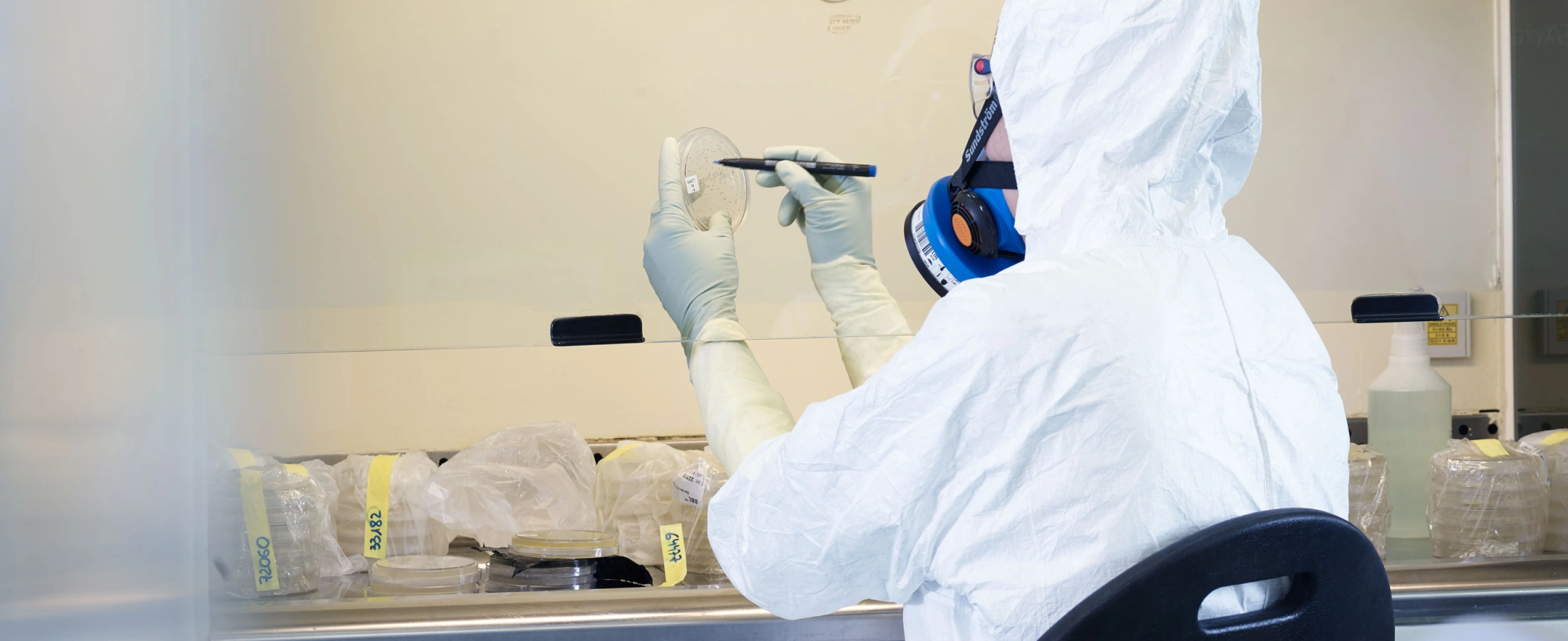

The domestication and breeding of livestock has led to the need to find treatments to cure or prevent animal diseases, some of them related to wildlife. On the other hand, it must be taken into account that 75% of the infectious diseases that affect humans come from animals, known as zoonotic diseases. Faced with the challenges of globalization and climate change, a multidisciplinary cross-cutting approach is needed that includes human, animal and environmental health ( One Health ).
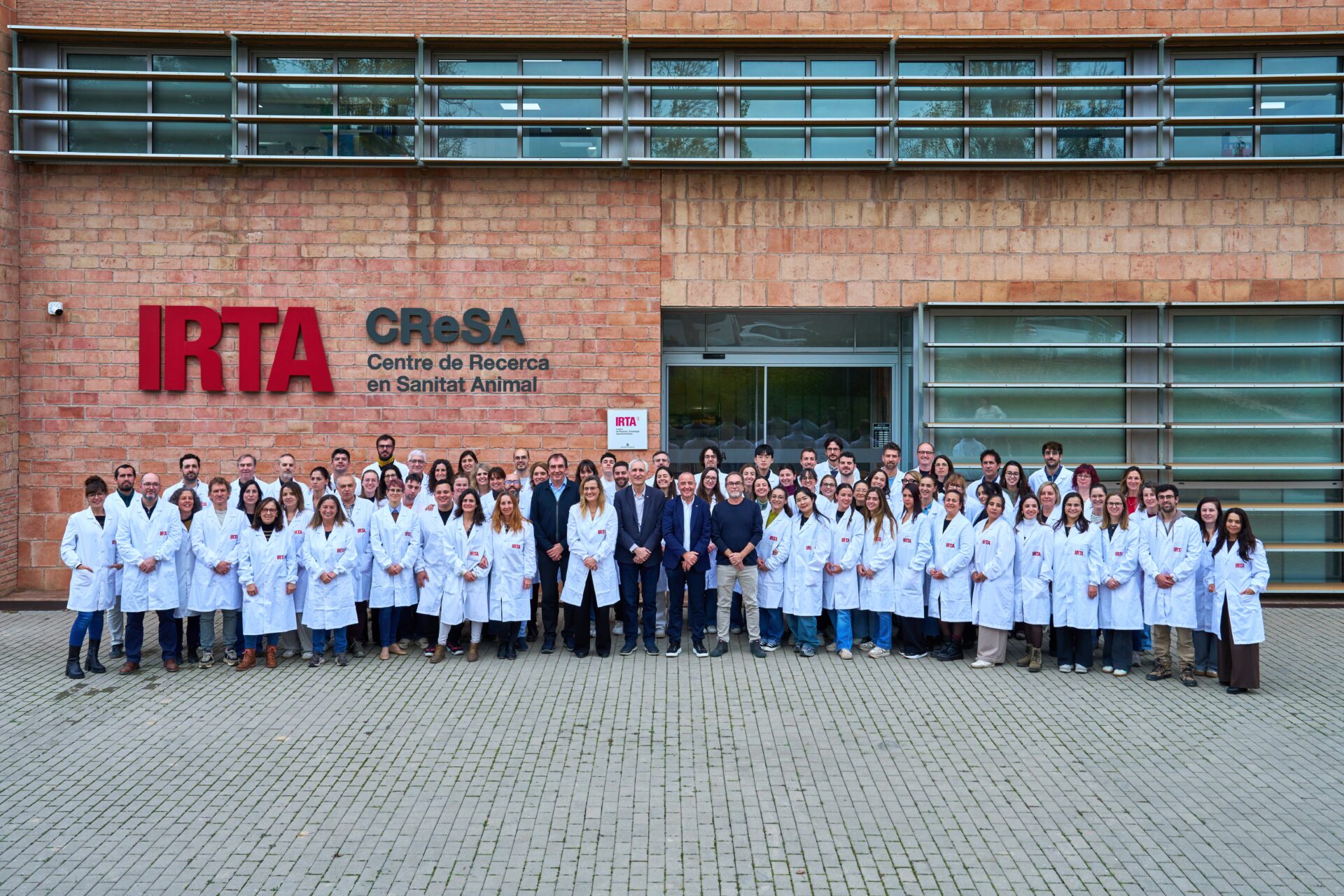
In the Animal Health program we are dedicated to studying animal and zoonotic diseases, their epidemiology and improvements in diagnosis and control, as well as developing effective prevention tools, such as vaccines. The objective is to guarantee the health and well-being of animals and their derived products intended for human consumption to achieve healthy, safe and high-quality food. In addition, we offer technological and innovative support to companies in the agri-food and pharmaceutical sectors, and to public administration.

African swine fever
IRTA-CReSA, where the Animal Health Programme operates, is one of the European centres with the longest scientific track record in African swine fever, in both basic and applied research. We offer official diagnostics within the DARPA network, scientific support and advice in health emergencies, international expertise in ASF virology and immunology, and participation in preclinical studies and European research projects.
Endemic porcine viruses
We study the pathogenesis and viral evolution of the most relevant endemic swine viral diseases, such as Porcine Reproductive and Respiratory Syndrome (PRRS) or Porcine Circovirus 2 (PCV2), to improve diagnosis and control. This group leads the World Organisation for Animal Health (WOAH) Collaborating Centre for Research and Control of Emerging and Re-Emerging Swine Diseases in Europe.
Pestivirus
We conduct studies on the evolution and pathogenesis of pestivirus infection in pigs and other species, especially, but not exclusively, classical swine fever (CSF). Our goal is to improve the diagnosis and control of this disease, acting as a World Organization for Animal Health (OIE) Reference Laboratory for classical swine fever.
Prions
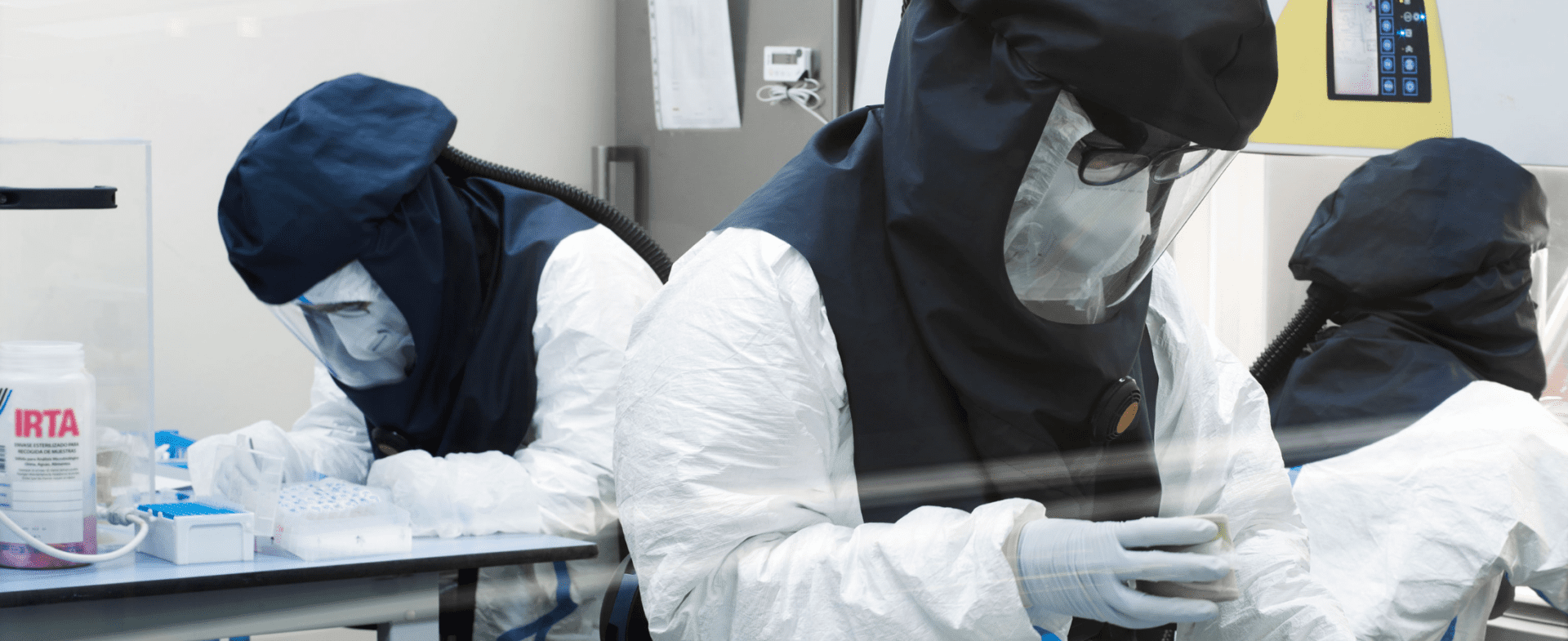
This line of research has the Reference Laboratory for Animal Prion Diseases of Catalonia (PRIOCAT) located in the High Biocontainment Unit of IRTA-CReSA. We carry out the diagnosis of the Transmissible Spongiform Encephalopathies (TSE) surveillance program on behalf of the Department of Agriculture, Livestock, Fisheries and Food and the Department of Health and, in parallel, we develop a line of research into the neuropathology of TSEs. We work in field studies as well as in animal models, especially transgenic mice, and we study the mechanisms of resistance to prions and the pathogenesis of idiopathic TSEs, with the ultimate goal of finding a treatment for these incurable neurodegenerative diseases.
Tuberculosis
We deal with epidemiology, host-pathogen interaction, diagnosis and prevention of tuberculosis in different species. We also manage the Tuberculosis Surveillance program in domestic and wild animal species in Catalonia on behalf of the Department of Agriculture, Livestock, Fisheries and Food.
Vector-borne viruses
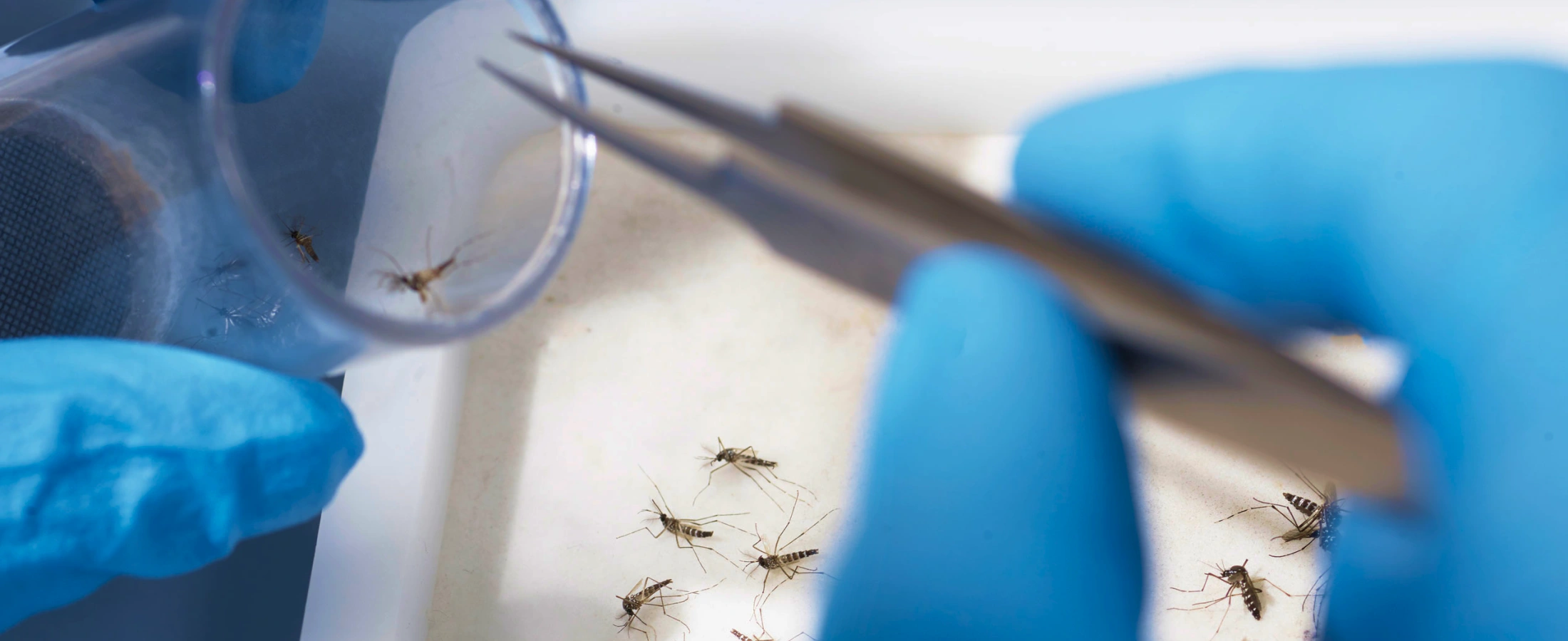
We study arboviral infections in vectors and animals to understand the potential for arbovirus emergence and improve their control. In this line, commissioned by the Department of Agriculture, Livestock, Fisheries and Food, we also manage the surveillance program for West Nile virus infection in Catalonia and the surveillance of arbovirus infection in animals. In addition, we carry out surveillance of arbovirus infection in mosquitoes for the Department of Health.
Zoonotic coronaviruses
We study coronavirus infections that affect animals and humans, such as Middle East Respiratory Syndrome (MERS) and, currently, SARS-CoV-2. This is a line of research that has been very active since the beginning of the COVID-19 pandemic and has been reinforced with more scientific and technical staff in the last two years.
Epidemiology and risk analysis
We provide scientific evidence and develop tools that can help in the surveillance or control of infectious diseases, particularly in the epidemiology of vector-borne zoonotic diseases, such as West Nile fever or Crimean-Congo hemorrhagic fever. This line also provides epidemiological support to different surveillance programs.
Endemic digestive bacteria and antimicrobial resistance
This line of research focuses on the epidemiology, host-pathogen interaction and control of digestive bacterial infections, such as salmonellosis and campylobacteriosis.
Endemic respiratory bacteria and antimicrobial resistance
We conduct studies on the characterization of the respiratory microbiota of swine and study the role that the main actors of the microbiota may have as pathogens or as preventive strategies.
Avian viruses
We study the epidemiology and host-pathogen interaction in different avian viral diseases, such as infectious bursitis, avian adenovirus, infectious bronchitis and avian influenza, with the aim of discovering the molecular mechanisms involved in resistance to these infections.
A portal dedicated to resolving the main doubts of veterinarians responsible for meat analysis in slaughterhouses