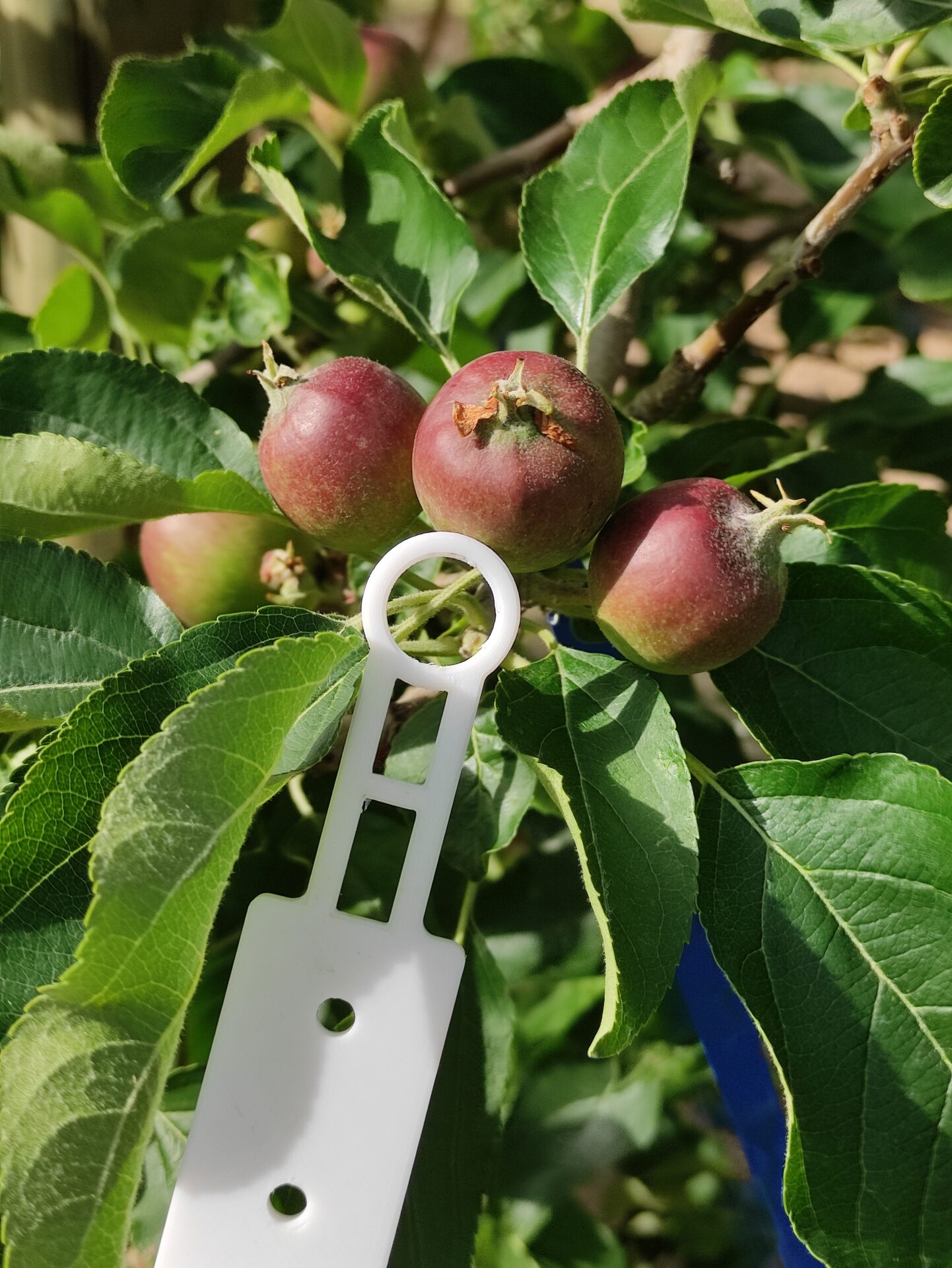
The FruitMeasureApp demonstration project offers a free, fast, and accurate alternative for monitoring fruit growth and supporting decision-making in fruit orchards
On September 10 in Lleida, the project’s results and the mobile app will be presented at the “FruitMeasureApp: AI-based mobile app for measuring fruits in the field” event
Measuring fruit calibre is one of the most important tasks for managing fruit orchards. This information is key for planning thinning, making more reliable yield predictions, organizing the harvest, and optimizing the marketing of the production. Despite its importance, this operation has traditionally been carried out with manual tools, such as calipers or sizing rings, which are time-consuming, labor-intensive, and prone to error.
To address this industry need, the FruitMeasureApp demonstrator project has developed and validated a mobile application based on artificial intelligence that allows for the rapid, precise, and cost-effective measurement of fruit diameter directly in the field using only a smartphone and a simple 3D-printed mount.
The technology combines computer vision and deep learning techniques to automatically detect fruits in images captured with the mobile device and estimate their size. Unlike other solutions on the market, which are often based on expensive sensors or services geared toward large-scale operations, FruitMeasureApp has been specifically designed to provide an accessible, free, and easy-to-use tool for fruit farms.
During the project, the application was redesigned and enhanced, incorporating a new, more intuitive interface, cross-platform compatibility for Android and iOS devices, as well as new features aimed at facilitating its use under real field conditions. Parallel to this, the training database has been expanded with over 2,300 images and 4,300 apples representing different varieties and developmental stages, which has enabled the retraining and improvement of the detection algorithms.
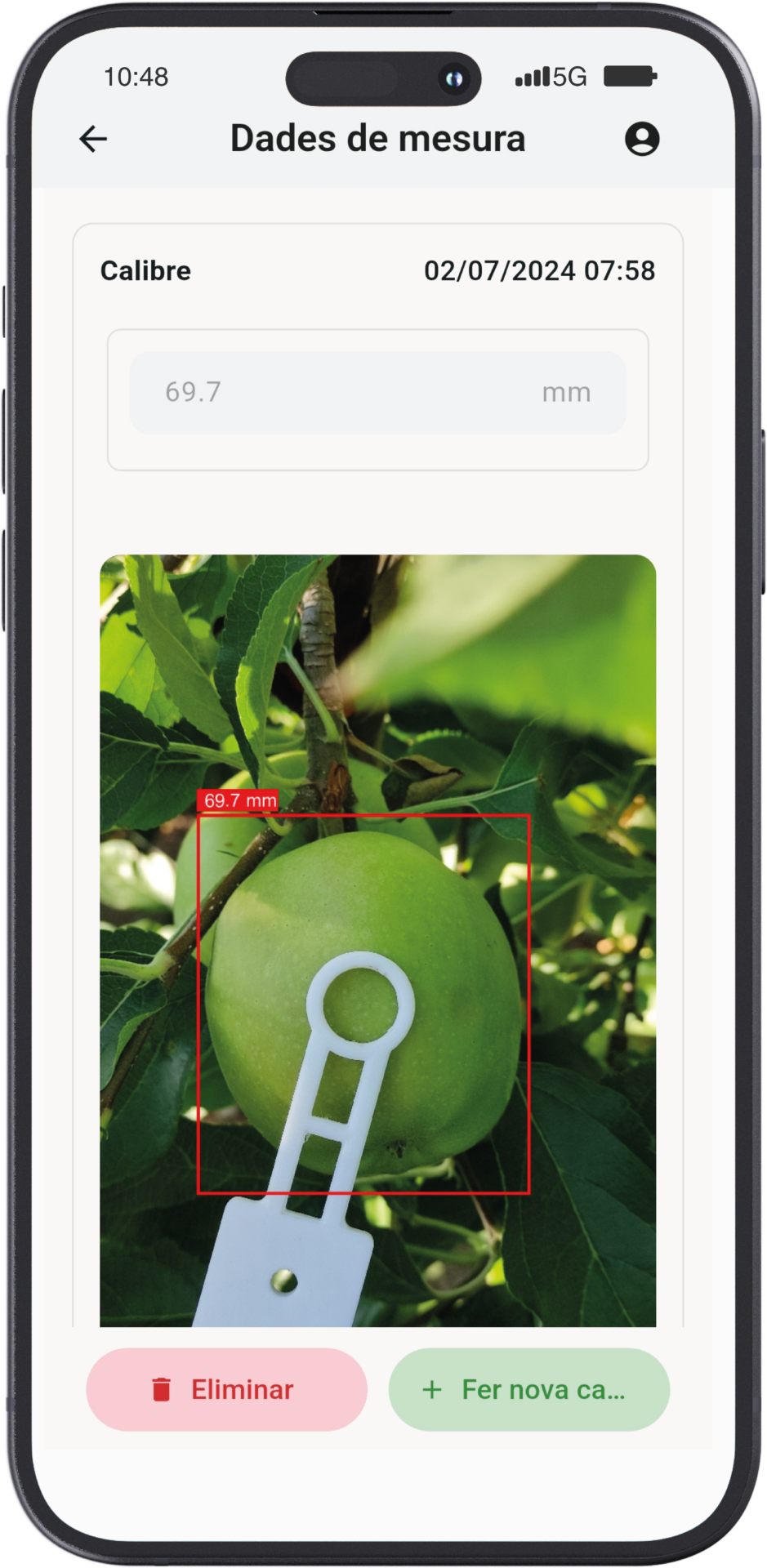
One of the main advances achieved has been the development of two distinct modes of operation. The Corimbe mode allows simultaneous measurement of all fruits grouped in a single photograph during the early stages of development, while the Fruit mode is aimed at individual fruits in more advanced stages. This functionality significantly increases the efficiency of the sampling process and reduces the time required to obtain useful information about fruit growth.
The application also incorporates data management tools that allow organizing measurements by plots and sampling dates, generating size distribution histograms, obtaining basic statistics, and building exportable growth curves, turning the mobile phone into a tool for supporting agronomic decision-making.
The technology has been validated on more than 3,000 fruits from five different apple varieties and in plots different from those used during the tool’s development. All measurements were compared with those obtained manually using a vernier caliper.
The results show high accuracy, with mean absolute errors between 1.28 and 2.11 mm depending on the measurement mode used, and a very high correlation with manual measurements (R² = 0.987). This performance is comparable to that of much more complex and expensive systems based on photogrammetry, LiDAR sensors, or other advanced computer vision technologies.
In addition, FruitMeasureApp has been compared with a commercial machine vision system used for monitoring fruit growth. The growth curves obtained with both technologies showed a high degree of agreement, with an R² correlation of 0.97, confirming the reliability of the application as a tool for monitoring fruit development throughout the campaign.
The project results confirm the potential of FruitMeasureApp as a tool for monitoring fruit growth and supporting decision-making in fruit cultivation. The ability to obtain reliable real-time measurements allows fruit growers to identify intervention needs, track crop development, and anticipate the final fruit size.
This information can help improve harvest planning, production forecasts, and marketing strategies. At the same time, it facilitates the adoption of precision agriculture practices aimed at optimizing resources, reducing costs, and minimizing the environmental impact of farms.
Despite the good results obtained, the project has also identified opportunities for future improvement. In particular, it is planned to continue working on the detection capability for smaller-caliber fruits to further expand the tool’s applications in specific operations such as thinning assessment.
As the final result, the application has been released publicly on Google Play and the Apple App Store, along with a user guide, tutorial videos, support materials, the 3D model of the FruitMeasureStick calibration stand, and even the application’s source code. All processing is performed directly on the mobile device, without the need for an internet connection or external servers. This approach helps reduce the barriers to entry for digitizing agricultural operations and encourages producers to adopt digital tools.
FruitMeasureApp has been jointly developed by the University of Lleida (UdL), which has acted as the coordinating entity, and IRTA, combining the expertise of both centers in complementary fields such as computer vision, artificial intelligence, precision agriculture, and fruit growing.
On behalf of the UdL, the project was led by Eduard Gregorio, project manager, professor in the Department of Forest and Agricultural Science and Engineering, and member of the Research Group in Agrotecnology and Precision Agriculture (GRAP). Also participating were professors Joan Ramon Rosell, Ricardo Sanz, Àlex Escolà, and Jordi Llorens, all members of GRAP, as well as professor Jordi Mateo from the Department of Computer Engineering and Digital Design.
On behalf of IRTA, it was led by Jordi Gené, a researcher in the efficient water use program specializing in proximal sensing and artificial intelligence applied to agriculture; also participating were researchers from the Fruit Culture program Jaume Lordan, Carla Roman and Luis González, who were responsible for validating the technology in fruit orchards and evaluating its usefulness as a tool for monitoring fruit growth.
Our goal has been to transform years of research into a practical solution that helps make faster, more informed decisions in the field.

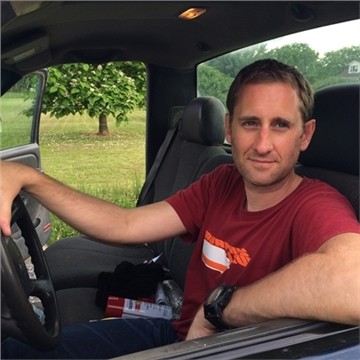
Proximal Remote Sensing and AI IRTA Consolida researcher
The collaboration between the two centers has been key to redesigning the application and implementing the necessary improvements to make it easier to use, optimize the fruit detection and measurement algorithm, validate the technology under real field conditions, and assess its accuracy. This work has been carried out in collaboration with the Catalan fruit sector to adapt the tool to real needs, in a context where digitalization and precision agriculture are becoming strategic tools to improve the competitiveness and sustainability of farms.
The demonstration and transfer activities developed during the project, including technical workshops at Mas Badia, Mollerussa, and the University of Lleida, have made the tool known to fruit growers, technicians, and companies in the sector, facilitating its implementation and helping to accelerate the digital transformation of Catalan fruit farming. In this regard, on September 10, in Lleida, the project’s results and the mobile application will be presented at the “FruitMeasureApp: Mobile Application Based on AI to Measure Fruits in the Field” event. Registration is now open for interested parties.
With this project, IRTA and the University of Lleida are taking another step in transferring innovative digital technologies aimed at improving the competitiveness, sustainability, and decision-making capacity of the fruit sector.
The demonstration project “FruiMeasureApp: Validation and Prototyping of an AI-Based Mobile Application for Measuring Fruits in the Field” is a EU-co-funded activity under intervention 7201 of the 2023-2027 CAP Strategic Plan.