How did you end up at IRTA-CRAG, and how did the opportunity to pursue your Ph.D. there come about?
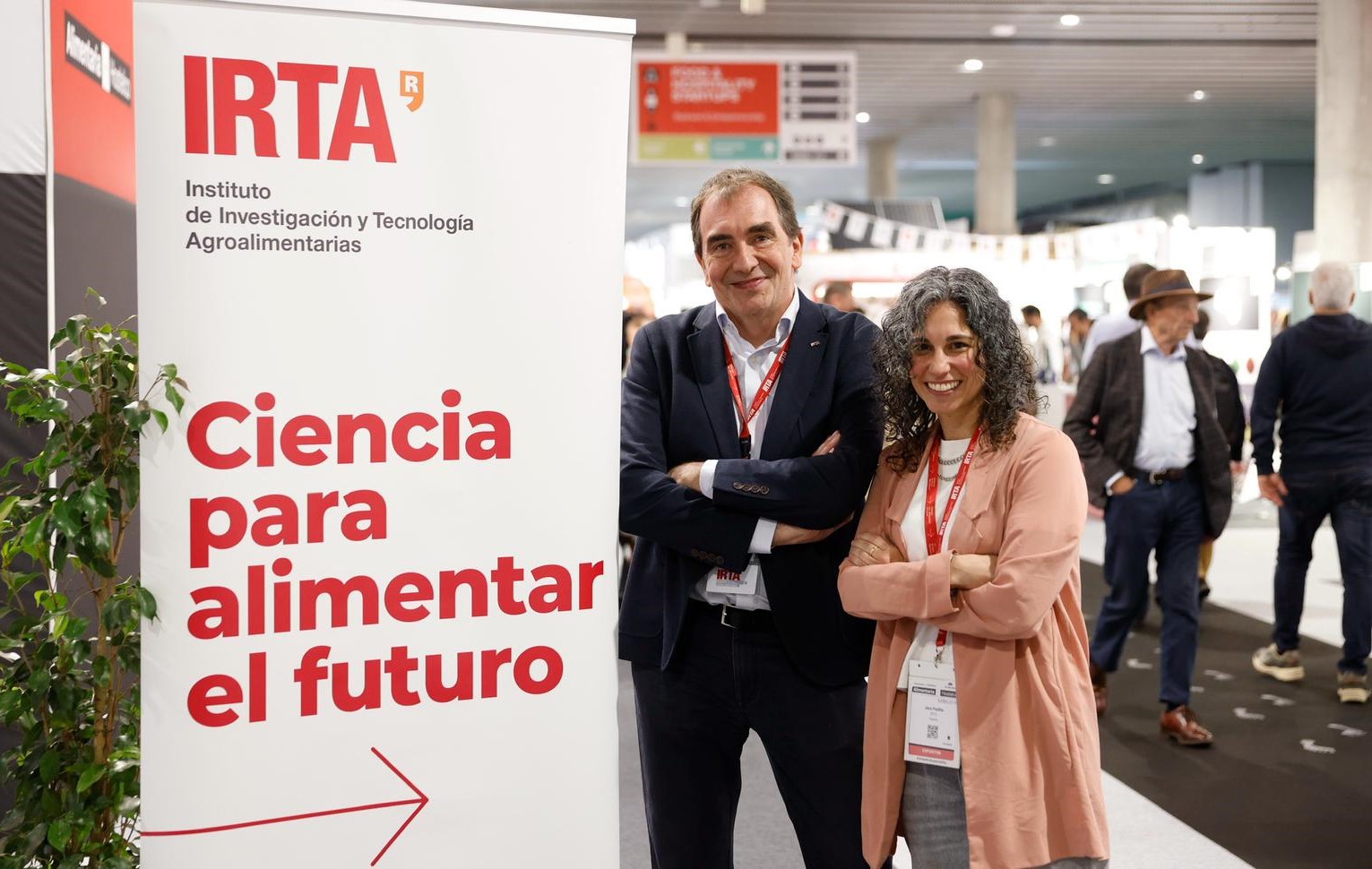
I learned about IRTA before starting my Ph.D. I was pursuing a master’s degree at the Autonomous University of Barcelona. I’d heard great things about the center, and at the time I was looking for labs to do my internship and my master’s thesis. Eventually, I joined IRTA-CRAG, and that’s when I met Jordi García and Marta Pujol. Once I finished my master’s, they accepted me to pursue my Ph.D. with them at the center.
What was the focus of your research during your Ph.D.?
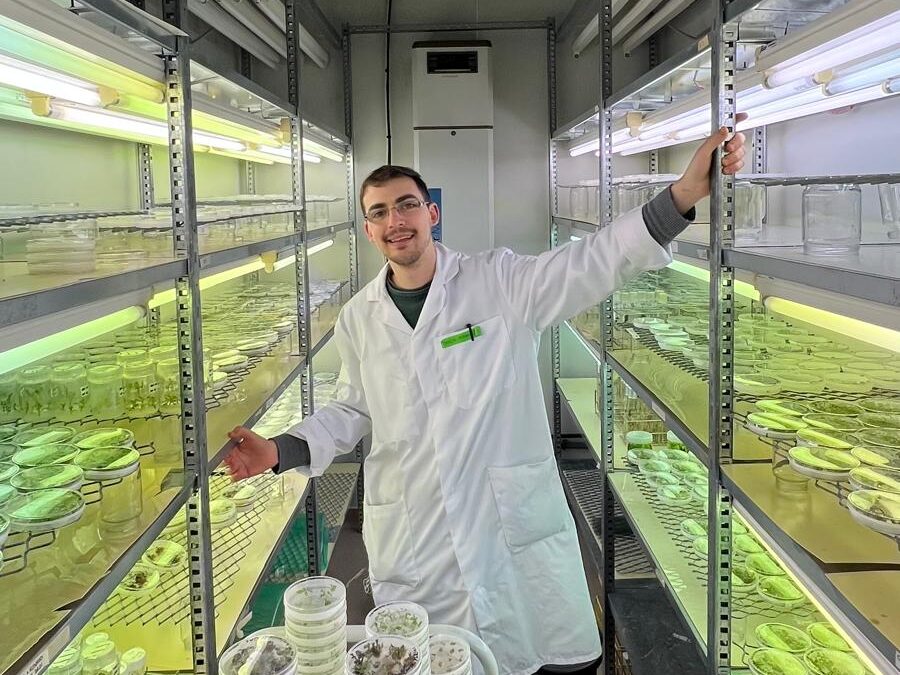
The project I joined aimed to generate basic knowledge about how aromas are produced in melons and to try to improve their organoleptic quality. We took samples from the “piel de sapo” melon, which is not very aromatic, and from the cantaloupe, which is very aromatic, to identify which genes were responsible for aroma production.
How do you look back on your experience at CRAG and within the IRTA environment?
One aspect I cherish greatly is that, within the center, all the IRTA teams shared facilities and equipment. Although each of us worked on our own projects, we used similar techniques. This greatly facilitated the exchange of knowledge, protocols, and experiences.
But what stands out most to me are the moments spent with the other doctoral students, as well as what I learned about planning, communication, and teamwork.
You’ve earned a master’s degree in Education and have taught several classes at the university. How did this passion for education come about?
I’ve always loved teaching—both my parents are teachers—and during my doctoral program, I’d already completed some teaching internships at the UAB and the UPF, in addition to giving private lessons. Once I finished my Ph.D., I returned to Galicia to pursue the master’s degree, and I really enjoyed the experience. Right now, I see it as a sort of Plan B in case my research doesn’t quite pan out at some point, but I continue to take advantage of opportunities for science outreach or university teaching when they arise.
You’re currently doing postdoctoral research at INRAE.
Yes. I’m currently working with tomatoes, focusing on abiotic stress: tolerance to drought and heat, and reducing the use of pesticides and fertilizers. The goal is to develop plants that are more resilient to the challenges of climate change, always in conjunction with more sustainable farming models such as agroecology—for example, combining various crops or varieties in the same field.
What was it like to start working abroad?
The change wasn’t very big compared to IRTA: the way we work is quite similar, although INRAE is much larger because it operates on a nationwide scale in France, with many centers spread across different regions. But with everything I learned at IRTA, I’m able to do my work here in the best possible way.
What role can genetics play in addressing climate change?
I believe that genetics and genomics, using techniques such as CRISPR-Cas, can accelerate changes that were traditionally achieved through crossbreeding—and do so more precisely, without introducing other unwanted genes linked to the trait we want to modify. This can help us tackle not only drought and high temperatures but also diseases that may become more common due to the spread of new insect vectors. At the moment, my postdoc research hasn’t yielded any definitive results yet: we have edited plants in the greenhouse, but the trials to see if they’re more resistant will take place next year.
What advice would you give to someone who has just finished—or is considering pursuing—a Ph.D.?
During a Ph.D., you develop many skills—both technical and transferable—that are very useful for any job; it’s an experience that helps you grow a lot as a person. You do have to choose your program carefully, because the experience depends heavily on the environment and the support of your advisors. At IRTA, I had the opportunity to learn a great deal alongside a fantastic team. Once you’ve finished, many doors open, and with all the skills you’ve developed, you can try whatever you’d like: business, science communication, academia, or teaching. There are many possible career paths, and I believe that with a Ph.D., you graduate equipped with the tools to tackle any of them.