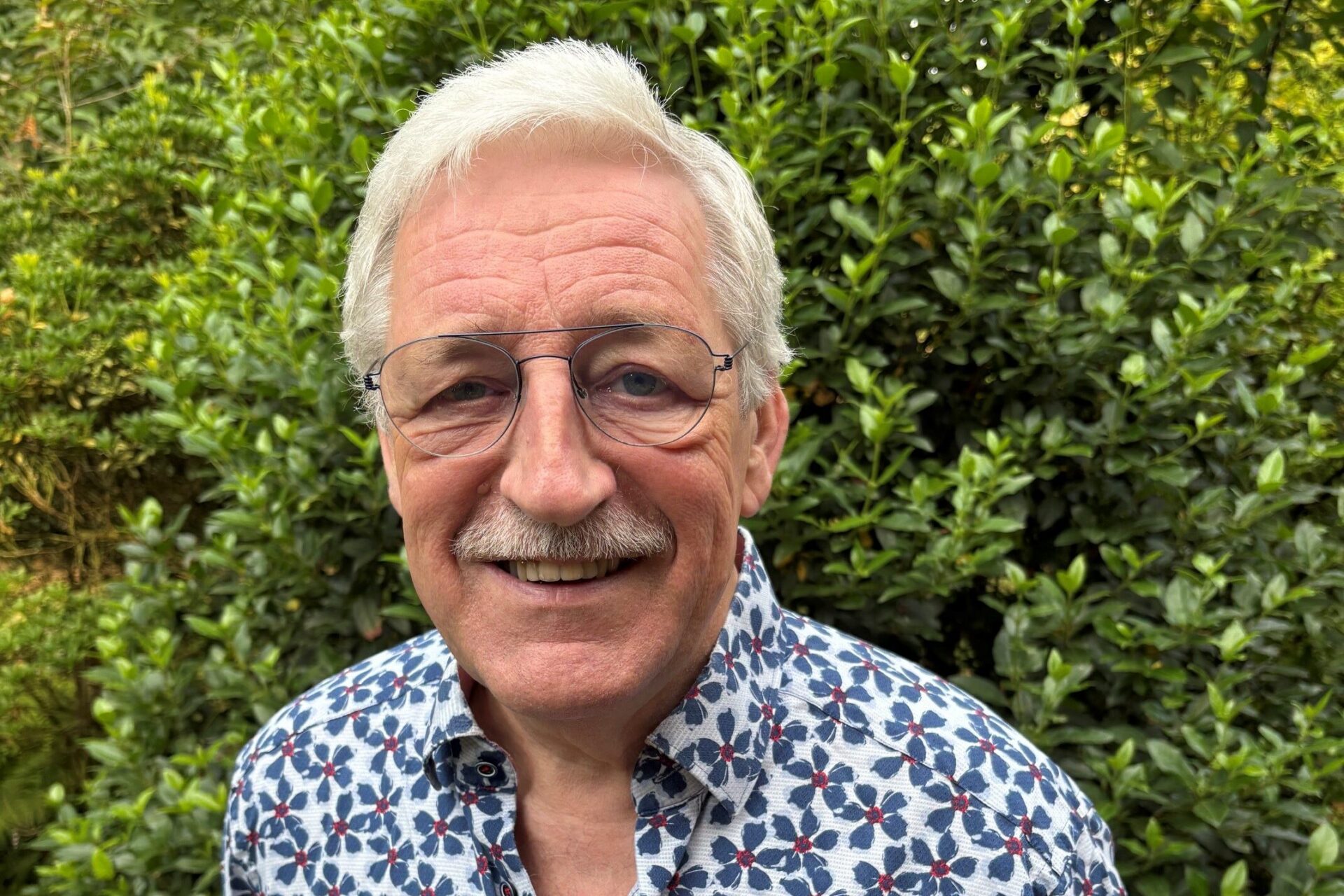
Richard G.F. Visser is former chair and head of Plant Breeding at Wageningen University and Research (Netherlands) and president of the Scientific Advisory Board of IRTA.
We have talked with him about the role of this body in promoting research and innovation, the strategic positioning of IRTA in the European ecosystem and the main challenges and opportunities that will mark the future of the institution.
What role does the Scientific Advisory Board of IRTA play?
Our function is to support IRTA to continue advancing in its research, knowledge transfer, innovation and social impact objectives. One of the main values of an advisory board is to provide an external and independent view. When an institution is only evaluated from within, it is more difficult to identify new opportunities or question certain ways of working. On the other hand, having experts who have faced similar challenges in other organizations allows us to incorporate different perspectives and detect good practices that can contribute to making the work even better.
The Board brings together researchers with very diverse backgrounds and complementary expertise. This diversity allows us to analyse IRTA’s activity from a broad perspective and offer recommendations based on its programmes, priorities and future projection.
Despite coming from different institutions and countries, we share the same goal: to help IRTA generate excellent research that has a real impact. In a global context marked by challenges such as climate change, food security or the sustainability of agri-food systems, research only makes sense if it contributes to improving society, the economy and the environment.
What should the role of IRTA be in Catalonia?
IRTA has a very clear mission: to generate knowledge and put it at the service of the agri-food sector and, ultimately, of Catalan society. This is the reason for being of the Institute since it was created by the Government of Catalonia more than forty years ago. Its responsibility is to remain at the forefront of research, but also to ensure that this knowledge translates into useful solutions, innovation and real impact on the territory.
This balance between scientific excellence and practical application is not as common as it might seem. In some countries, such as the Netherlands, a significant proportion of applied research has been transferred to the private sector. This can accelerate innovation in some areas, but it also implies that certain lines of research only advance if there is immediate commercial interest. Issues that require a long-term vision or benefit the sector as a whole may be neglected.
“IRTA, as a public research center, it can address strategic challenges that go beyond the interests of a specific company and work with a country perspective”
It is precisely here that lies one of the great values of IRTA. As a public research center, it can address strategic challenges that go beyond the interests of a specific company and work with a country perspective. At the same time, it maintains a very close relationship with professionals in the sector, which allows it to understand their needs and convert the results of research into innovations that reach the field, companies and, finally, society. This combination of scientific excellence, a vocation for public service and proximity to the sector is a model that is worth preserving and strengthening.
And what position does IRTA occupy on the European scene?
To consolidate its position in Europe, IRTA must be attentive to the great scientific and social challenges that will mark the coming years and actively participate in the international alliances and consortiums that work to respond to them. In this context, IRTA provides a different value that is not always easy to find in other institutions: a great capacity to transfer knowledge to practice, a direct relationship with farmers, livestock farmers and companies in the sector, and a network of experimental facilities and stations that allows validating solutions under real conditions.
The great challenges of agri-food research are shared around the world: climate change, crop resilience, resistance to antibiotics or animal welfare, among others. This makes IRTA a natural partner for many international organizations working in these areas. Initiatives such as the Hot Climate Partnership demonstrate that international collaboration is a key way to generate impactful knowledge.
There are also opportunities to consolidate new areas of leadership. IRTA Pirineu, for example, can become a European benchmark in applied research in mountain areas. Many countries, such as Switzerland, Italy, Austria or France, share similar challenges related to livestock farming, agriculture and the management of mountain ecosystems. Strengthening alliances with these territories would allow sharing experiences, accelerating mutual learning and strengthening the role of IRTA as a reference actor in this field.
What great challenges will IRTA have to face in its new Strategic Plan?
The key question is: where does IRTA want to be in 2050? What impact does it want to have on the agri-food sector?
If this vision is clear, it is easier to make decisions about the priorities of the present. Projects, lines of research and investments must contribute to moving towards this shared horizon.
IRTA is currently developing more than fifty lines of work. It is clear that not all will evolve at the same pace or have the same impact. But this is not a problem if they all respond to the same direction and strategic purpose. When destiny is well defined and clear, priorities can be adapted and new opportunities can be seized without losing course.
How do you imagine the institution in ten years’ time?
We live in a context of growing uncertainty, where food security has become a strategic priority for many countries. The pandemic, geopolitical conflicts or the effects of climate change have highlighted the vulnerability of global supply chains. Therefore, more and more governments are pushing policies to strengthen their ability to produce food within their own borders. Countries such as China, France, Germany or the United Kingdom have already set targets in this direction.
“We also know that a better balance needs to be found between the opening up of markets, sustainability, resilience and the needs of territories”
In this scenario, all research that contributes to making agri-food systems more resilient, efficient and sustainable will have an even greater value. For decades we have been confident that global trade would always guarantee access to food, and it remains a fundamental piece of the system. But today we also know that a better balance needs to be found between the opening up of markets, sustainability, resilience and the needs of territories.
I see IRTA as an institution with an increasingly relevant role in this process. Its ability to generate scientific knowledge, work alongside the sector and transform research into applicable solutions places it in a privileged position to contribute to building a more competitive, sustainable agriculture and food production capable of responding to the great challenges of the coming decades.
What is most rewarding about his work as a scientific advisor?
What I am most pleased about is that we are helping to build the better future. An important part of my work is basic research, but the greatest reward comes when the knowledge we generate translates into tangible improvements for the sector and for society. To see that an idea, a discovery or a recommendation ends up having a real impact is what gives meaning to the work we do.
What do you think is the main value of working at IRTA?
I think people working at IRTA can be proud to be part of a reference institution. Since I am part of the Scientific Advisory Board, I have been able to verify that IRTA is not only committed to scientific excellence, but also to creating a work ecosystem that attracts and retains talent, that ensures the diversity of teams and prioritizes their well-being.
I did my PhD at the University of Groningen and then spent almost forty years in Wageningen, taking on different responsibilities throughout my career. Being able to grow within the same organization is a great value, both for the people and for the institution itself. In order for this to be possible, however, talent must be well identified, development opportunities must be offered and generational change must be prepared in time to preserve accumulated knowledge.