
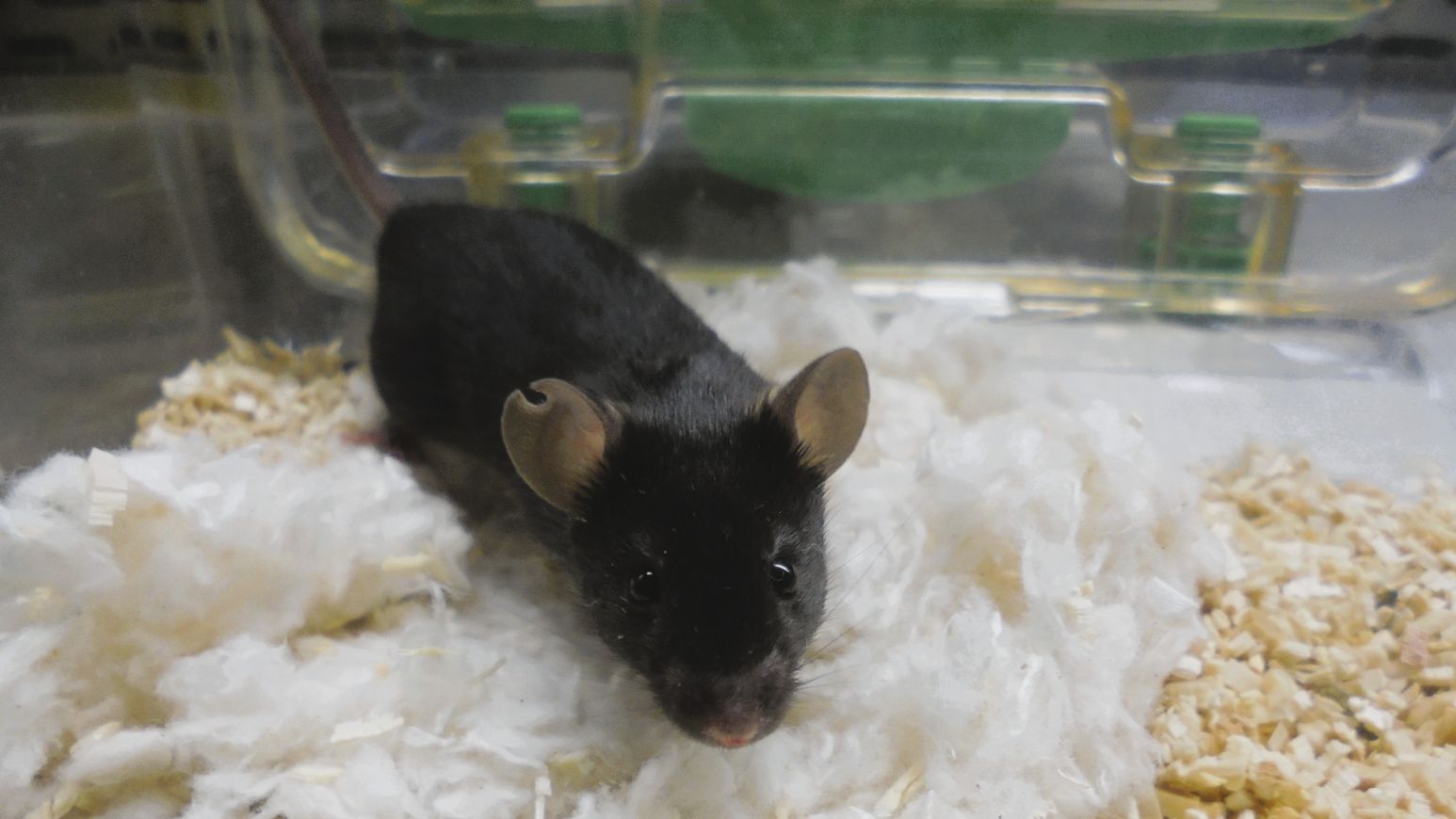
The research will be useful for developing animal models to better understand this disease and study it more accurately.
Researchers from IRTA-CReSA have published a study in the journal Frontiers in Microbiology that supports the hypothesis that Long COVID with neurocognitive symptoms may be caused by an abnormal and sustained immune response rather than by an active viral infection in the brain.
This information provides a valuable tool for gaining a better understanding of the biological mechanisms underlying Long COVID, identifying potential biomarkers of the disease, and evaluating future treatments before clinical trials in humans are initiated.
The study is particularly important because this is the first time such a low dose of SARS-CoV-2 has been used to infect transgenic mice that are highly susceptible to the virus, allowing the animals to be monitored over a longer period of time.
Researcher Carla Ruiz-Casas, first author of the paper, highlights the variability observed between individuals: “we have seen that the response is highly heterogeneous and that there are differences between the animals. In some cases, we observed that the mice developed sequelae similar to those described in people with Long COVID.” The research has also highlighted differences between males and females in their long-term response to infection, among other findings.
Another key finding is that, during the late stage of the disease, no virus was detected in the animals’ brains. This suggests that persistent neurological symptoms are not caused by the continued presence of the virus in the nervous system.
This research, led by members of IRTA-CReSA, forms part of the doctoral thesis of predoctoral researcher Carla Ruiz-Casas, who is conducting her research within the framework of the EPIVINF project. This European project aims to understand how viral infections alter the epigenetic regulation of host genes involved in controlling the immune response and neurological health. IRTA-CReSA is part of EPIVINF together with IrsiCaixa, which coordinates the project, the Karolinska Institute, Ospedale San Raffaele, Saarland University and Omniscope. The project is an example of how animal health contributes to advances in human health from a One Health perspective.


Laboratory Technician - Zoonotic Coronaviruses

Endemic swine viruses researcher. Affiliated researcher at the UAB


Head of Animal Testing and Welfare