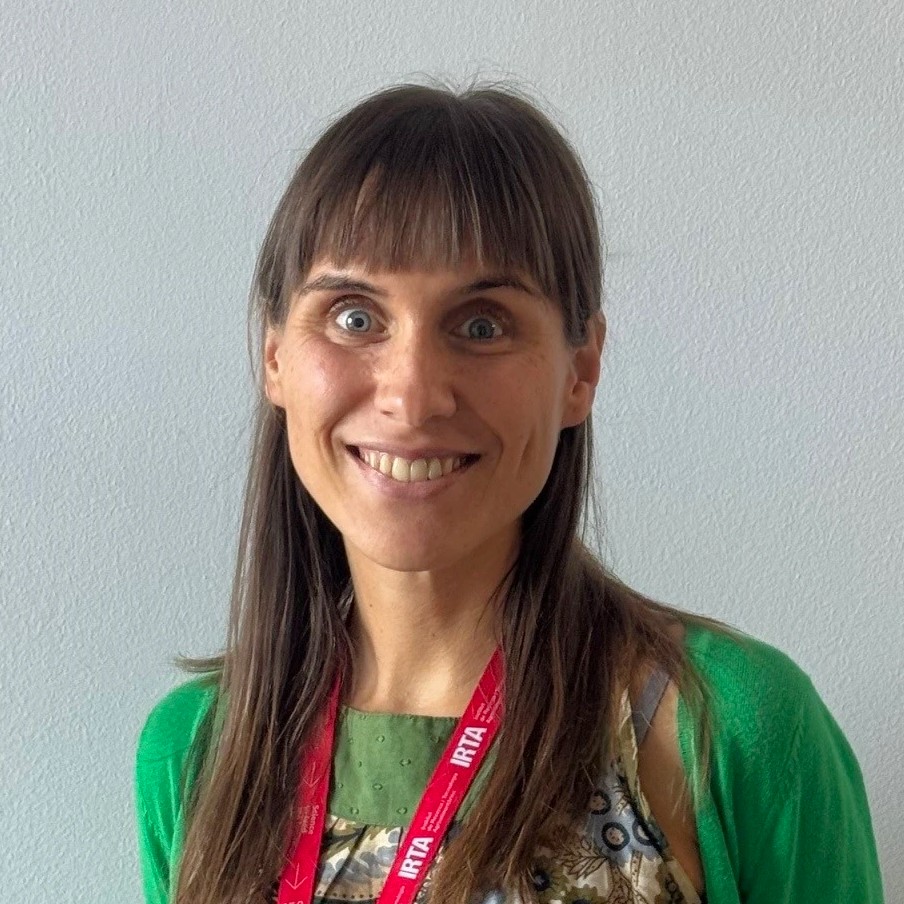

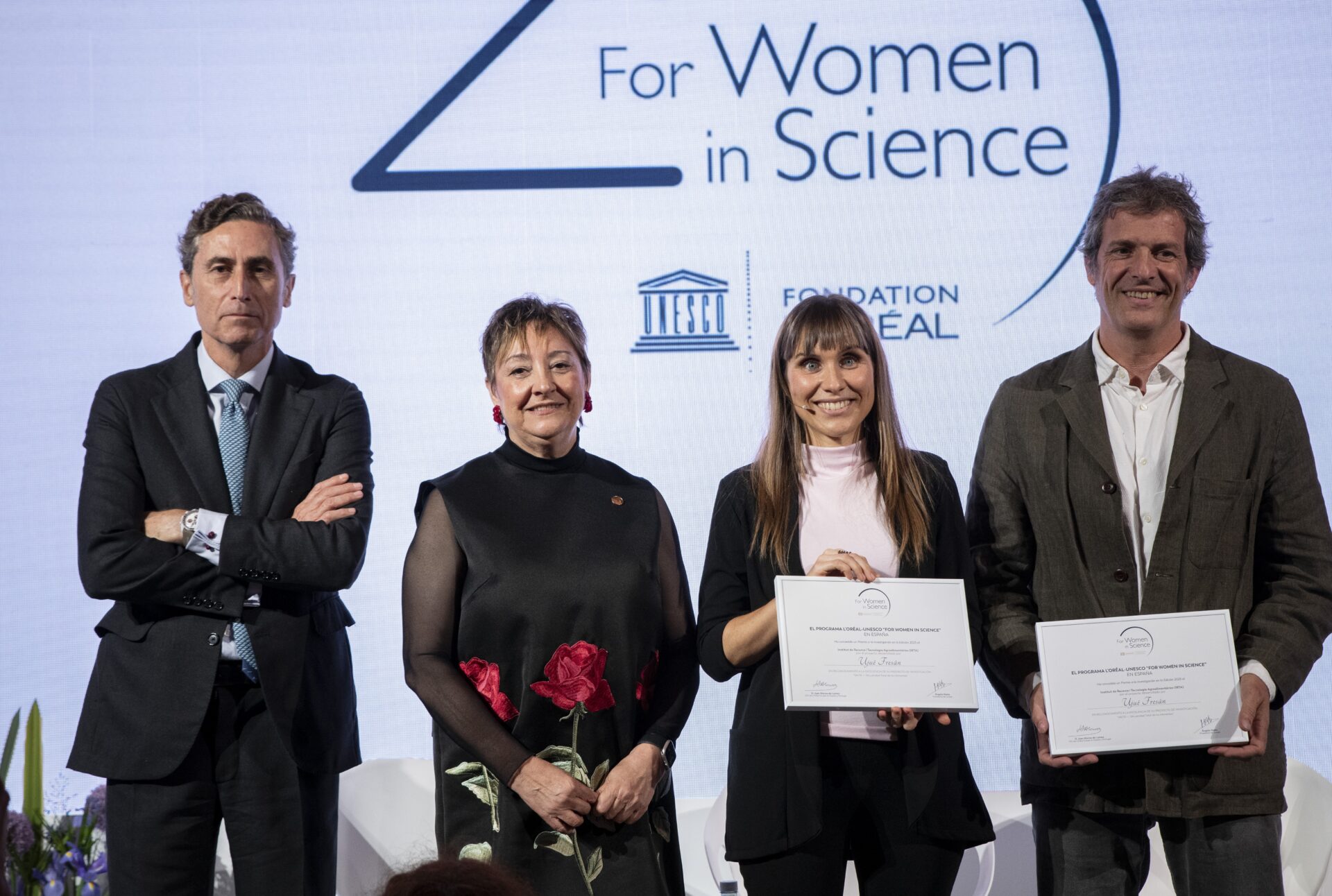
In late April, Ujué Fresán, a researcher within the Sustainability in Biosystems programme at the Institute for Agri-Food Research and Technology (IRTA), was one of the five Spanish female scientists under the age of 40 recognised by L’Oréal and UNESCO’s For Women in Science programme for carrying out cutting-edge research projects.
Fresán focuses her work on sustainable food – an area of research with an adjective in the name that she hopes will no longer be necessary in a few years’ time.
We took the opportunity presented by the news of the award to speak at length with her about her career and how we can look after our health and the environment through the way we eat.
As well as being a recognition, this award comes with a grant of 15,000 euros for one of the projects you’re leading at IRTA, which we’ll be discussing in a while. How did you receive it?
It was a surprise. Even more so when I saw the research topics of the other winners. One was on neuroscience, another on heart transplants, another on rare diseases… These are topics that attract a lot of attention. And yet, there was a prize for research into food, a part of daily life, but with a transformative potential that is often underestimated. I was pleased that it was recognised.
Did you have to apply to be eligible for the awards?
Yes. To be eligible, you must outline your career history and design a project that can be carried out over the course of a year. The organisation where you work submits the application, demonstrating its support. And that’s how it went: when I joined IRTA, as well as applying for funding for larger-scale projects, we saw the opportunity to apply for these awards.
You joined IRTA almost nine months ago, in September 2025, having come from ISGlobal. Could you give us some background?
Perhaps I can explain my career path to give a better understanding.
Go ahead.
I’m a pharmacist, I did a master’s in public health, and my PhD was in Biomedicine. Specifically, my thesis was on molecular biology and, more specifically, on how genes are expressed in flies.
Flies.
I really enjoyed doing my thesis, but the subject didn’t motivate me. So, I started looking for a way to get back to what I really loved: public health and nutritional epidemiology. I wanted to stay in Barcelona, where I’d done my PhD, but all I could manage without any experience in this field was an internship at the University of Navarra, where I’d done my degree. After a month’s internship and writing a scientific paper in such a short space of time, they hired me as a postdoc. Shortly after starting, I came across a document that wasn’t about healthy eating, but about sustainable diets.
Your topic.
It changed the way I view food, research and life in general. I suggested to the University of Navarra that I dedicate my contract year to researching in sustainable food, and they told me to go ahead, even though they didn’t have any research programmes dedicated to this field. And it went very well: in a year, we published five articles on this topic, one of them in collaboration with a group from Italy. One day, my boss presented our findings at an international conference where there was a researcher from the US looking for a postdoc with expertise in sustainable food. He asked me to go there to work with him.
And you said yes.
I spent two years in his group (Environmental Nutrition Research group). I ended up specialising in vegetarian diets and Life Cycle Assessment (LCA), which is a tool for calculating environmental impact.
There is a Life Cycle Assessment group at IRTA.
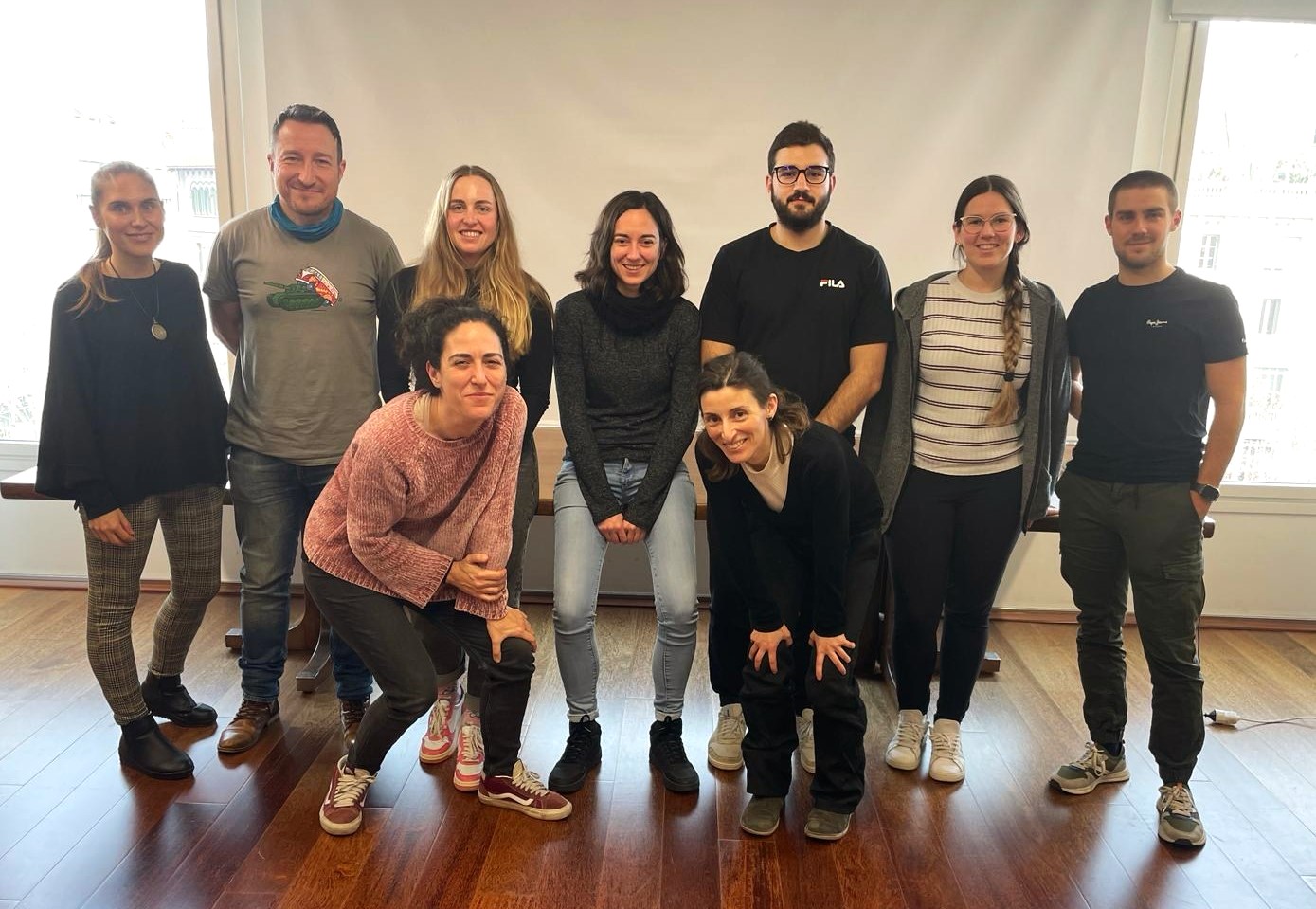
Yes, I’m part of this group. But it’s taken me more than six years to get here. After two years in the US, I wanted to return to Spain, hoping to find work in nutrition in Barcelona. No luck. But the Navarre Public Health Agency gave me the chance to continue in public health and epidemiology, albeit in infectious diseases: first I worked with HIV patients and then on COVID-19 issues. In December 2020, the opportunity at ISGlobal finally came along: my research focused on changes in eating behaviour through digital tools, promoting the population’s adherence to healthier and more sustainable diets. I spent three years there as a postdoc. Meanwhile, I applied for the Daniel Carasso Fellowship and was awarded one of its three grants to research sustainable food as a principal investigator. With grants like this, it’s possible to break through the postdoc glass ceiling and lead your own research line; otherwise, it’s almost impossible. While working on this line of research at ISGlobal, I applied for the Ramón y Cajal grants: I won one and decided to come to IRTA as a principal investigator. I was really looking forward to it. I had been in contact with IRTA for some time. The line of research I lead is called Study and promotion of sustainable diets.
… The conclusion is that you must keep moving forward to research what you’re passionate about…
Some days ago, someone told me that I’m a lucky person. Perhaps I have been lucky, but things haven’t just come out of nowhere. I’ve worked hard for it; I’ve fought tirelessly to be able to work on what I’m truly passionate about.
You mentioned the ‘click’ you felt when you read about the concept of sustainable food, of sustainable diets. Is it a new concept, then?
The term ‘sustainable diet’ was coined in 2010, at a FAO conference in Rome. As early as the 1960s, people began talking about the environmental impact of our food choices, and in the 1990s a review was carried out on the effects of the Mediterranean diet on the environment. But, really, back then, nutritionists had little concern for the environmental impact, and environmentalists were more concerned for oil or gas than for food. It has been only in recent years that more work has begun on this. In fact, when I began my research, there were very few groups in Spain working on sustainable food. And these groups are increasing, because it is almost an obligation.
Within your line of research, the project that won the L’Oréal and UNESCO award is called SALTA: SALubridad Total de los Alimentos (total healthiness of foods). What do we mean when we talk about healthiness?
Healthiness refers to the effects on health. In nutritional epidemiology, we have always assessed how certain foods increase or decrease the risk of disease. However, about five years ago, we conducted a study involving more than 2,400 healthcare professionals in Spain to see what they knew about sustainable food. In short, most knew practically nothing. One of the questions was: of the three dimensions of sustainability related to food – human health, the socio-economic dimension and environmental impact – if you had 100 points, what score would you give to each of them? The environment scored just 17 points. Health was the priority, followed by the socio-economic aspect. It was as if the environmental aspect was alien to human beings, as if those of us concerned about environmental issues were entirely altruistic, beings of light. But the reality is that environmental problems are problems for human beings.
It is becoming increasingly clear.
The latest studies I carried out at ISGlobal, in which researchers from IRTA were already involved, focused on translating environmental damage into human health impacts. For example, climate change increases the risk of infectious diseases. Or air pollution affects cardiovascular and respiratory diseases. Now, the SALTA project aims to combine both effects of diet on health: the direct effect and the indirect effect caused by environmental damage. We want to find a single indicator and, ideally, turn it into a food label. Summing it all up using the same units will make it easier for consumers.
With the pace of life these days, it’s quite a pressure having to be so well-informed to shop healthily and sustainably. Labelling could be an interesting solution, couldn’t it?
It’s one of the tools. We need to combine education with policy. We need education so that people know how to make good choices, whilst also understanding why policies are put in place to promote sustainability. In other words, education alone isn’t enough. Otherwise, just look at how we’ve got used to the warnings on cigarette packets about how harmful they are. Therefore, policies are needed, and pricing policies, for example, can help make healthy and sustainable food more affordable.
How can research like yours be put into practice so that it has a real impact on society?
By covering all aspects. From theoretical knowledge to the most practical applications, and for all audiences. For example, with an app to promote sustainable diets. Or with educational materials for children and young people. Or with tools for healthcare professionals. And, as we said, by providing knowledge for effective, science-based labelling.
IRTA serves the Catalan agri-food sector. It’s important to make things easier for it so that it can transform in a sustainable way…
I work mainly with consumers, but yes. Also, I am a daughter of farmers. Producers need to understand why certain policies are being imposed on them and to have support to make this transition. At the same time, policies must be logical and to have scientific rigour.
You argue that, to contribute to a more sustainable diet, we should incorporate more plant-based foods and balance them with animal-based foods.
It is clear that we must feed a growing population in a healthy way using finite resources. And we can hardly do this given the way most people eat today. If we want a sustainable food system, we all have a responsibility, from the producer to the consumer. In terms of diet, it is key to balance the consumption of animal-based foods with plant-based ones. It is much more efficient to consume pulses or cereals directly. And this does not mean that we must become vegans. There are studies that clearly show that, with an omnivorous diet, it is possible to stay within planetary boundaries (the thresholds that must not be exceeded to maintain the Earth’s stability), but with a lower consumption of animal protein than we have now, closer to that of the traditional Mediterranean diet, as recommended by organisations such as the EAT-Lancet Commission.
Especially in certain places, such as Europe or the US, isn’t it?
Exactly. The current diet in many high-income countries is far from being considered environmentally sustainable, and it is urgent that we become aware of this and find ways to balance it. The traditional Mediterranean diet, as I was saying, is a good example of that balance.
Any guidelines?
That, if we have two main meals a day (lunch and dinner), at least one should consist of plant-based protein. Legumes, in particular. For example, having at least seven main meals a week containing pulses, and the other seven divided into two with white meat, two with eggs, two with fish and one with red meat.
An example, then, of how to plan a sustainable diet.
The question isn’t what diet you follow, but how you follow it. A vegan diet can be perfectly healthy or based on fizzy drinks, crisps and biscuits, and an omnivorous diet can be based on fast food or follow a Mediterranean pattern, and the effects on our health will be completely different.
That’s why it’s better to talk about healthy diets or lifestyles, rather than healthy foods, isn’t it?
Yes. At first, we were talking about nutrients. And we used to say that a food was good or bad depending on whether it contained certain nutrients. Then, we realised that it wasn’t the case. So, we started talking about foods instead. We now know that it is better to talk about dietary patterns, about whole diets. The effect of a food does not depend solely on that food, but on what it is replacing (because we can only eat a certain amount of food each day), and on the other foods it is consumed with.
And what about the sustainability of locally sourced or organic food?
Sustainability has different aspects, not just the environmental one. If we look at the environmental aspect, local food does not necessarily have a lower impact, even though common sense might tell us it does. Transport contributes little to a food’s environmental impact. What matters far more is the type of food and the techniques used to produce it. A classic example is tomatoes in the Nordic countries: it has less impact to produce them in Spain, and export them there, than to have to set up greenhouses using energy and lighting to produce those tomatoes. It’s another matter if you want to promote local produce to support employment in your area.
Social and economic sustainability.
We need to look at the whole picture. But even local produce can sometimes offer poorer conditions for people. I think we need to look a little beyond whether something is local to determine whether a food product is truly sustainable. And as for organic food, simply being organic isn’t enough for us either. It’s worth exploring the best approach, even when it comes to choosing between conventional and organic options.
That’s where regenerative practices come in.
Yes. Is it more important to tick off a list of requirements and have the eco-label, or to genuinely care about the environment? Something labelled as eco-friendly might be wrapped in loads of plastic, flown in from the other side of the world, or irrigated without restraint because there are no regulations on water use in that area.
It’s not easy to choose as a consumer… We’ve talked about protein sources… What else?
If you ask me in general, when it comes to sustainable diets, pulses are the kings of protein: the healthiest, with the lowest environmental impact and the cheapest. Other recommendations would be eating five portions of fruit and vegetables a day. Prioritising whole grains, which are a good source of energy, with fibre and nutrients. Ideally, drink tap water, as it has a much lower environmental impact. Minimise sugary soft drinks and alcoholic beverages. Make highly processed products, or foods high in salt or sugar, the exception. It’s fine if you fancy a pastry one day, but don’t make it part of your routine. As for dairy products, for environmental reasons, one portion a day is recommended, the equivalent of two yoghurts or a glass of milk. Calcium can be obtained from many other plant-based sources. I also think it’s important not to demonise fats, but to choose them from high-quality sources, such as extra virgin olive oil or nuts. And, in general, regardless of the type of food in question, let’s look at the sustainability policies of the shops where we buy and the brands we prefer, and do a bit of research.
We’re speaking from a great distance today. You’re in Brazil.
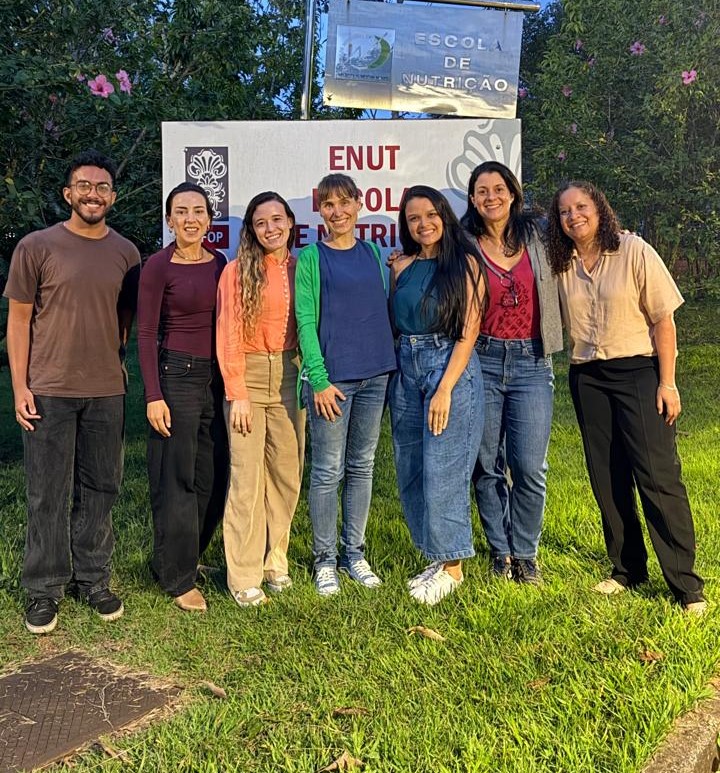
For many years now, I’ve been teaching a couple of online courses on sustainable food at the Faculty of Nutrition at the Federal University of Ouro Preto. I’ve come here now to advise them, as they want to launch a research programme on sustainable food and have secured funding. We’d also like to establish a collaboration with IRTA and for a Brazilian PhD student to come to Catalonia to work with us.
How would you like to have progressed in five or ten years’ time?
I would like us not to need a specific line of research on sustainable food, because sustainability is already an integral part of all food-related research. And I would also like to have a stable job. In this regard, I would like to see greater recognition of the importance of scientific research in Spain and Catalonia. During the COVID-19 pandemic, a great deal of funding was secured for research. So, it is possible, and it is an investment in the future.
Thank you very much and congratulations on the award.
__________________________
More recent interviews with researcher Ujué Fresán: