An international team, led by IRTA, has analysed the ruminal microbiota of almost 2,500 cows from five breeds and five countries, and has discovered groups of bacteria, named “Ruminosignatures” or “microbial signatures”, which are heritable and directly related to methane emissions and the animal’s feed efficiency.
The study, published in The ISME Journal, a leading journal in microbial ecology, opens the door to incorporating microbial markers into cattle genetic improvement programmes, with the aim of selecting more efficient animals with a smaller environmental footprint.
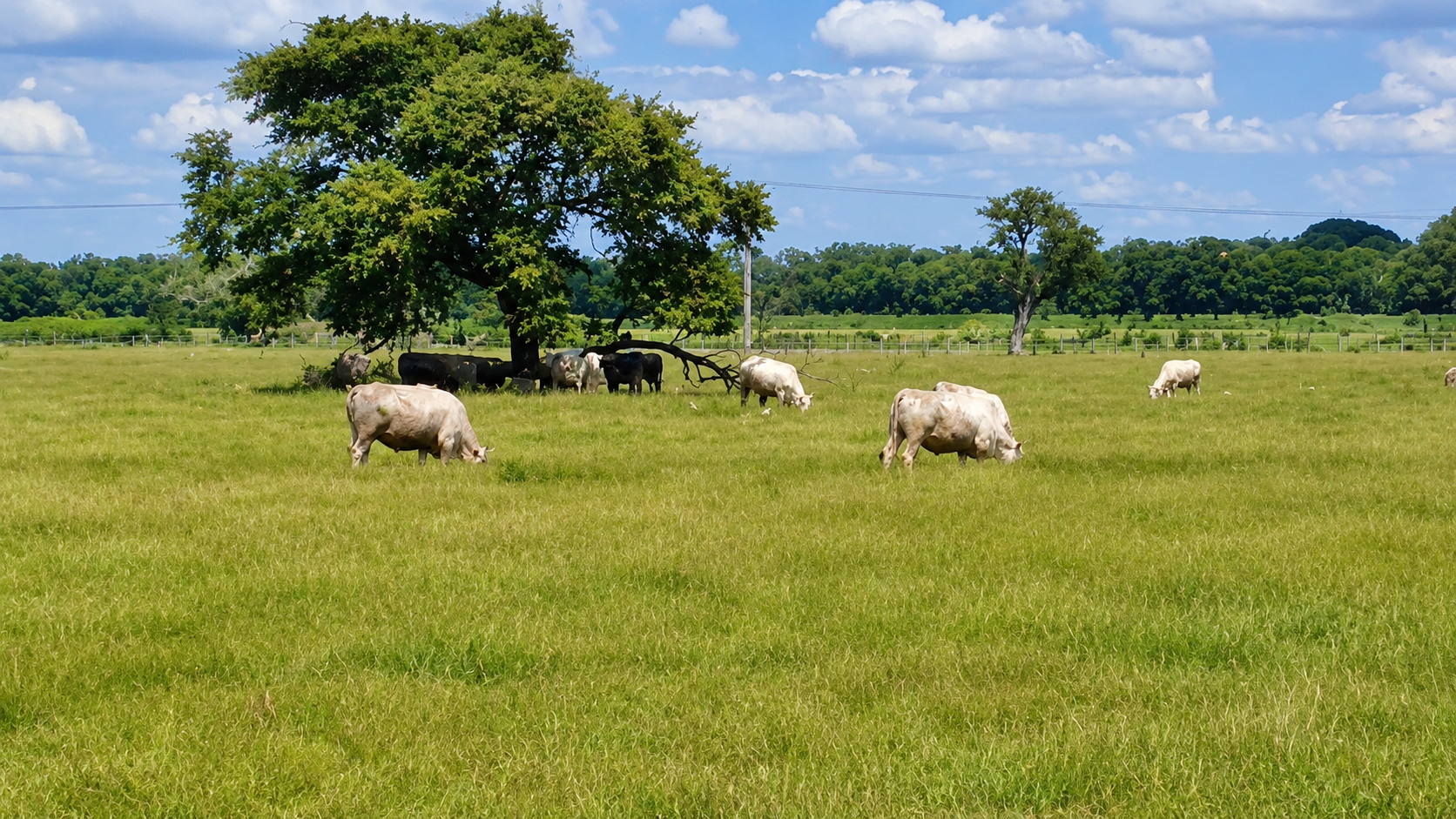
Cattle farming is one of the main sources of methane emissions, a greenhouse gas with an even higher warming potential than carbon dioxide. Much of this methane originates in the rumen, the first compartment of the cow’s complex stomach, which works like a huge natural fermenter: inside it, billions of microorganisms “work” breaking down the grass and forage the cow eats, releasing in the process nutrients and metabolites essential to the animal… and also methane. This same microbial ecosystem is ultimately responsible for how the cow makes use of the feed it consumes and how much methane it releases in the process.
It is possible to select animals that emit less methane. The problem is that measuring directly the methane emitted by each animal, in order to genetically select those that emit the least, is an expensive task that is very difficult to apply at scale to the thousands of animals managed by genetic improvement programmes. Finding an indirect, reliable indicator that is simpler to obtain has become one of the major goals of research in this field.
In an effort to find this indicator, a team led by IRTA, with the participation of Ben-Gurion University of the Negev (Israel), ICBF, Teagasc and the University of Galway (Ireland), the University of Alberta and the University of British Columbia (Canada), CSIRO (Australia), the University of Nottingham (United Kingdom), INRAE (France), Università Cattolica del Sacro Cuore (Italy) and Luke (Finland), among other institutions, analysed rumen samples from 2,496 animals of the Holstein, Angus and Charolais breeds, as well as some commercial crossbreeds, from the United Kingdom, Italy, France, Ireland and Canada.
Instead of studying hundreds of microbial species separately, the researchers applied a statistical technique called “non-negative matrix factorisation”. This is a method capable of detecting patterns that recur across large amounts of data, and here it is used to group together microorganisms that tend to coexist, as if they shared the same ecological niche within the rumen. The result was 14 of these bacterial groups, which the team has named Ruminosignatures or microbial signatures, capable of explaining between 96% and 99% of the differences in microbial composition observed between the animals.
The study is signed as first author by IRTA researcher Ioanna Theoni Vourlaki. She is joined, on behalf of the Institute and as members of the Animal Genetics and Breeding programme, by researchers Raquel Quintanilla, Miriam Piles and Yuliaxis Ramayo-Caldas. The latter highlights the significance of the work: “Until now, each study of the ruminal microbiome focused on a single breed or country, which made it difficult to know which findings were truly generalisable. By analysing almost 2,500 animals from five countries, we have been able to identify microbial signatures that replicate robustly, and these are precisely the ones with the greatest potential for application in real genetic improvement programmes”.
Of the 14 groups identified, two appeared systematically across all the breeds, countries and production systems analysed: one dominated by the genus Prevotellaand another by a lesser-known genus, UBA2810. This second group, which the authors have named RS_UBA2, is the true protagonist of the study. Animals that showed greater presence and abundance of RS_UBA2 in the rumen consistently emitted less methane, a relationship that was repeated across the five populations analysed and which a joint meta-analysis confirmed as statistically robust, even after applying the most stringent statistical controls. In several of the populations, moreover, a greater abundance of this Ruminosignature was associated with better feed efficiency: the animals gained more weight or produced more milk for every kilo of feed consumed.
The team went a step further and found that the abundance of the different Ruminosignaturesin each cow’s rumen depends in part on its genetics: between 9% and 58% of the differences between animals, depending on the population, have a heritable basis. In other words, this is not simply an effect of diet or management, but a trait that, at least in part, could be passed on from parents to offspring and, therefore, selected for like any other production trait.
Why would this bacterium reduce methane emissions? Analysis of the UBA2810 genome points to a plausible biological explanation: this microorganism would compete with methanogenic archaea, the microbes responsible for producing methane, for the hydrogen available in the rumen, diverting that hydrogen towards other uses.
The practical implication of the finding is direct: if a microbial signature such as RS_UBA2 is detectable across different livestock populations, heritable, and consistently associated with greater feed efficiency and lower enteric methane emissions (the methane produced by animals during digestion), it could be incorporated as an indirect indicator in livestock genetic selection programmes, complementing the animal’s genomic information and reducing the need for direct methane measurements, which are far more costly.
The study notes, however, that alongside these two “universal” signatures there are others specific to each breed, diet or production system, which suggests that any strategy to modify the microbiome, for example through the use of feed additives, will need to be adapted to the context of each population and system rather than applied uniformly.
As part of its commitment to open science, the team has made publicly available the codes used, as well as the reference matrix used in the analysis, so that other research groups can compare their own data with this common framework without having to repeat the entire analysis process from scratch. This will make it easier to compare studies in a field where methodological differences have traditionally been an obstacle.
The study is part of HoloRuminant, a research project funded by the European Union’s Horizon 2020 programme, involving teams from several European countries. Its aim is to understand how the microbiomes that inhabit the different parts of ruminants’ bodies (mouth, rumen, gut) connect with one another, and how this connection influences their health, welfare, production efficiency and environmental footprint, including methane emissions.



Statistical genetics and pig breeding and genetics researcher

Data science, quantitative genetics and rabbits breeding researcher specialist