Canviar per alguna foto xula de la planta de biogàs a tot l’ample que doni i que no es veig extrany
A biogas plant is a facility that converts organic waste from the farms and feed mill at Mas Bové into useful resources. It works by reproducing, under controlled conditions, a process that already occurs in nature: anaerobic digestion. Inside a sealed, oxygen-free environment, microorganisms break down the organic matter contained in pig slurry, poultry litter and feed residues, transforming it into two products.
Methane is a greenhouse gas that is released into the atmosphere when livestock manure accumulates in lagoons or storage tanks, especially when they are covered. The biogas plant uses these livestock effluents to generate methane under controlled conditions in a closed environment and burns it to produce energy. As a result, it helps reduce the environmental impact of the Mas Bové farms.
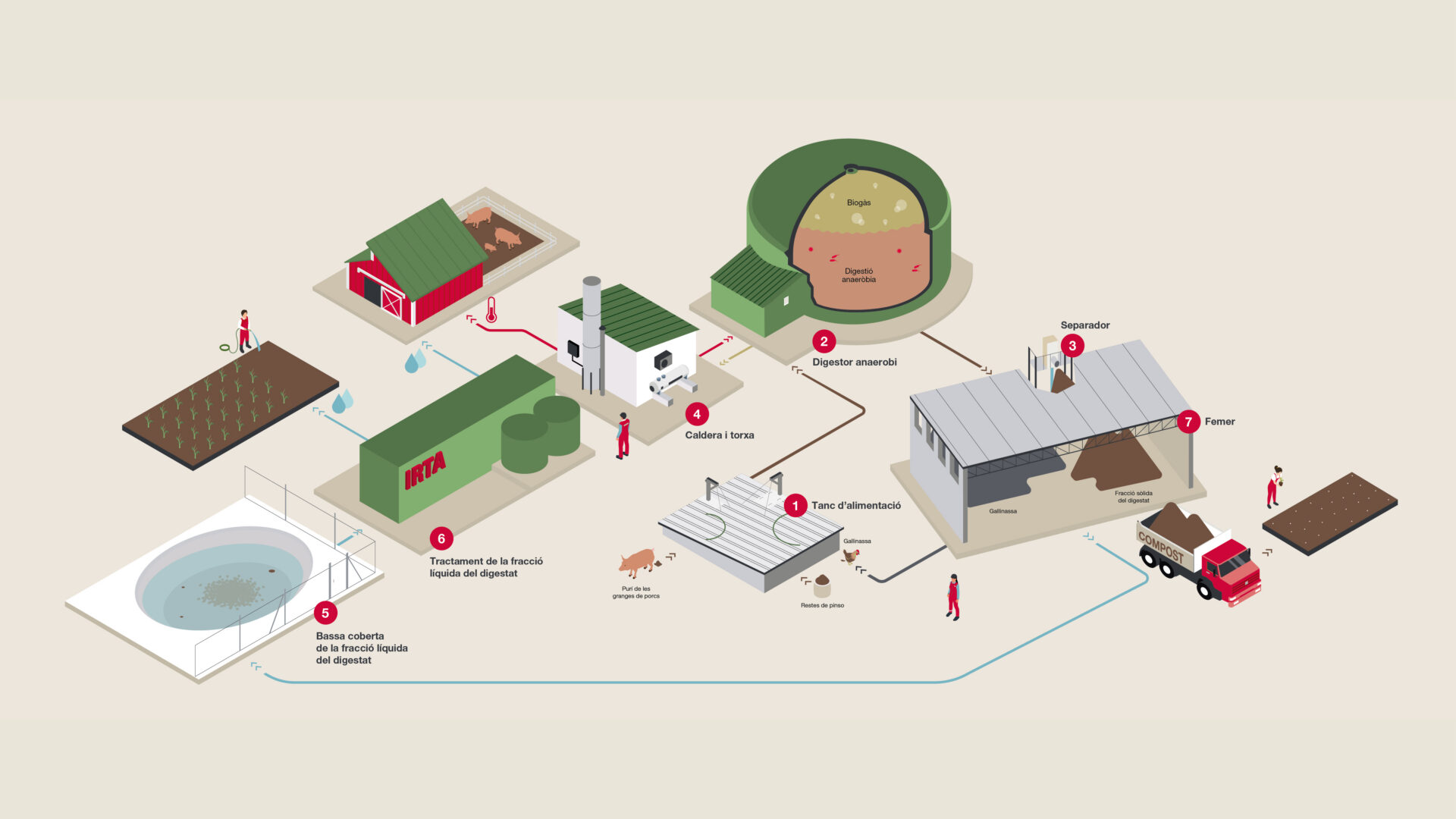
The energy generated heats the sow farrowing unit and maintains the temperature of the anaerobic digester. As a result, renewable energy produced on the farm itself has replaced the propane gas that was previously used. The organic fertiliser obtained from the digestate is applied to the fields at Mas Bové, reducing manure management costs. The recovered water is used for both irrigation and the cleaning of the pig and poultry facilities.
Biogas is a renewable energy source obtained through a biological process known as anaerobic digestion, which transforms organic matter (found in pig slurry, poultry litter and other organic waste) into a mixture of gases composed mainly of methane (CH₄) and carbon dioxide (CO₂), together with other trace gases.
A biogas plant is a facility designed to produce a renewable gas (biogas) from the treatment of organic waste through anaerobic digestion (in the absence of oxygen). This process makes it possible to generate energy (thermal or electrical) while also recovering water and fertiliser.
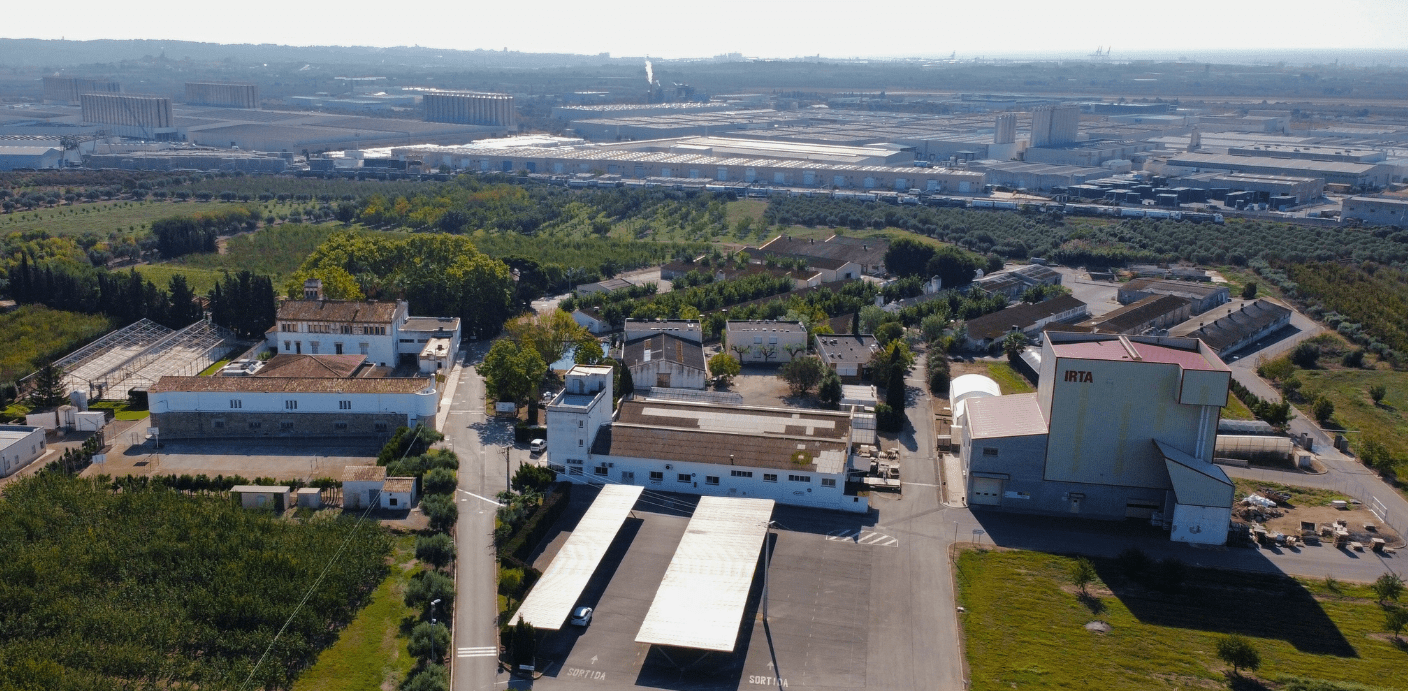
The IRTA Mas Bové plant is also a research and open-knowledge facility. In fact, it is the first biogas plant in Catalonia and in Spain to be managed by a public research institute while simultaneously providing a service to a working farm.
Foto xula general planta
The project is part of IRTA’s commitment under one of the eight scientific strategic objectives of the 2024–2027 Strategic Plan: Promoting the bioeconomy through the valorisation of organic waste and agri-food by-products, a circular model that creates value from the sector’s biological resources beyond energy production.
This strategic objective focuses on reducing waste and making use of the waste that must inevitably be generated by turning it into a valuable resource and reintegrating it into the agri-food chain. This is the case for livestock manure and other residues, such as feed residues from the Mas Bové feed mill.
The bioeconomy, a circular economic model based on the use of renewable and local natural resources, is an essential tool for addressing today’s major food-system challenges, both global and local. These include mitigating climate change, improving soil health, and achieving more efficient water management.
The process begins here. Pig slurry, poultry litter and feed residues from the feed mill are discharged into this tank, where they are mixed into a homogeneous blend known as the feed mixture. This is the raw material that is then pumped into the anaerobic digester.
Mixing wastes from different sources and digesting them together is known as co-digestion. The combination balances the nutrients provided by each waste stream and stabilises microbial activity, allowing the digester to operate more efficiently and produce more biogas.
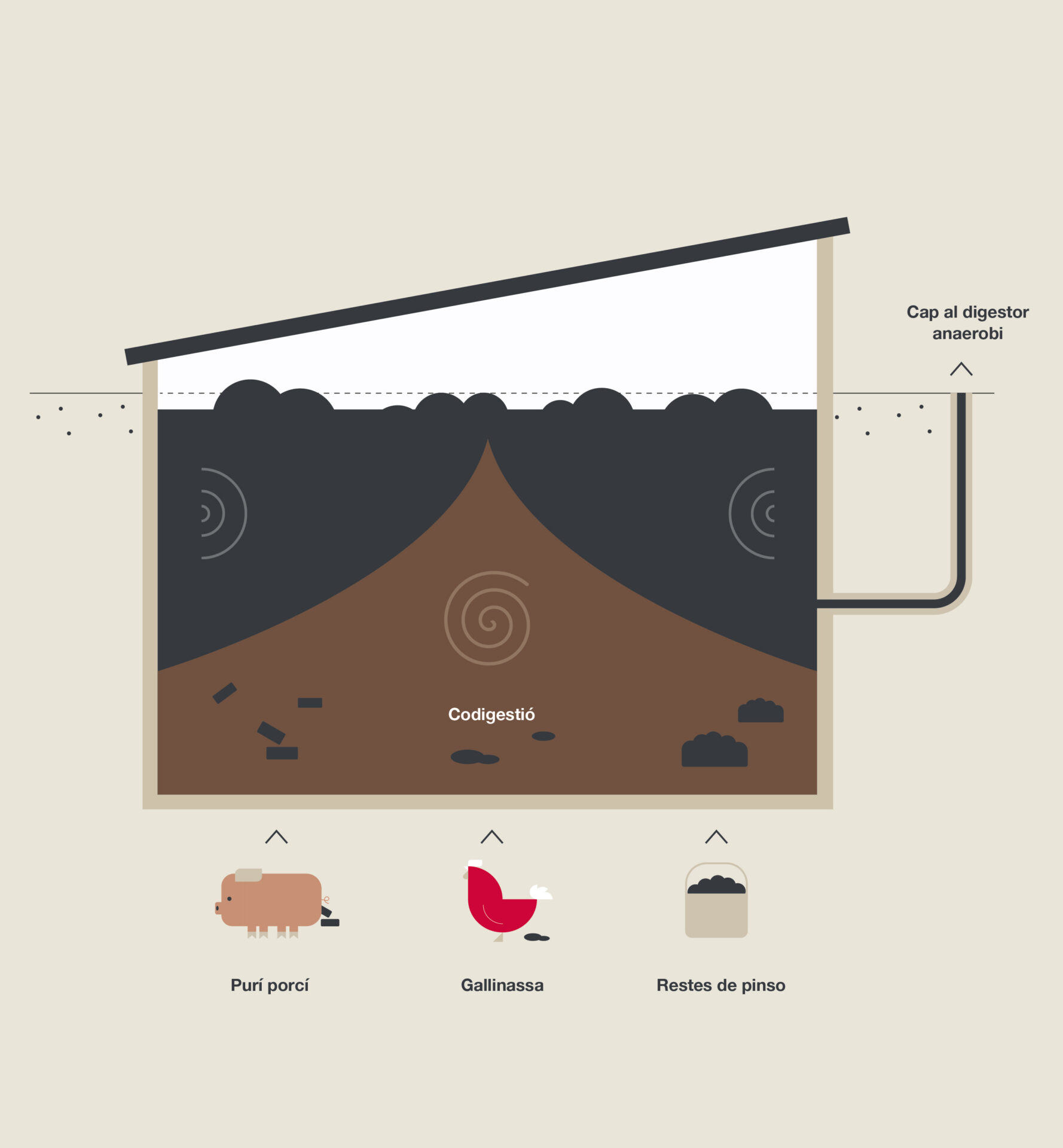
The tank has a capacity of 210 m³, is partially buried and covered to reduce gas emissions. Inside, a mixer keeps the feed mixture homogeneous, while an automatic pumping system regulated by level sensors transfers it to the digester. A total of 5,246 tonnes of feed mixture are prepared here each year.
Foto xula del tanc d’alimentació
The feed mixture arrives from the feed tank and enters the digester, the core unit of the plant. The interior is maintained at a constant temperature of 38°C and in the absence of oxygen. Under these conditions, bacteria and archaea break down the organic matter over several days. Two products are generated in this process: biogas and digestate.
Decomposition takes place through four stages that occur simultaneously inside the digester:
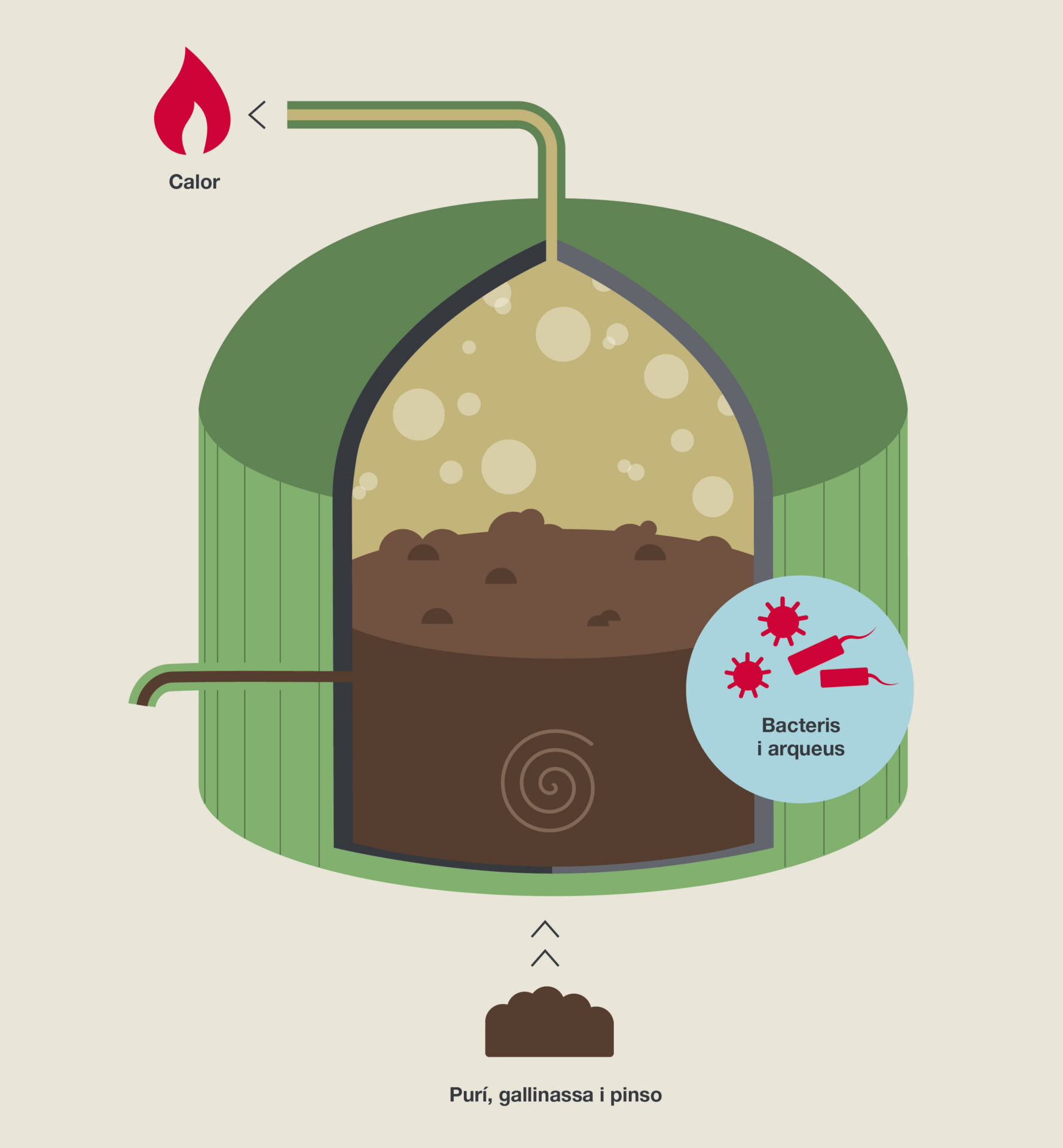
The digester has a total volume of 452 m³ and two side-mounted agitators that keep the mixture in motion so that temperature and pH remain constant. It produces 96,697 Nm³ of biogas per year, composed of 65% methane and 35% carbon dioxide, as well as 5,079 tonnes of digestate annually. A small portion of the biogas is burned to maintain the digester at its operating temperature.
Foto xula del digestor
The digestate leaving the digester is sent to the separator, where it passes through a filter-press system fitted with screens ranging from 300 to 650 microns, which separates it into two fractions with different properties:
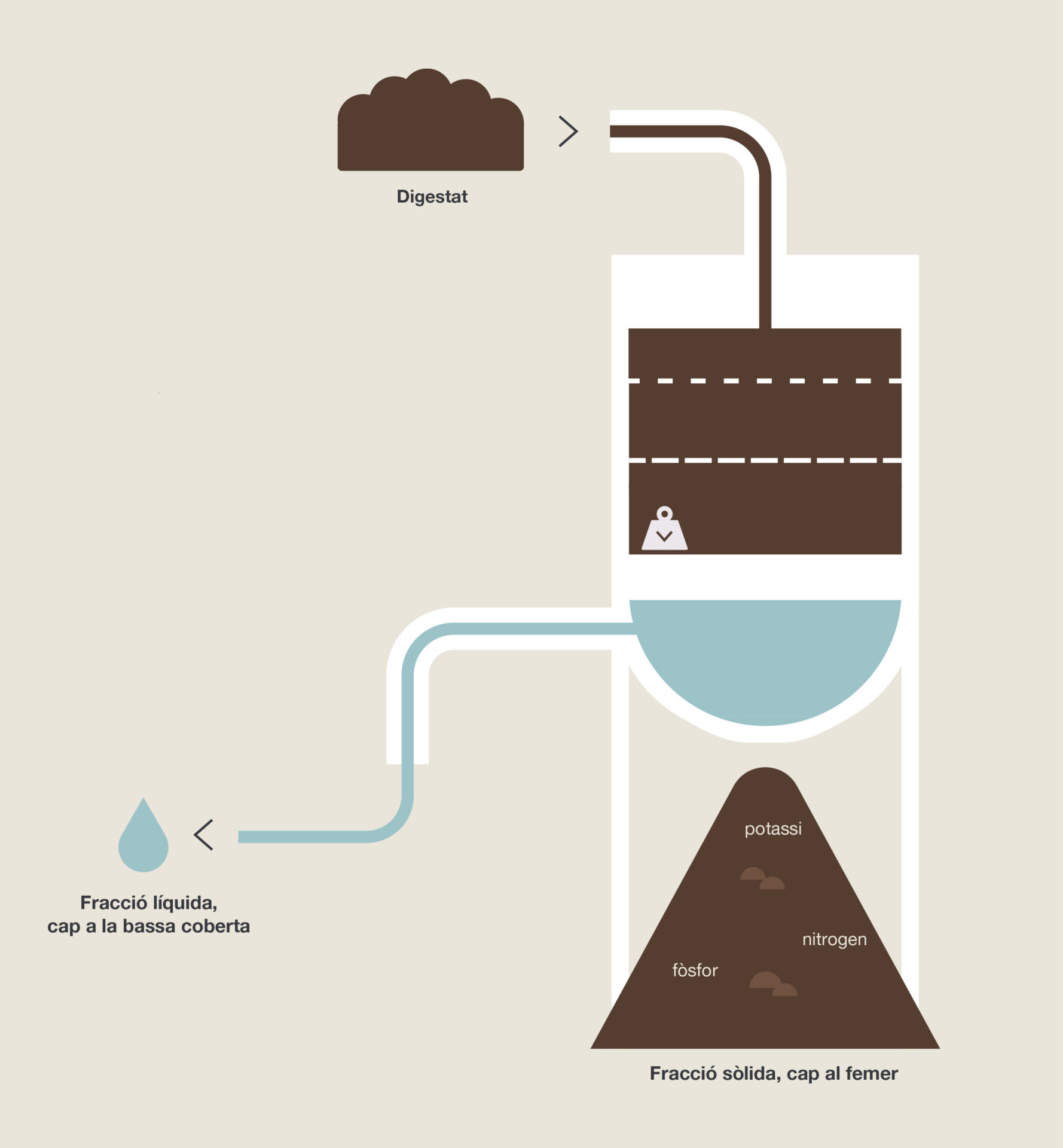
Digestate is rich in nitrogen, phosphorus and potassium, the essential nutrients found in any fertiliser. This makes it a valuable organic fertiliser for agriculture and helps close the nutrient cycle. Each year, 1,188 tonnes of solid fraction and 3,891 tonnes of liquid fraction are separated.
Foto xula del separador
The boiler is the unit where the biogas produced in the digester is burned. The combustion of biogas serves two purposes: maintaining the temperature inside the anaerobic digester and heating the sow farrowing unit. In this way, the farm generates thermal energy from its own organic waste.
The flare is a safety device. It operates when there is surplus biogas that the boiler cannot consume, or when the digester needs to be emptied for maintenance. Burning this gas in a controlled manner prevents methane from being released into the atmosphere.
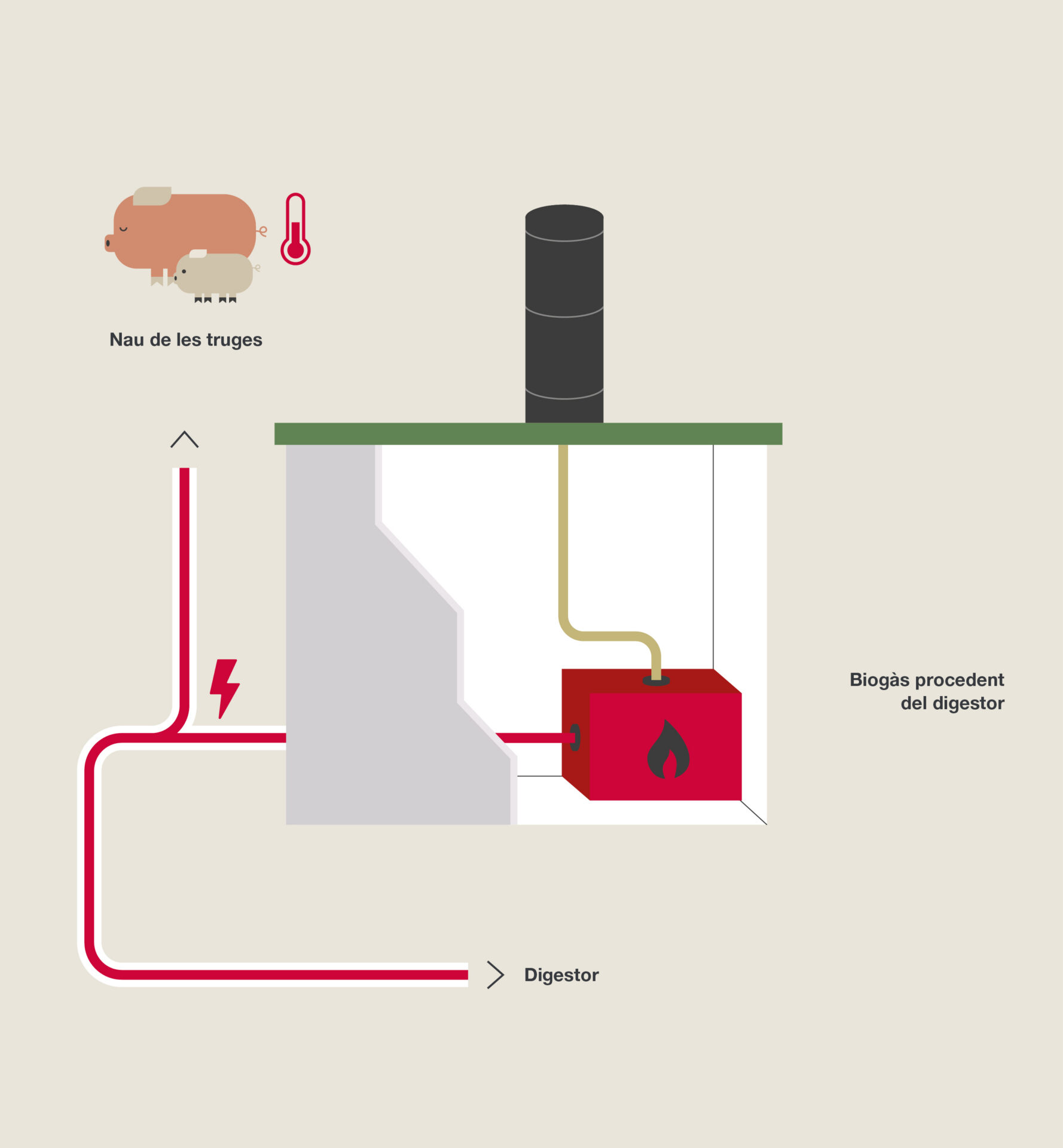
Before reaching the boiler, the biogas undergoes gas conditioning. Hydrogen sulfide (H₂S), a corrosive gas that could damage the equipment, is removed, water vapour is separated, and the gas is compressed so that it reaches the boiler under the appropriate operating conditions.
Foto xula de la torxa i caldera
The liquid fraction leaving the separator is transferred to the covered lagoon, a partially buried and covered storage tank. Here, the liquid is allowed to settle, and the suspended solids gradually sink to the bottom under the action of gravity in a natural sedimentation process.
The sediments that accumulate at the bottom are removed several times a year; part is sent to the manure storage area, while the remainder is used as fertiliser. The clarified liquid is then pumped to the treatment module, the final stage before water recovery.
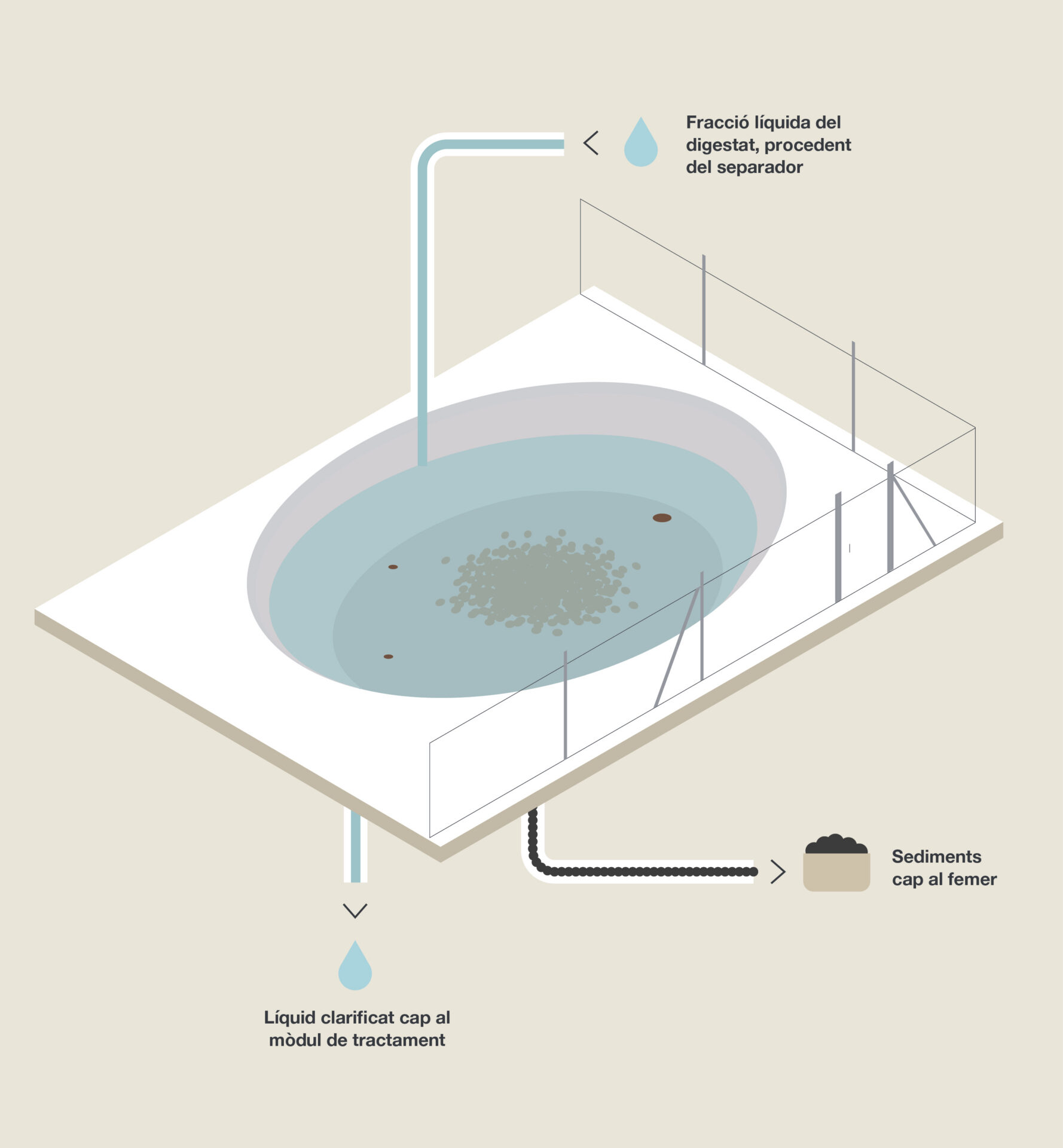
A partially buried and covered storage tank designed to reduce gas emissions, where the liquid fraction of the digestate is stored, with a total volume of 1,197 m³.
Foto xula de la bassa
The clarified liquid is pumped from the lagoon to a treatment module housed inside a container, where it is converted into recovered water suitable for farm cleaning and field irrigation.
The treatment process consists of three stages:
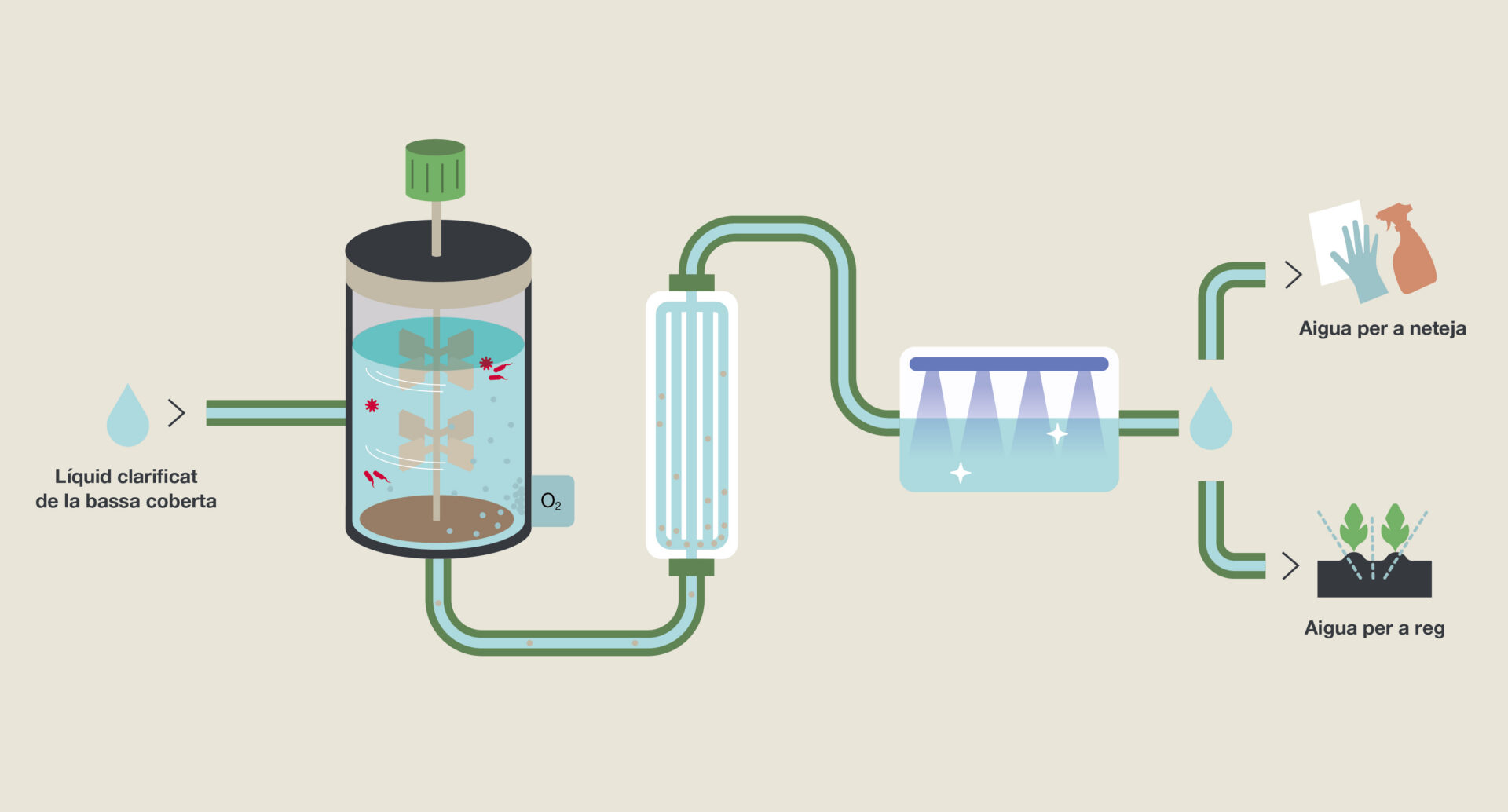
The treatment module also includes two external storage tanks that separately store the incoming clarified digestate and the outgoing recovered water. Each year, the module recovers 3,816 m³ of water suitable for cleaning and irrigation.
foto del modul de tractament
The manure storage area is divided into two sections according to the origin of the material:
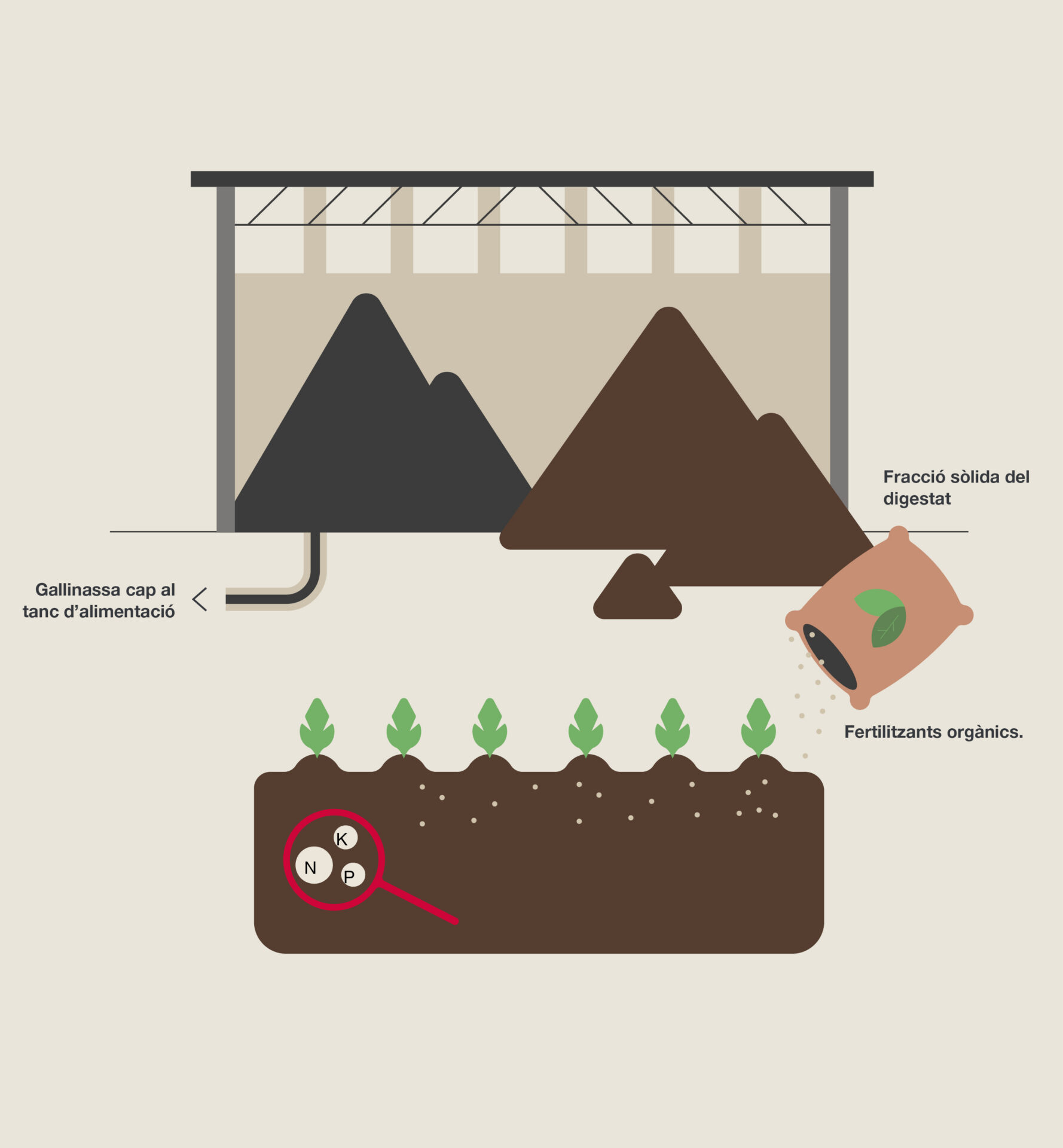
Land application follows the current waste management regulations, which govern application rates and conditions to ensure safe and sustainable use.
The concentrated fraction is rich in nitrogen, phosphorus and potassium and is used as a fertiliser for crops. It can also be mixed with other agricultural residues, such as pruning waste, and composted until it becomes a mature and stable organic fertiliser.
What entered the plant as waste leaves it as energy, water and fertiliser, ready to return to the farm. The manure storage area has a total covered surface area of 198 m². Each year, the manure storage area handles 1,262 tonnes of solid fraction.
foto xula del femer
This project has received funding under the incentive programme for grants supporting innovative biogas plant projects within Spain’s Recovery, Transformation and Resilience Plan.