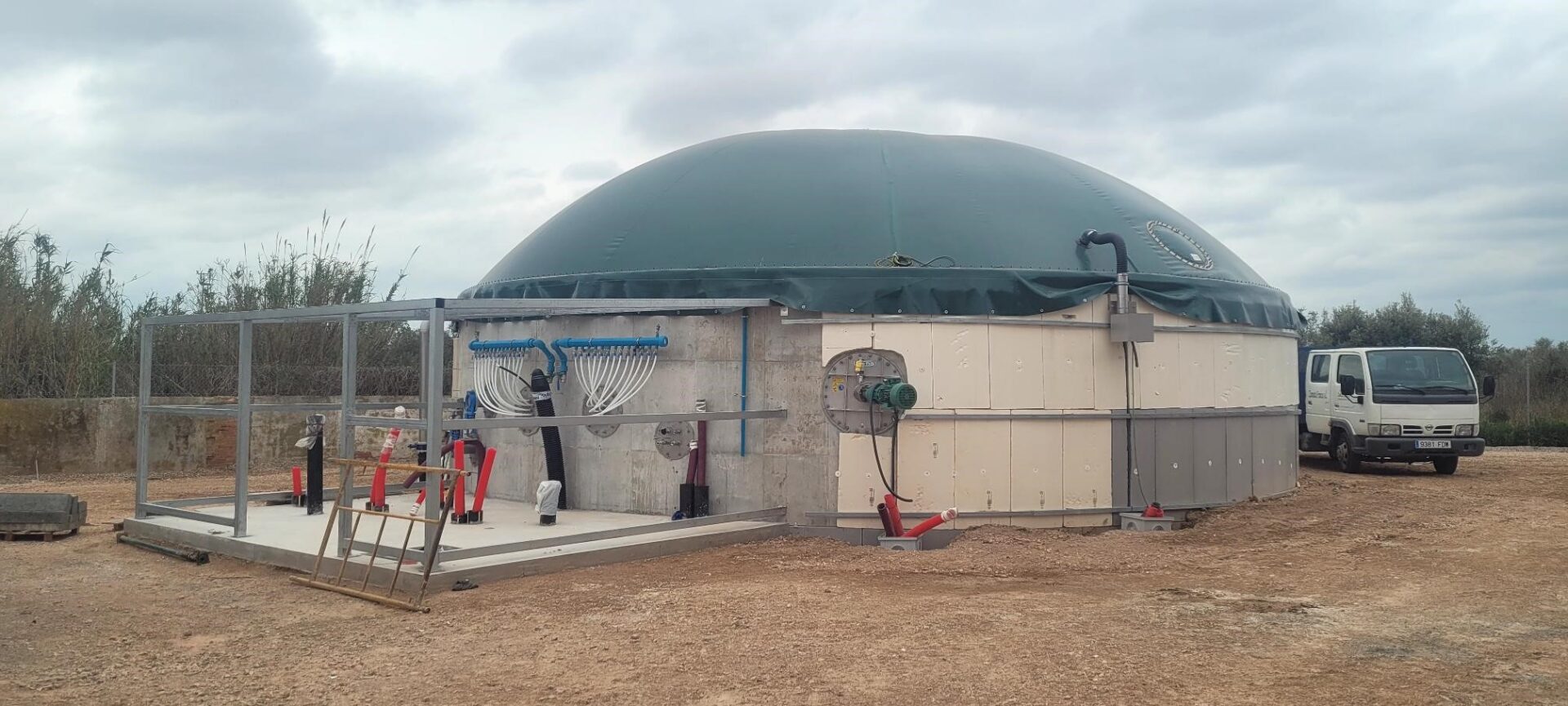
And another at the Mas Bové farm (Tarragona), where there are pigs and chickens.
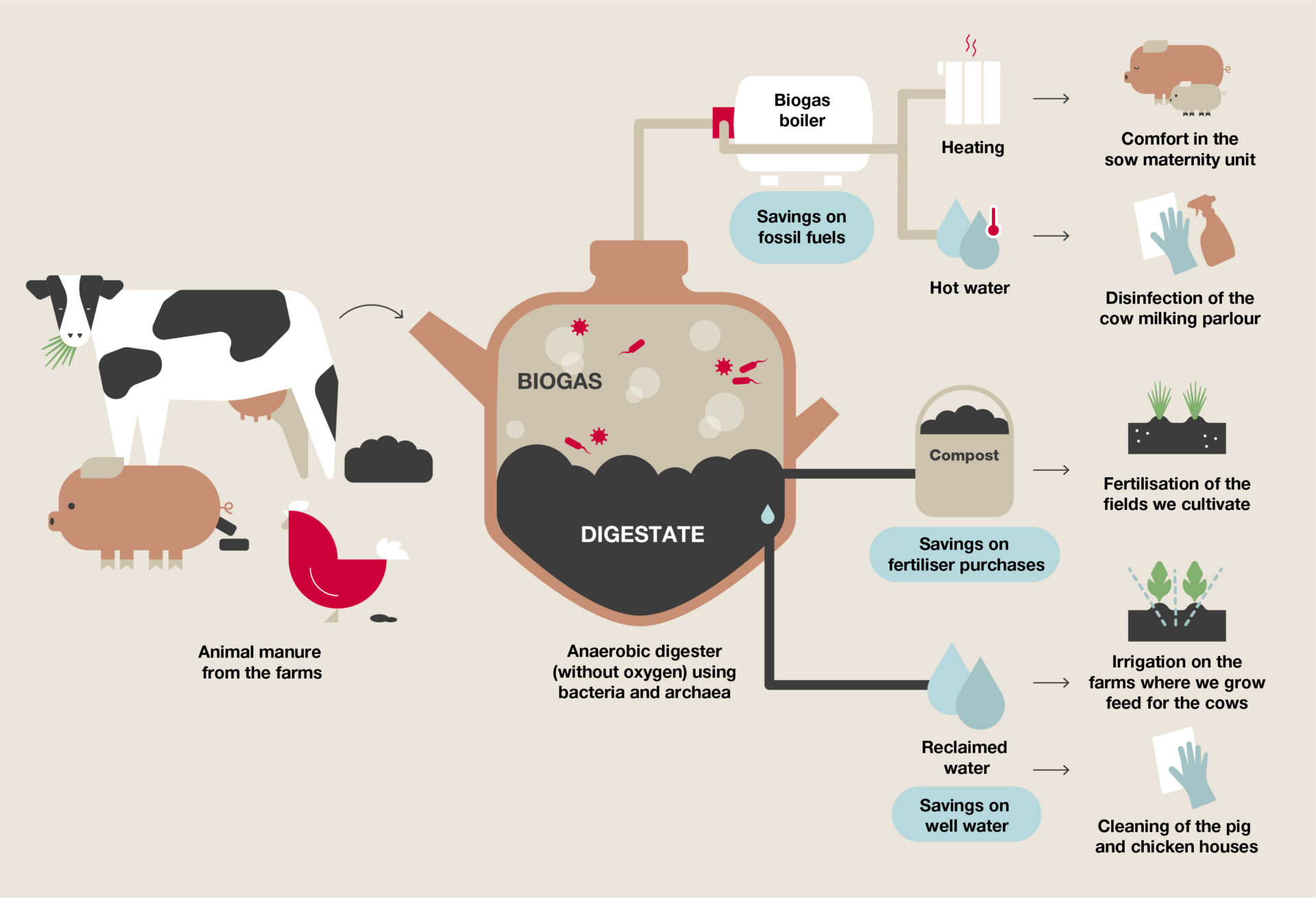
This infographic summarises how they will work:
So, on both farms:
We will convert manure into biogas
Through a digestion process carried out by anaerobic microorganisms: bacteria and archaea that work without oxygen inside a tank.
The technologies we will use on each farm will be different.
We will use the biogàs
Forheating (in the sow maternity unit at Mas Bové).
And for heating cleaning water (to disinfect the milking parlour for the cows at Monells).
We will make use of the remaining organic matter
It is called digestate, and we will separate it into two fractions:
The solid part will be converted into high-quality organic fertiliser (compost) thanks to the work of aerobic bacteria and fungi.
And the liquid part will be converted into water for irrigation (on the fields at Monells) and for cleaning (on the farms at Mas Bové).
All of this will enable us to:
Make our farms more self-sufficient and sustainable.
Collaborate with companies or projects wishing to test new technologies.
And demonstrate to the sector how these biogas plants operate and the results they achieve.
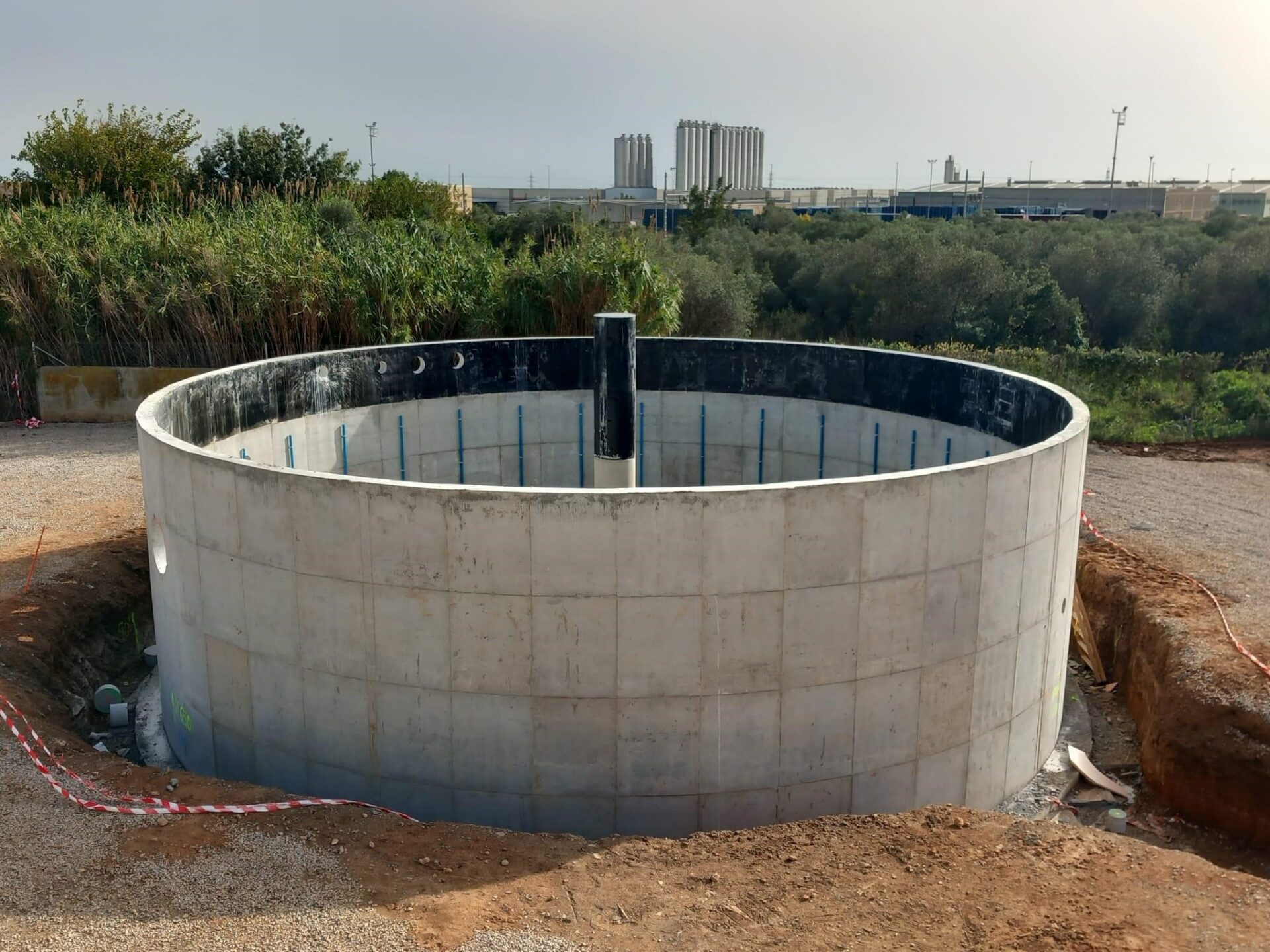
The Mas Bové biogas plant, at the start of construction.
Find out about IRTA’s strategic objective relating to the bioeconomy:
We want to help transform the technologies and practices of farmers and livestock breeders to maximise the environmental and economic sustainability of their activities.