The new infrastructure, which will have an investment of 4 million euros, will allow us to lead research applied to the wine sector from the territory and with impact throughout Catalonia
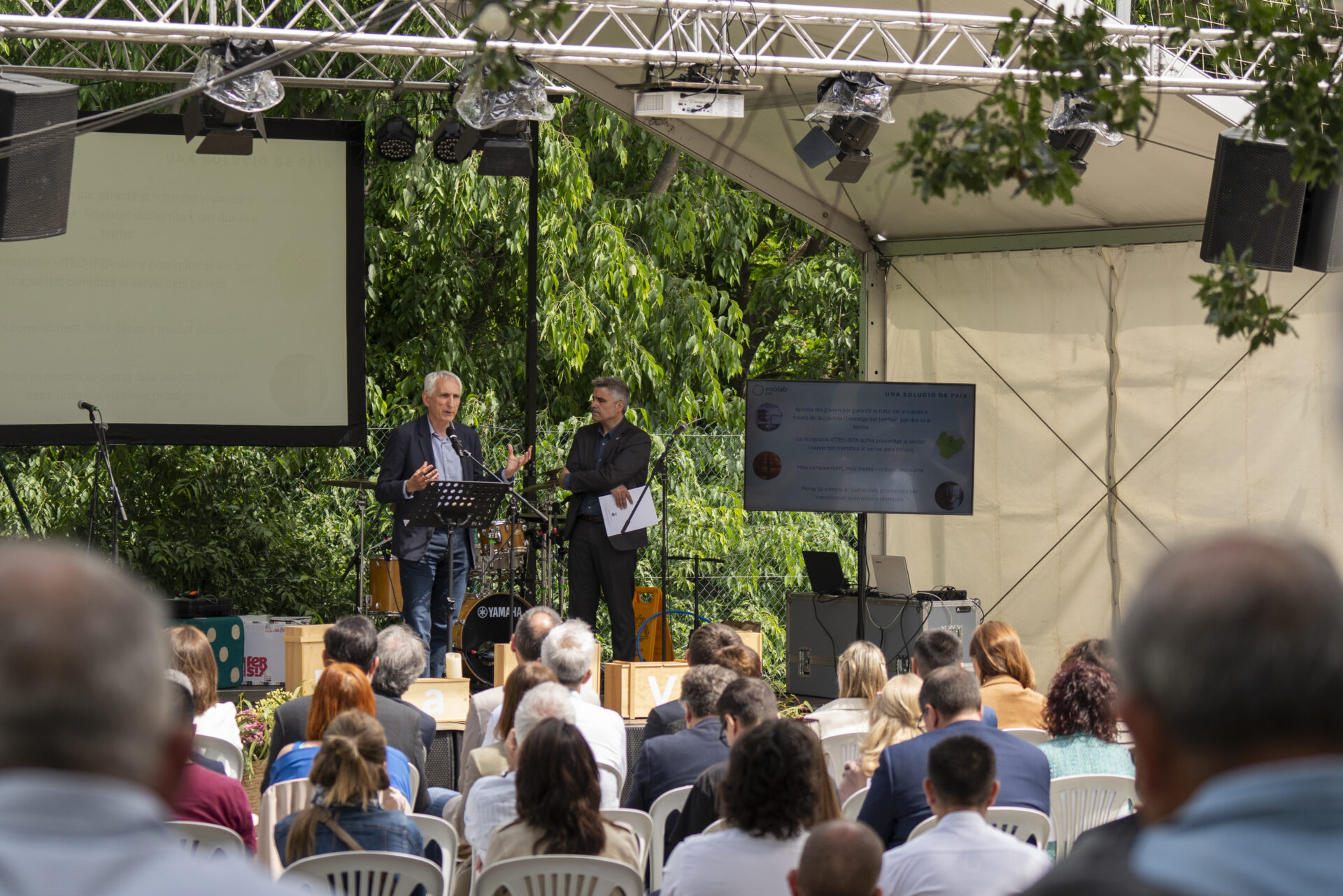
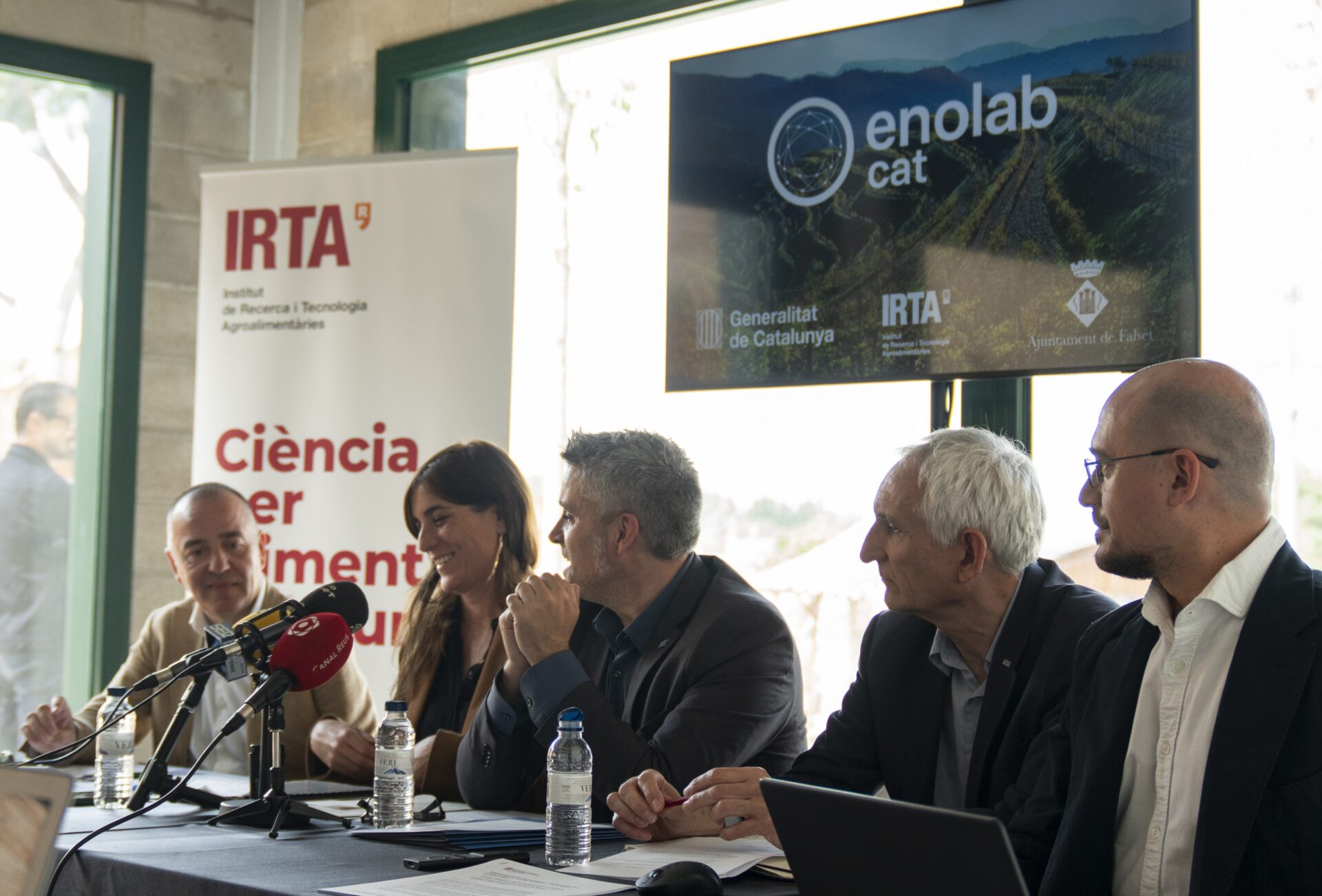
As part of the inauguration of the 31st Falset Wine Fair, which opened today and will last until May 3, the launch of EnoLab.cat, a new oenological research center focused on the digitalization and sustainability of the Catalan wine sector, has been announced. The project is promoted by the Department of Research and Universities of the Generalitat de Catalunya, the City Council of Falset and the Institute of Agrifood Research and Technology (IRTA), and will have a public investment of 4 million euros.
IRTA is very excited to take on the role of a key scientific actor in this proposal, with the idea of contributing our experience in agri-food research and knowledge transfer to the sector. Our participation in the project is possible thanks to VITEC, the Wine Technology Center, which is currently in the process of integration in our institution. This synergy will undoubtedly strengthen our capacities in research and innovation in viticulture and oenology.
The new infrastructure will be located in the old Falbar textile factory in Falset and was born with a very clear objective: to integrate the winemaking process, scientific research and data analysis into the same space. This model will allow us to move towards a more precise oenology, based on evidence and oriented to respond to the great challenges that the sector faces.
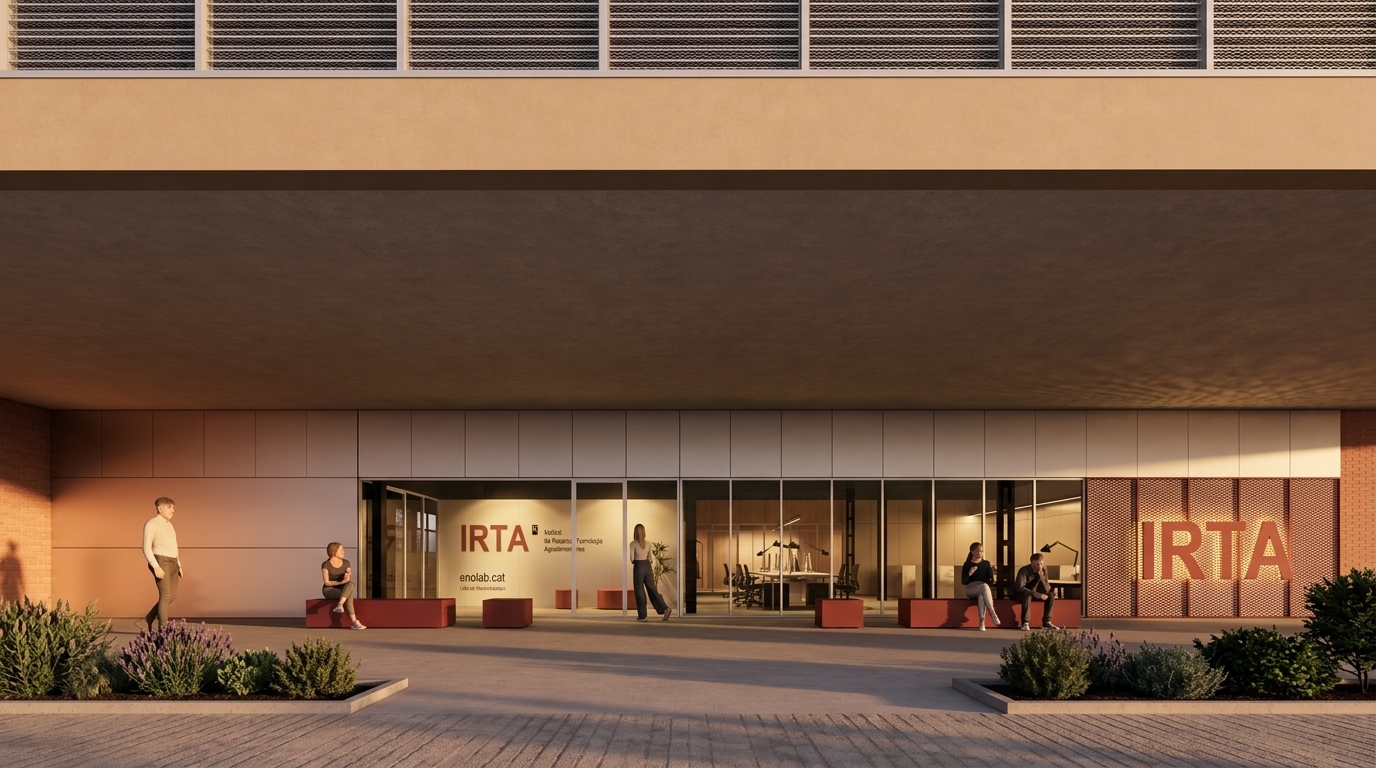
In a context markedly conditioned by climate change, the change in consumer habits, the need to adapt to new markets and the incorporation of new technologies, EnoLab.cat will become a strategic infrastructure to generate useful and applicable knowledge that allows to ensure the future of the wine sector. Thus, the center will combine a fully sensorized experimental winery, several multidisciplinary laboratories and an advanced digital platform based on data and artificial intelligence.
The general director of IRTA, Josep Usall, stressed that “this infrastructure will allow us to move from fragmented research to an integrated model, with real-time data on all phases of winemaking, and help the sector anticipate scenarios and optimize processes”.
In the same vein, Joan Manel Albacete, director of corporate services at IRTA and general director of VITEC, stressed the future dimension of the project: “In Priorat, wine is much more than an economic activity: it is territory, culture and identity. The great challenge is to guarantee its future in a context marked by climate change and the need to be more sustainable. With EnoLab.cat we promote a research infrastructure at the service of the sector to generate useful knowledge that allows us to better understand the winemaking processes and improve decision making in wineries through digitalization and artificial intelligence. We do it from the territory and with a vocation of service throughout the country, because the future of the sector involves integrating research, innovation and proximity to producers”.
The project will be structured in two main areas of work. On the one hand, the digitization of oenological processes, with the use of advanced sensor systems and predictive models to optimize the different phases of elaboration. On the other hand, sustainability, with lines of research aimed at reducing the environmental footprint of wineries, improving resource management and valorising by-products within the framework of the circular economy.
With an area of more than 1,000 m2, EnoLab.cat will include experimental production spaces, chemical and microbiological laboratories, breeding areas and advanced data monitoring and analysis systems. The center was born with a clear open and collaborative vocation, to work together with wineries, companies and other research centers, and to facilitate the transfer of knowledge to all the denominations of Catalan origin.
For IRTA, it is very important to value the territory, and this case is another example, because the implementation of EnoLab.cat in Falset will also contribute to strengthening the Priorat as a pole of agri-food innovation linked to wine, generating economic activity, attracting talent and consolidating the role of the area as a driver of research and innovation.
With EnoLab.cat, IRTA takes a step forward to place oenological research at the level of excellence of our wine sector and to accompany it in its adaptation to an increasingly demanding future from the climate, technological and market point of view.