Yesterday, the 50th edition of the Alimentaria Fair closed its doors, having brought together the entire food industry value chain to drive its evolution and transformation. Over four days, the fair gathered more than 3,000 companies from 70 countries in a 100,000-square-meter exhibition space.
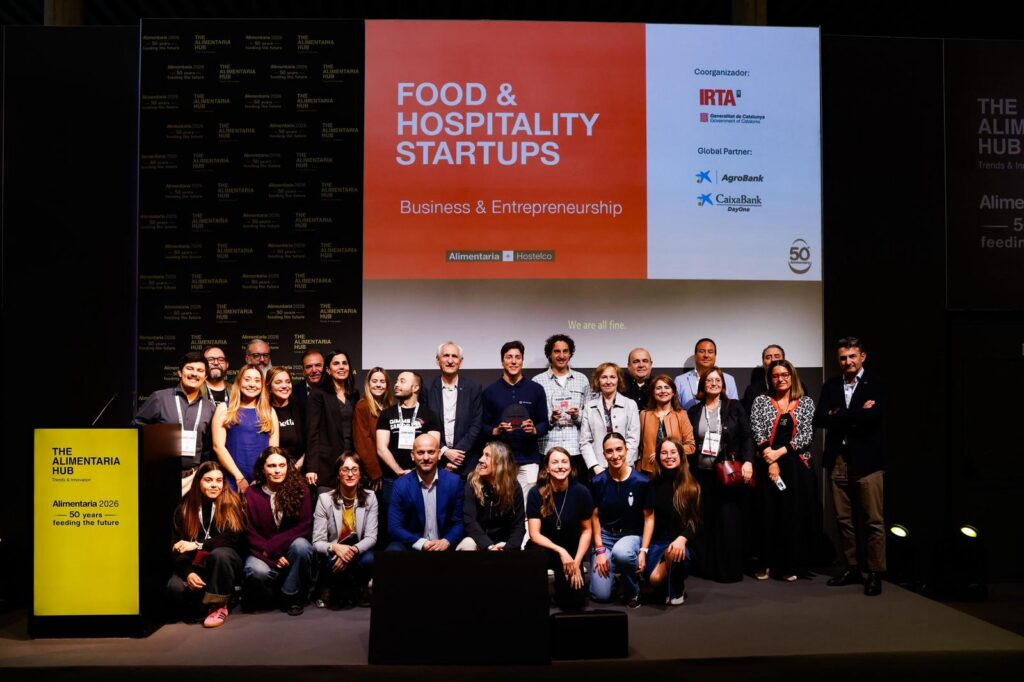
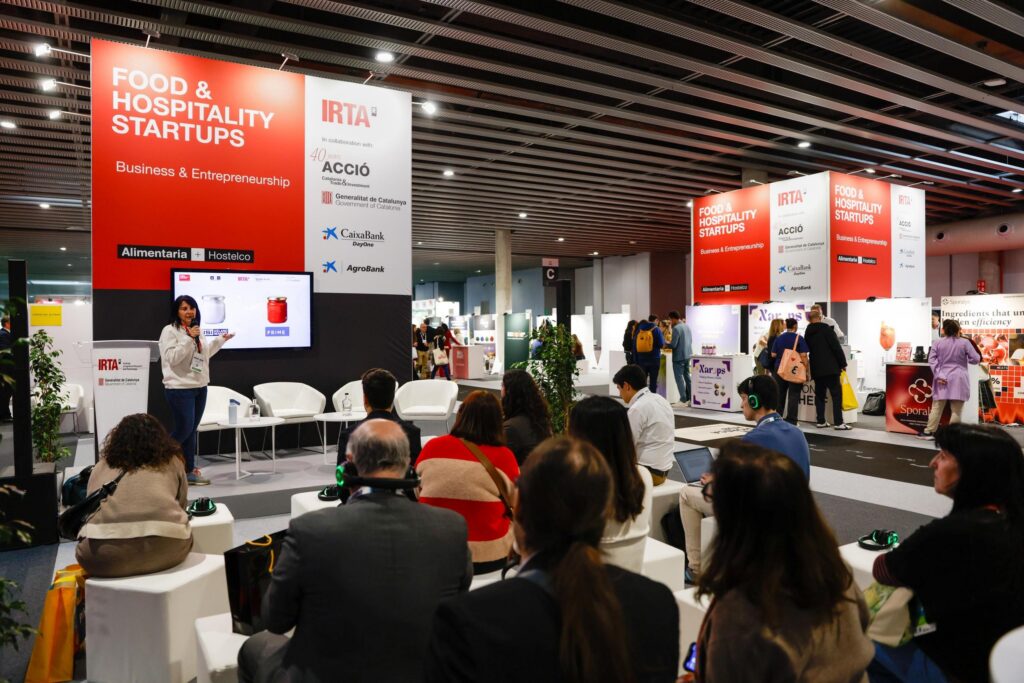
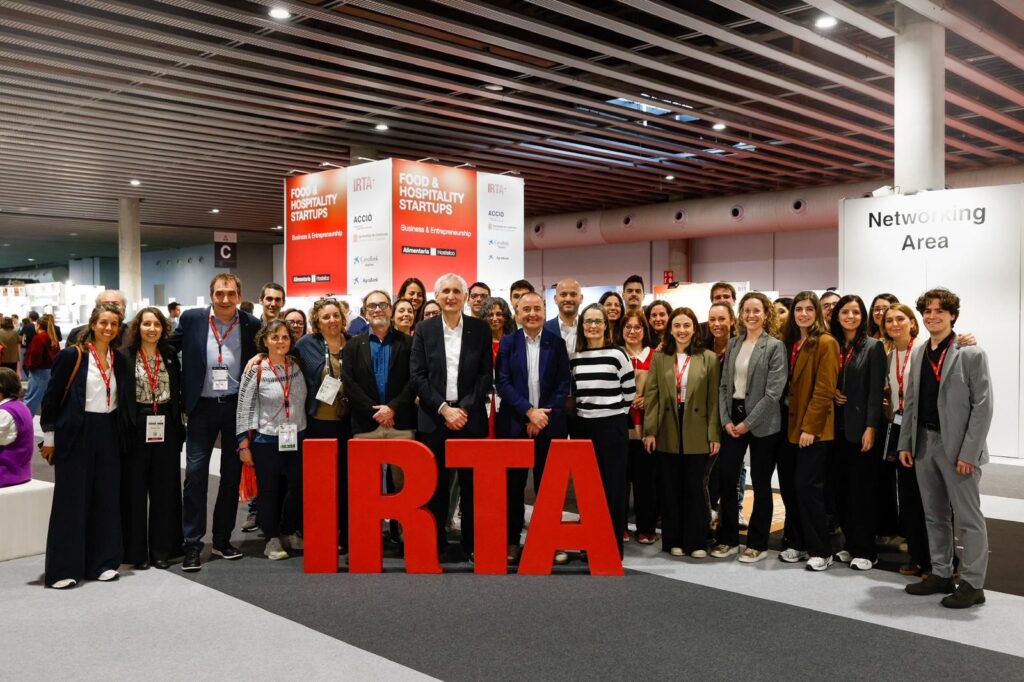
At this edition, the most international in history, IRTA has begun a new chapter: it led an open innovation space called Food & Hospitality Startups, which was visited by some 15,000 people and featured nearly sixty emerging technology companies set to help transform the agri-food sector toward a future of sustainable well-being.
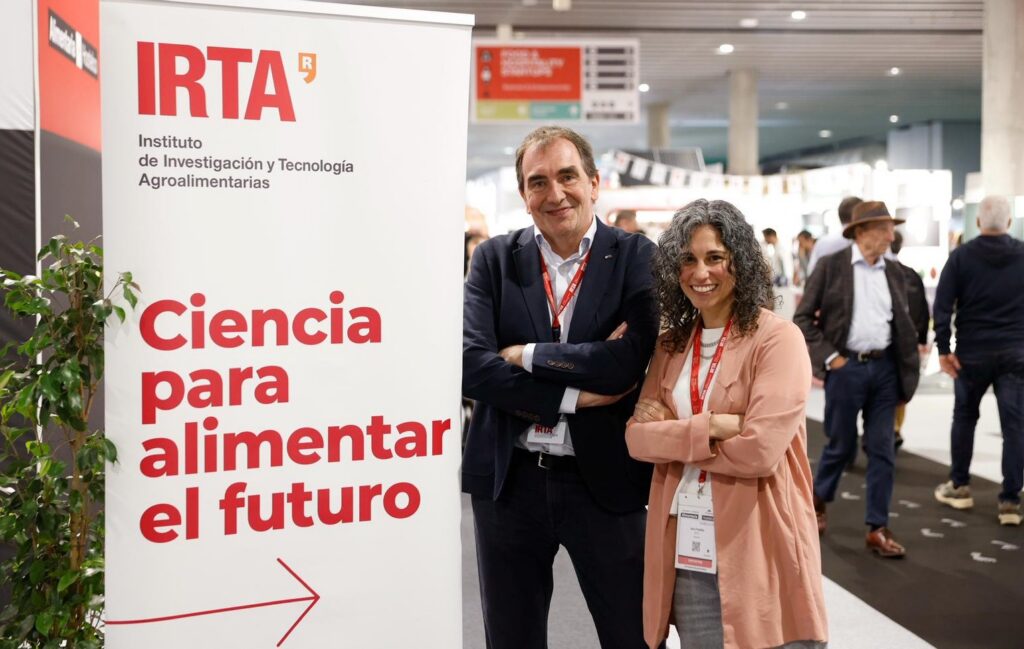
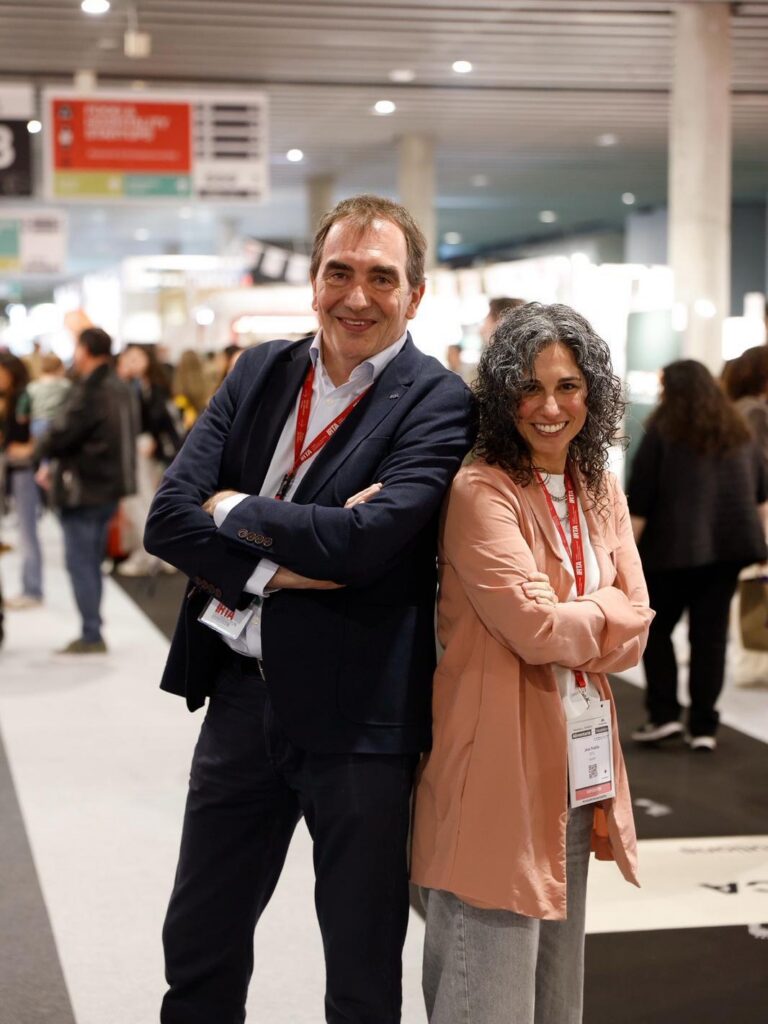
Behind this initiative is the Research and Innovation Development team, led by Simó Alegre, with a new member, Jess Padilla, who will lead IRTA’s open innovation and entrepreneurial ecosystem strategy over the coming years. We spoke with both of them to better understand what this strategy entails and how they envision IRTA’s future.
Through Alimentaria, we’re showcasing IRTA’s commitment to promoting open innovation. Can you give us some context?
Simó: IRTA’s mission is, on the one hand, to generate knowledge, and on the other, to help companies in the agri-food sector become increasingly competitive through research, knowledge, and innovation. And, up until now, we’ve focused heavily on what we call targeted research.
Our hallmark.
Simó: Yes. It’s a research with a clear purpose: addressing the needs of the agri-food sector. If there is already existing knowledge regarding the problem we want to solve, we conduct applied research—that is, we adapt existing knowledge to specific conditions. But, if the problem lacks existing knowledge, then we conduct basic research, which we will later apply.
At IRTA, it’s crucial to listen to the sector, isn’t it?
Simó: Always. We listen to the sector’s general challenges. And, when we conduct research through contracts with companies, we listen to their individual needs. For example, a company may have its own specific needs when it operates in a different market than other companies of the same sector.
And from now on…
Simó: So far, we’ve done a lot of research, but we’ve been less active in open innovation—that is, in ensuring that technologies are developed and brought to market through collaboration. This can be achieved in two ways: either by developing technologies ourselves in partnership with companies in the agri-food sector, or by helping technology-based companies address the challenges faced by businesses in the sector. It is this second approach that we have promoted at Alimentaria with startups—newly created technology companies with high innovative potential.
Alimentaria has celebrated its 50th anniversary, and IRTA its 40th. Why is now the time to promote open innovation?
Simó: Forty years later, we’ve come of age and have the capabilities to do so. We have sufficient strength—in terms of people, structure, resources, and industry knowledge.
Which stakeholders make open innovation possible?
Simó: When we talk about innovation, we mean that knowledge must have an impact at the end of the agri-food chain: on those who produce food and on those who consume it. Companies make this possible. At IRTA, we make our knowledge available to companies or entrepreneurs setting up technology-based businesses, so that their technologies—or those developed in research centers—can reach companies in the agri-food sector. And open innovation goes further: it means not doing it alone, but doing it with companies and entrepreneurs from the very beginning—from the design phase—by working together and sharing knowledge transparently, bidirectionally… openly.
Therefore, if we had to summarize IRTA’s role in the field of open innovation…
Simó: We would say that we want to help generate or consolidate technology-based companies in the region, whether they are privately owned, have emerged from technology centers, or are spin-offs from other companies. I’m talking about startups related to the agri-food sector in the broadest sense—from the blue economy to the bioeconomy or bioenergy—so they can connect with clients in the sector and help them boost their competitiveness.
Will this benefit the primary sector? The average age of farm and livestock owners is rising, and the number of farms is declining…
Simó: Yes. Consumers, large companies or small businesses can all benefit from this. For example, a sensor that detects a plant’s water status, wirelessly and over long distances, can help a farmer. Or a sensor that monitors animal welfare on a farm can benefit livestock farmers.
Jess: In fact, we want to help farmers and livestock producers find solutions to do their jobs better and with greater well-being. We really need this in Catalonia. We can help them connect with tech startups that can assist them.
Simó: We need to think of today’s startups as tomorrow’s companies. We connect them with the industry so they can secure their first customers, which we know. And we can help them seek funding and conduct research to adapt technologies to their needs. Innovation isn’t a linear process. It can’t start with research and end with the user: from the very beginning, you have to keep the user in mind. Today, before launching, any startup conducts dozens or hundreds of interviews with the ecosystem.
Ecosystem?
Simó: There are three ecosystems. First, research centers, universities, and technology centers. They generate knowledge and technologies. Second, the consumers of these technologies: small and large companies alike, as well as those of us who consume their products. And, in between, the innovation ecosystem, made up of technology-based companies, catalysts, investors, incubators, accelerators, and public entities dedicated to driving innovation. All three ecosystems are essential for innovation and must be interconnected. Trade shows like Alimentaria, and specifically this initiative we’ve led, Food & Hospitality Startups, also serve this purpose.
Jess: Startups always begin their development with the end consumer in mind. It’s a model that has a much greater chance of success than conducting research and then asking if there’s interest.
IRTA is a public company. What limitations or guarantees does this entail for open innovation?
Simó: In Spain, there is no research center with the clout of IRTA in the agri-food sector. We conduct research across every link in the chain, and this is quite unique. Furthermore, we work on both short- and long-term projects, and we have no financial interests. If anyone should be doing this, it’s us. Why not?
Then, being a nonprofit organization is a guarantee.
Simó: It builds trust because we have no ulterior motives or financial goals, and because our purpose is public service. Furthermore, in the field of research, everything is measurable and auditable: this is the foundation upon which we build all our activities. Likewise, we are linked to the government and, therefore, we support companies with the medium- to long-term orientation set by public policies.
And now we are officially launching this initiative.
Simó: We’ve already been working on it, and now is the time to take a leap.
What name can we give to this leap?
Jess: We want to be at the forefront of open innovation so that it has an impact in our region.
Simó: Yes. We take on the responsibility of leading the way in revitalizing the innovation ecosystem in the agri-food sector, and we do so by connecting nationally and internationally.
What will be the key factors?
Simó: All the challenges we’ve been working on for years and haven’t quite managed to solve yet.
Any examples?
Simó: Some challenges have been around for decades, but the technology available made it difficult to solve them. For example, water regeneration, proper slurry management, or quickly understanding the regulations of third countries where we want to export—which is now becoming easier thanks to Artificial Intelligence (AI).
Jess: Yes, there are challenges with difficult solutions. And partnerships are key. One example is the use of nitrates and nitrites as meat preservatives.
Simó: Or new genomics techniques: through the traditional system of crossbreeding varieties, developing a new plant variety resistant to certain diseases can take 15 years. Doing so through genomics techniques can take two or three years. Countries that have opened up the use of these technologies already have a network of specialized companies. In Europe, there are still few, and we want to be prepared for when European regulations are fully open. We want to identify the best service providers in other countries and also offer IRTA’s expertise and knowledge to adapt specific solutions and technologies.
As a facilitator of open innovation, does IRTA draw inspiration from any other institutions?
Simó: At the national level, the National Center for Food Technology and Safety (CNTA) in Navarre has always been a leader. Internationally, the Wageninghen University & Research in the Netherlands is a clear leader in this field.
Jess’s arrival at IRTA is also a way to take this leap forward.
Simó: Jess is here to help shape IRTA’s strategy in this area for the medium and long term. We want to leverage her experience and knowledge.
Jess: Exactly—for the past three years, I’ve been working on this type of strategy at the CNTA. I feel like I went there to gain experience so I could later apply it back home in Catalonia. Before that, I worked for nearly 15 years in the food industry, leading R&D departments. I made the move from industry to the CNTA because the National Center for Food Technology and Safety is at the forefront of highly disruptive innovation and hosts many collaborative projects between research centers, universities, companies, startups, and government agencies. I led projects in this field and coordinated the relationships among these stakeholders.
How would you summarize what IRTA has organized at Alimentaria?
Jess: If I imagine that I’ve come here and I’m not from IRTA, I’d explain that IRTA says: “We’re here, and we’ll be the driving force behind open innovation in the agri-food sector.” I’d also explain that IRTA has connections with corporations working on open innovation projects; that it knows the startups, because it’s brought nearly sixty of them here; and that it knows where solutions to the sector’s challenges need to go. In short, I’d say: “They understand this and are communicating it well.”
Simó: I’d add that we’ve set the table for the agri-food entrepreneurship and innovation ecosystem. The plates, glasses, tablecloth, and cutlery would be: the startups, which have the chance to present themselves; the companies that dedicate part of their budget to innovation programs; the companies in the sector seeking innovation; the investors willing to put money into helping startups grow; the people who make connections and find clients for startups so they can open up markets; the people who present relevant technologies and summarize what the startups are doing; and the research and technology centers, which explain what we’re working on or how we can help solve problems. In short, we are creating the space for that open innovation to take place. The rest of the spaces at Alimentaria are, for the most part, venues for meetings between customers and companies. This, on the other hand, is a space for innovation centered around startups. And the more there are…
Jess: The more conversations take place.
IRTA has led this section of Alimentaria in collaboration with ACCIÓ, the Catalan Agency for Business Growth.
Simó: ACCIÓ has joined this table we’ve set, yes. It’s a very important player in the ecosystem. They work, from within the public administration, to promote innovation across all sectors, and they’re here to support innovation in the agri-food sector. Our goal is to work together. To cooperate.
How do you envision innovation at IRTA five years from now?
Simó: I would like our researchers, before presenting a project, to always have spoken with some of the companies they believe they can help. It’s difficult, because we don’t always have the time we need. But I think it’s very important. We must be absolutely certain that what we’re doing is not only useful, but that it’s the best thing we can dedicate the next few years of our research careers to.
Thank you very much.
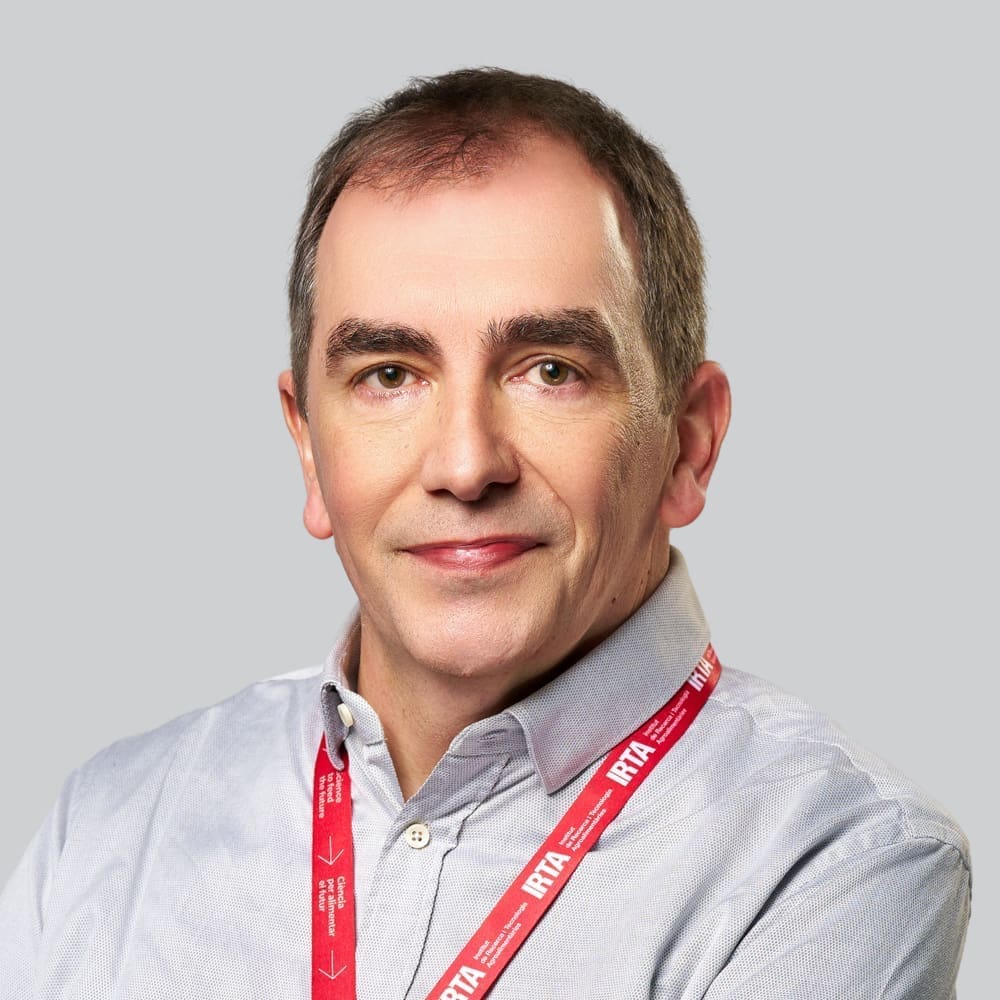
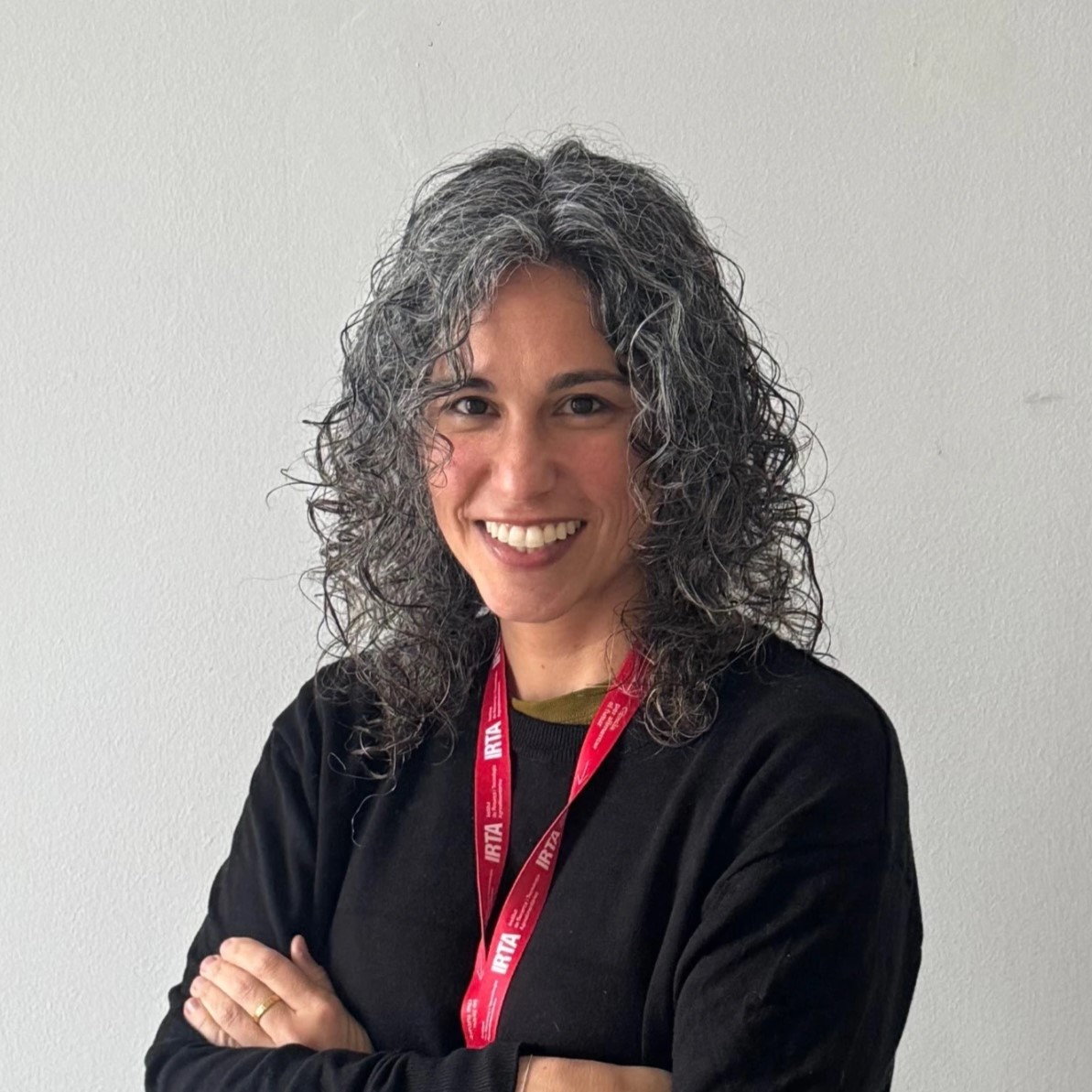
Technical staff in the Department of Research and Innovation Management and Development