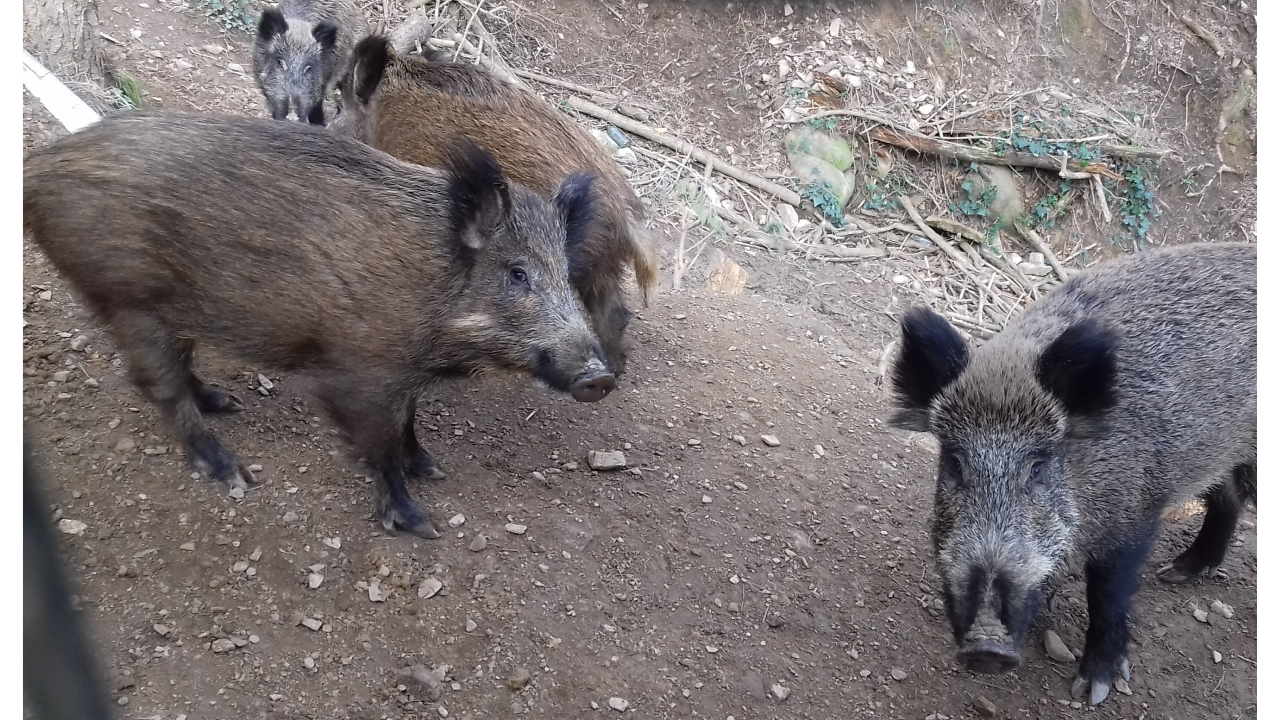
The Government of the Generalitat has today forwarded to the Ministry of Agriculture the results of the complete genomic analysis of the African swine fever (ASF) virus recently detected in wild boar in Cerdanyola del Vallès, as well as of the strains handled at IRTA-CReSA.
Pending the results from the reference laboratory in Madrid, the sequencing of the strains used at IRTA-CReSA, carried out at the Institute for Biomedical Research (IRB), does not match the strain detected in the wild boar.
This is the conclusion of the sequencing study led by ICREA research professor Toni Gabaldón at the IRB, developed by his Comparative Genomics group. Dr. Gabaldón is a recognized expert in phylogeny and comparative genomics.
The study analyzed the 17 ASF virus strains that have been used recently at IRTA-CReSA. The results are conclusive: none of these strains genetically match the strain responsible for the current outbreak.
The observed differences are too significant to establish any direct relationship. The virus detected in Cerdanyola del Vallès presents dozens of specific mutations and a large genomic deletion that do not appear in any of the laboratory strains analyzed.
This set of differences does not allow confirmation that the outbreak originated from these samples. The Ministry’s and Europe’s reference laboratories will need to confirm the results.
The complete genome sequencing of the outbreak virus indicates that it is an ASF genotype II strain, with general features similar to viruses detected previously, but with substantial genetic changes not previously described.
This distinctive “genetic fingerprint” includes:
This genetic pattern shows greater similarity to some isolated cases described in Eastern Europe and Asia, such as Russia, China, or Thailand, and indicates that we are dealing with a new or previously undocumented variant.
Although there are other historical strains that are still being sequenced at the IRB, these have not been used recently and present genetic characteristics much more similar to previously detected viruses than to the current outbreak strain.
Therefore, the results are aligned with the Audit Committee’s report, which indicated that no incident had been detected in laboratory biocontainment measures that could justify suspicion of an accidental escape.
The outbreak was detected at an early stage thanks to the continuous animal health surveillance programs for livestock and wildlife that IRTA-CReSA has been carrying out in Catalonia since 2018. All wild boar found dead are systematically tested to rule out the presence of the ASF virus, even when there is no prior suspicion.
Complete genomic sequencing is a key tool because it provides a true “fingerprint” of the virus, allows comparison with other known viral strains, and makes it possible to rule out or confirm possible routes of origin with a high degree of scientific reliability.
African swine fever is not transmitted through the air and requires direct contact or continuous exposure to contaminated material. In line with international experience, the most plausible hypothesis is the introduction of the virus through contaminated material, especially pork products, a route that has already been identified as likely in outbreaks detected previously in other European countries.
The Government continues working to contain the African swine fever outbreak within the 6-kilometer radius, with more than 400 personnel deployed on the ground, including the Order Group, the Rural Agents Corps, and the Military Emergency Unit (UME).
To date, 533 wild boar have been analyzed, of which 29 are positive within the 6-kilometer radius, confirmed by the Ministry’s reference laboratory.
The Government continues to hold regular meetings with the sector and with the group of experts, as well as with the mayors of the municipalities within the radius, with the aim of working in a coordinated manner to keep the outbreak under control.