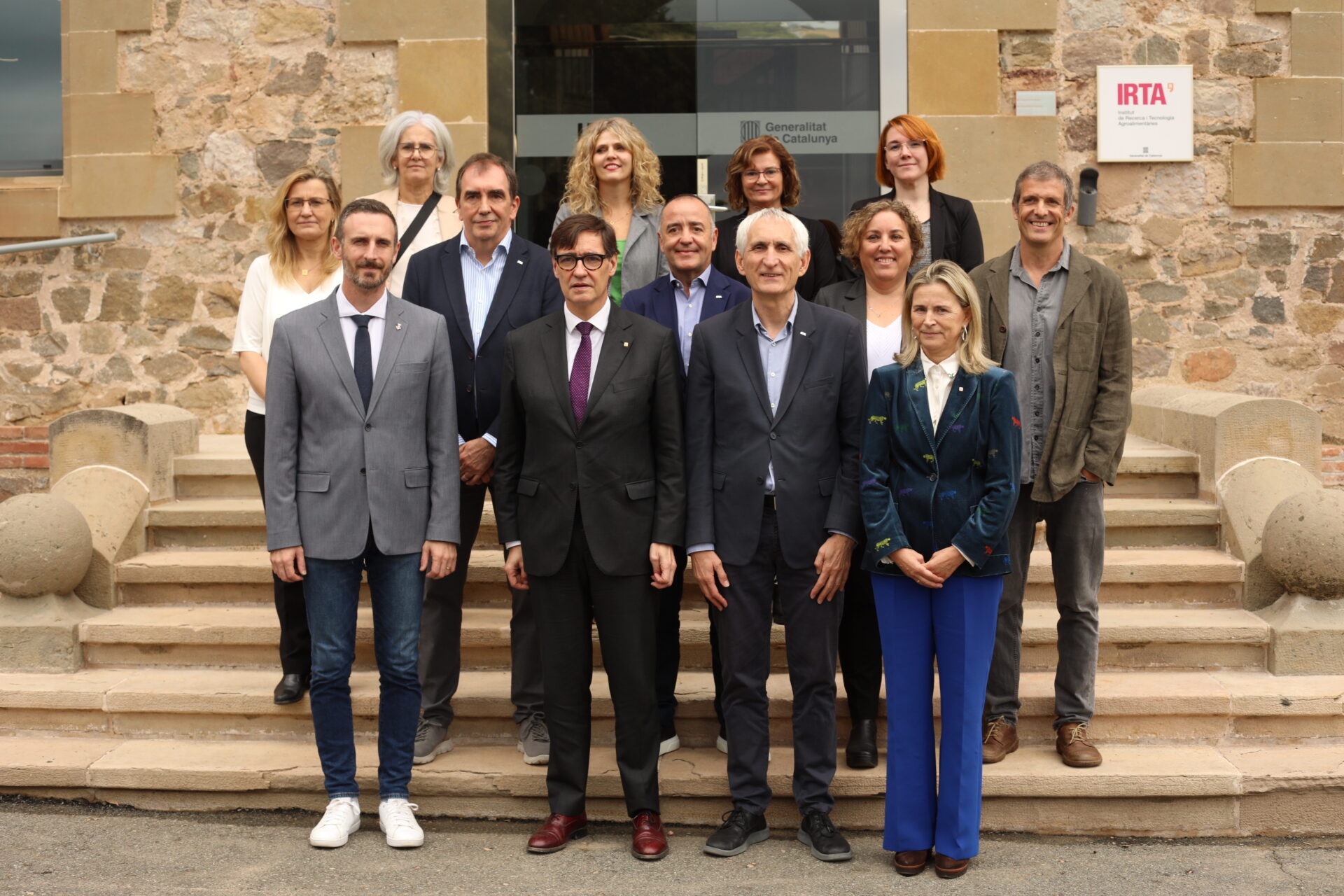
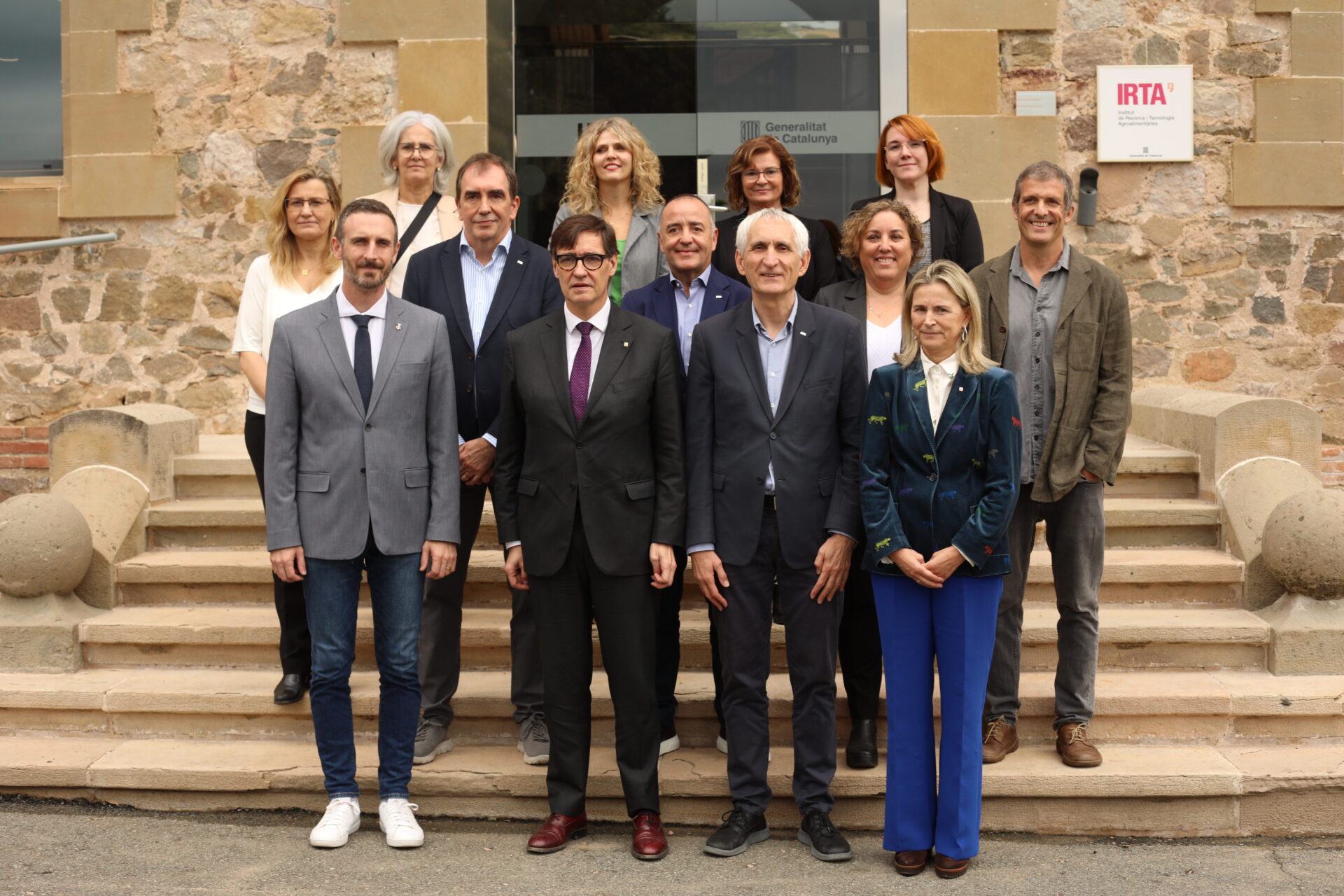
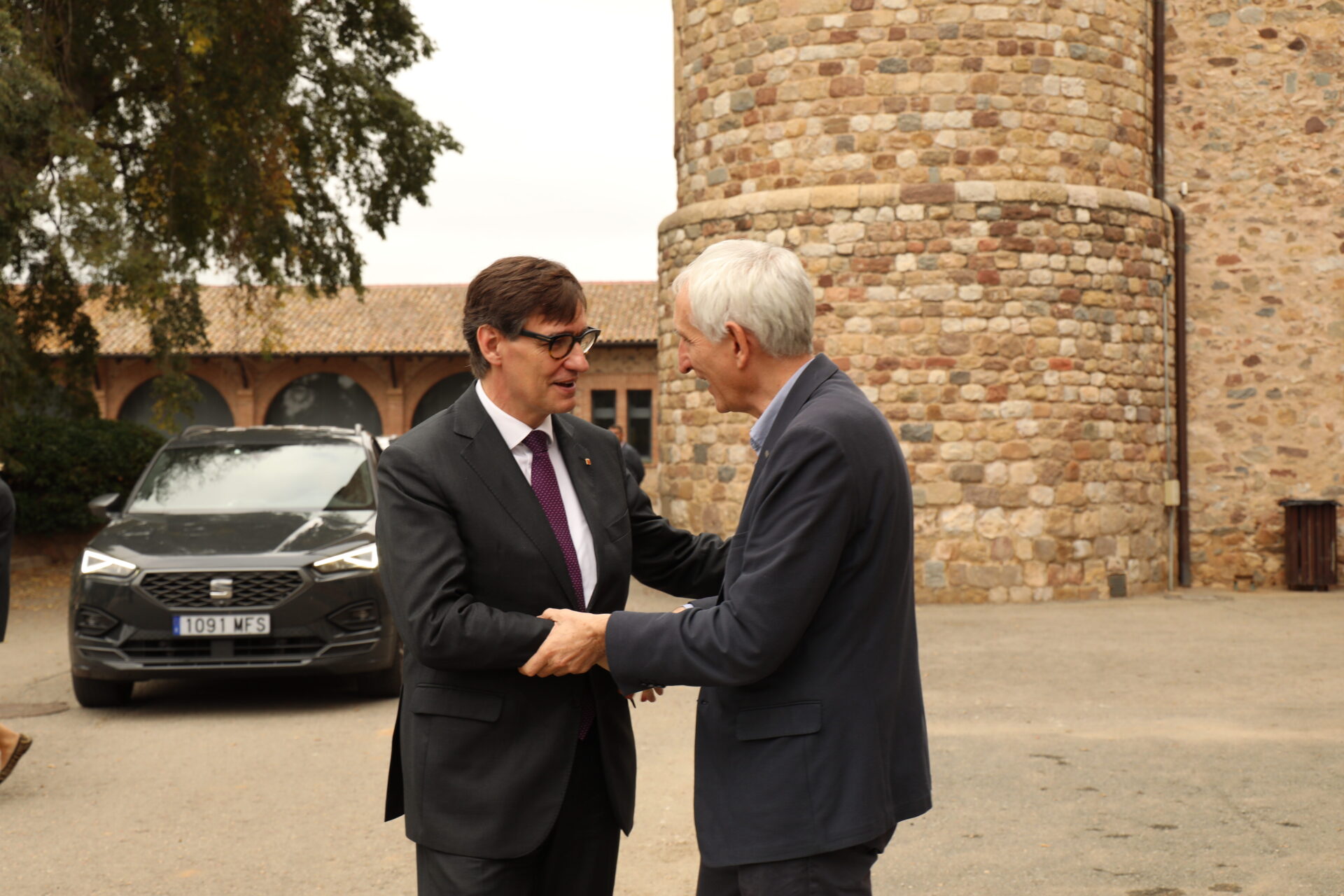
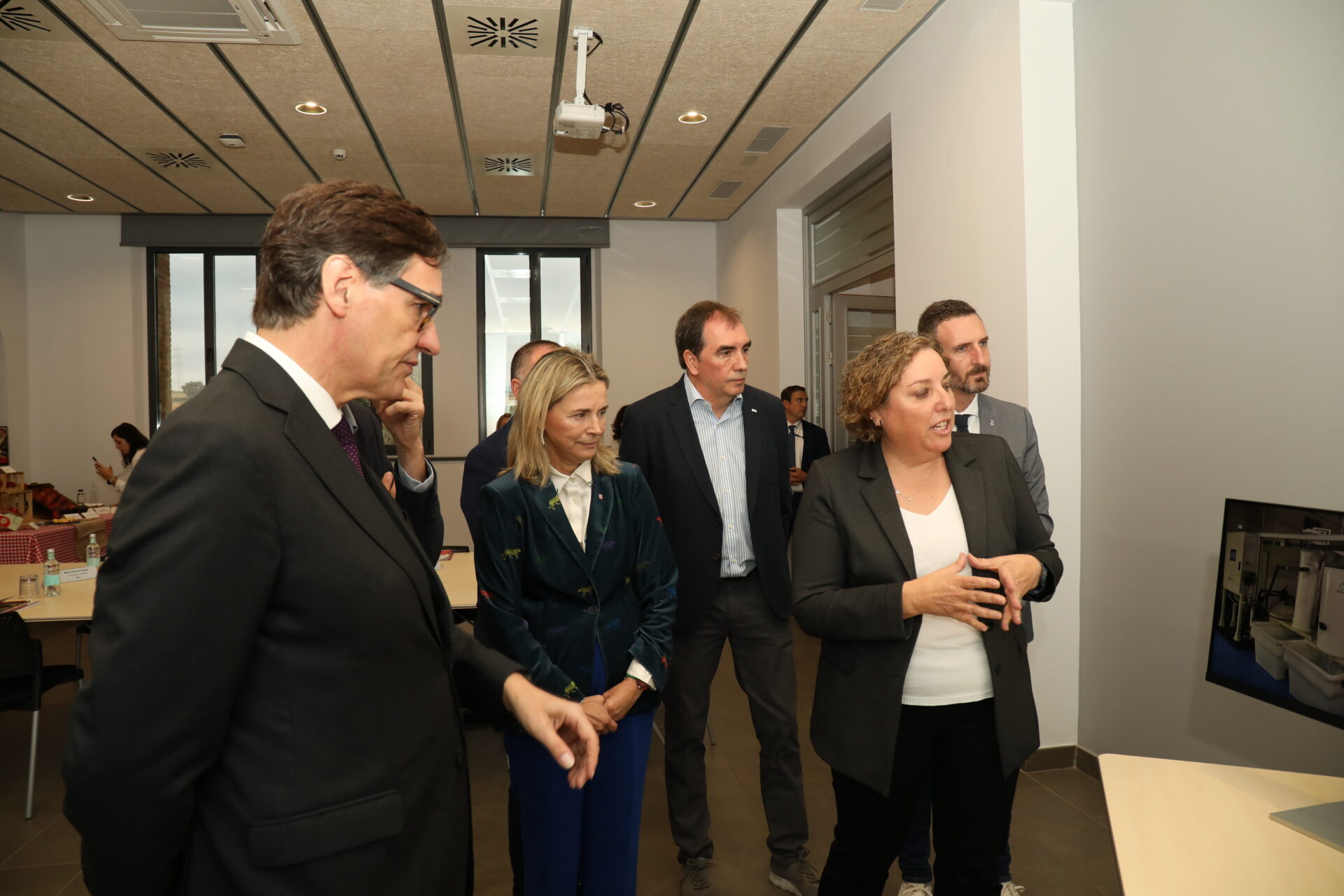
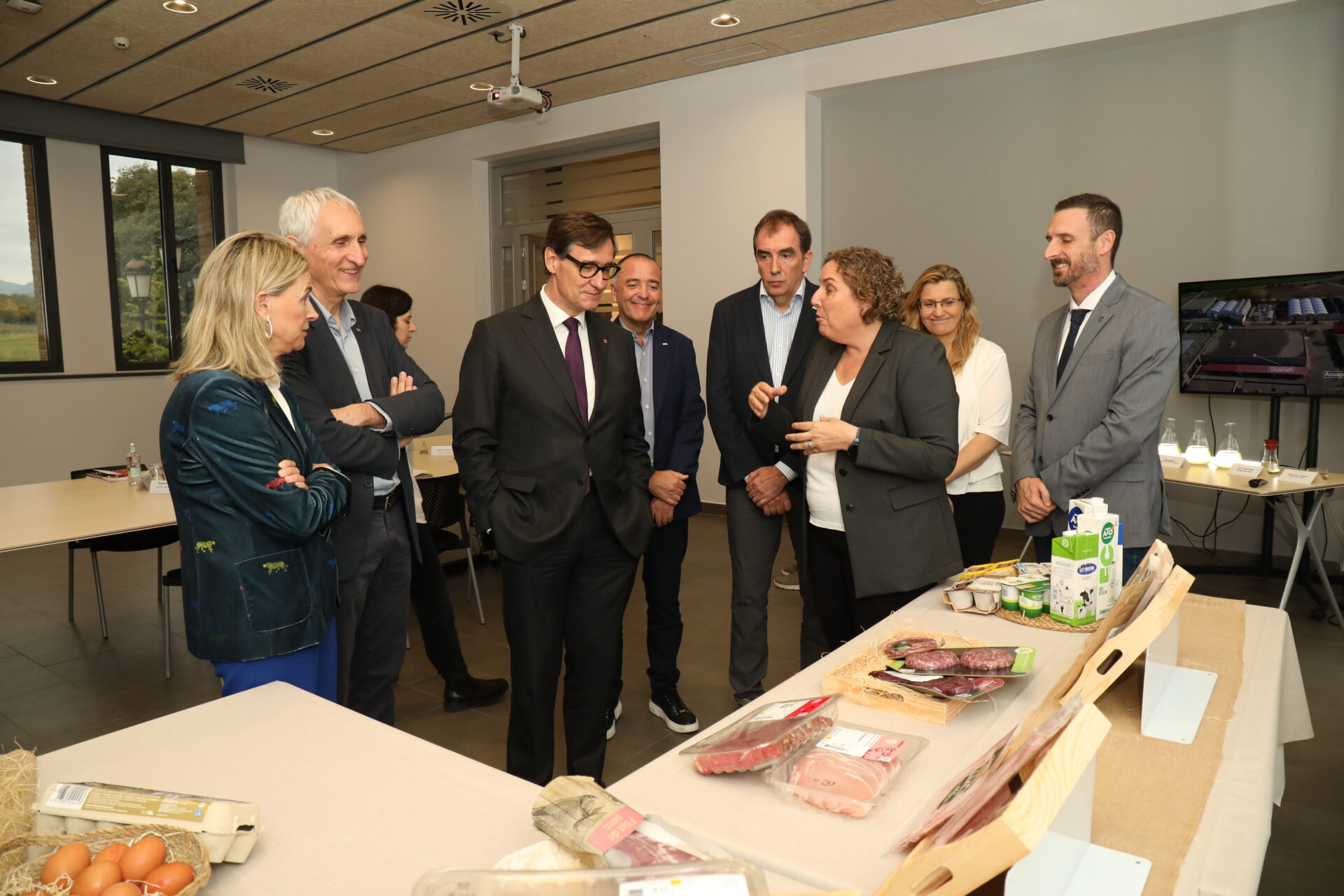
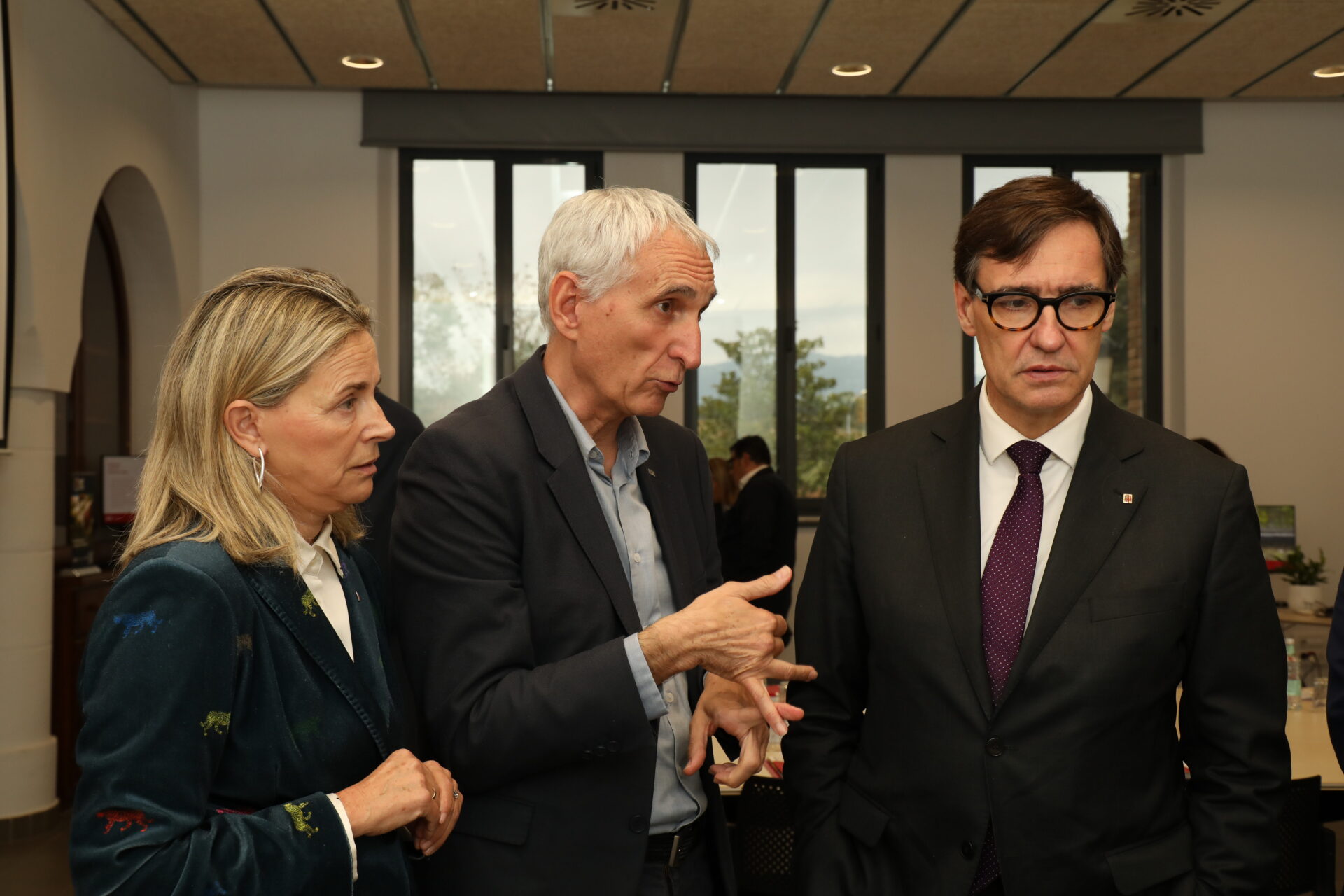
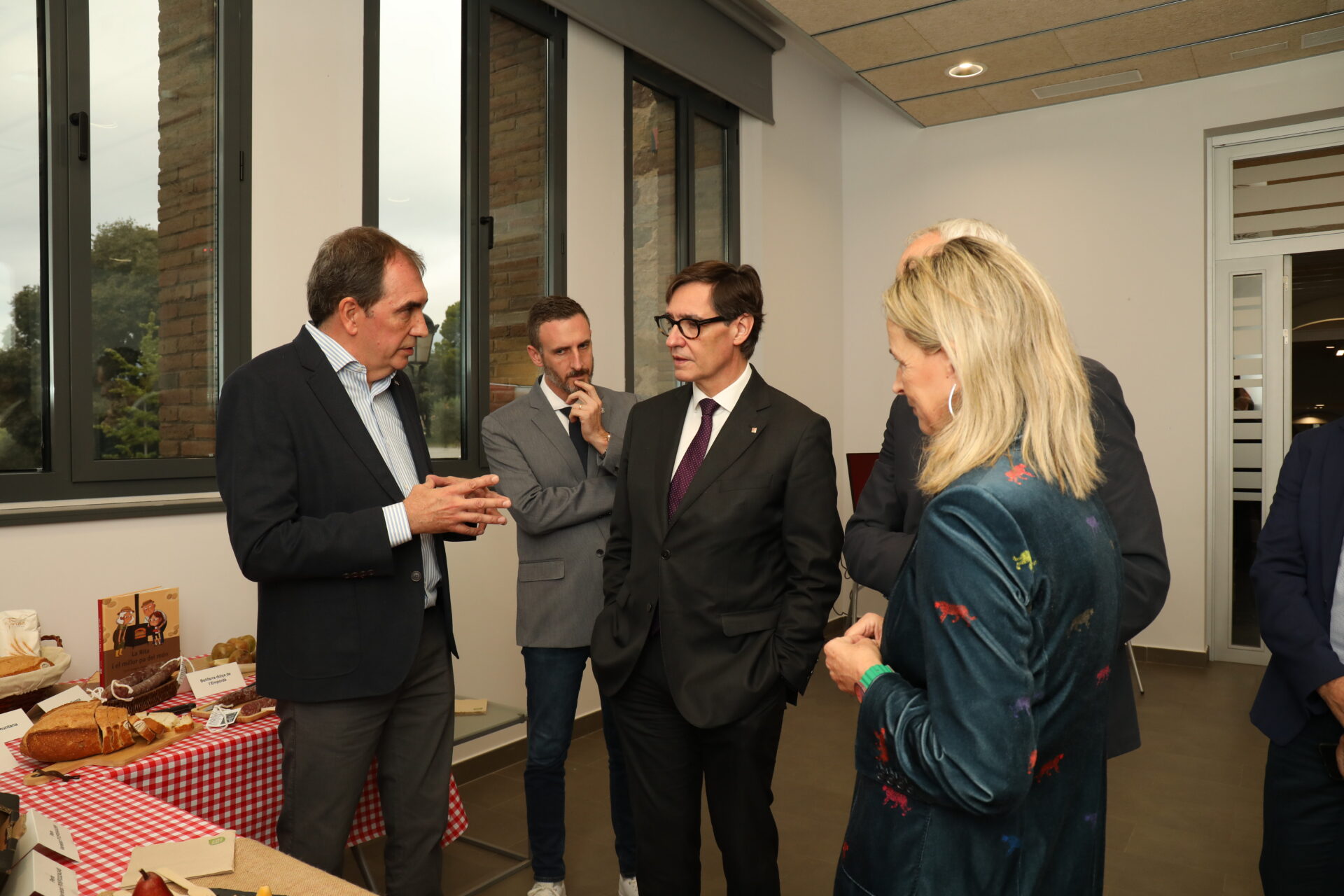
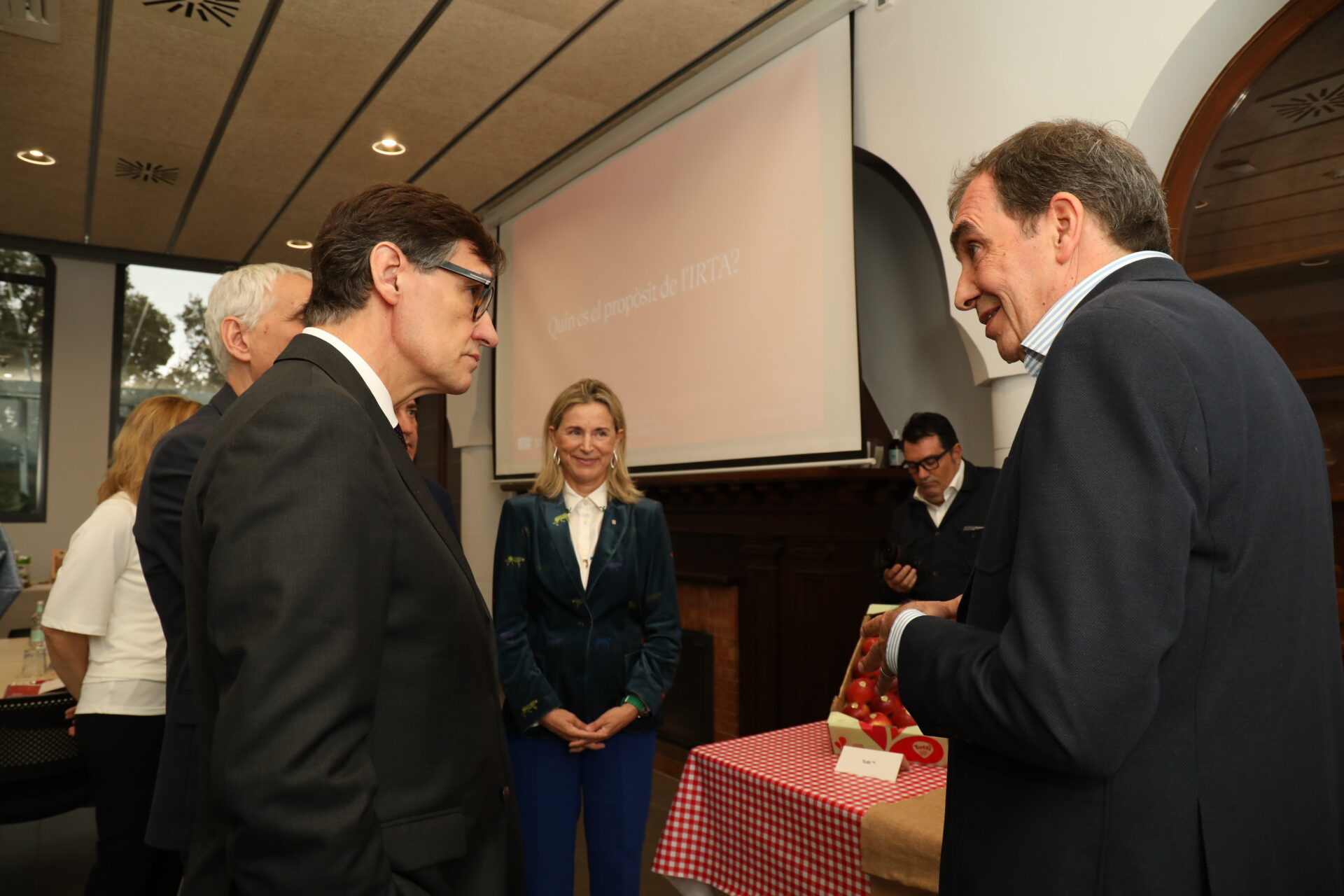
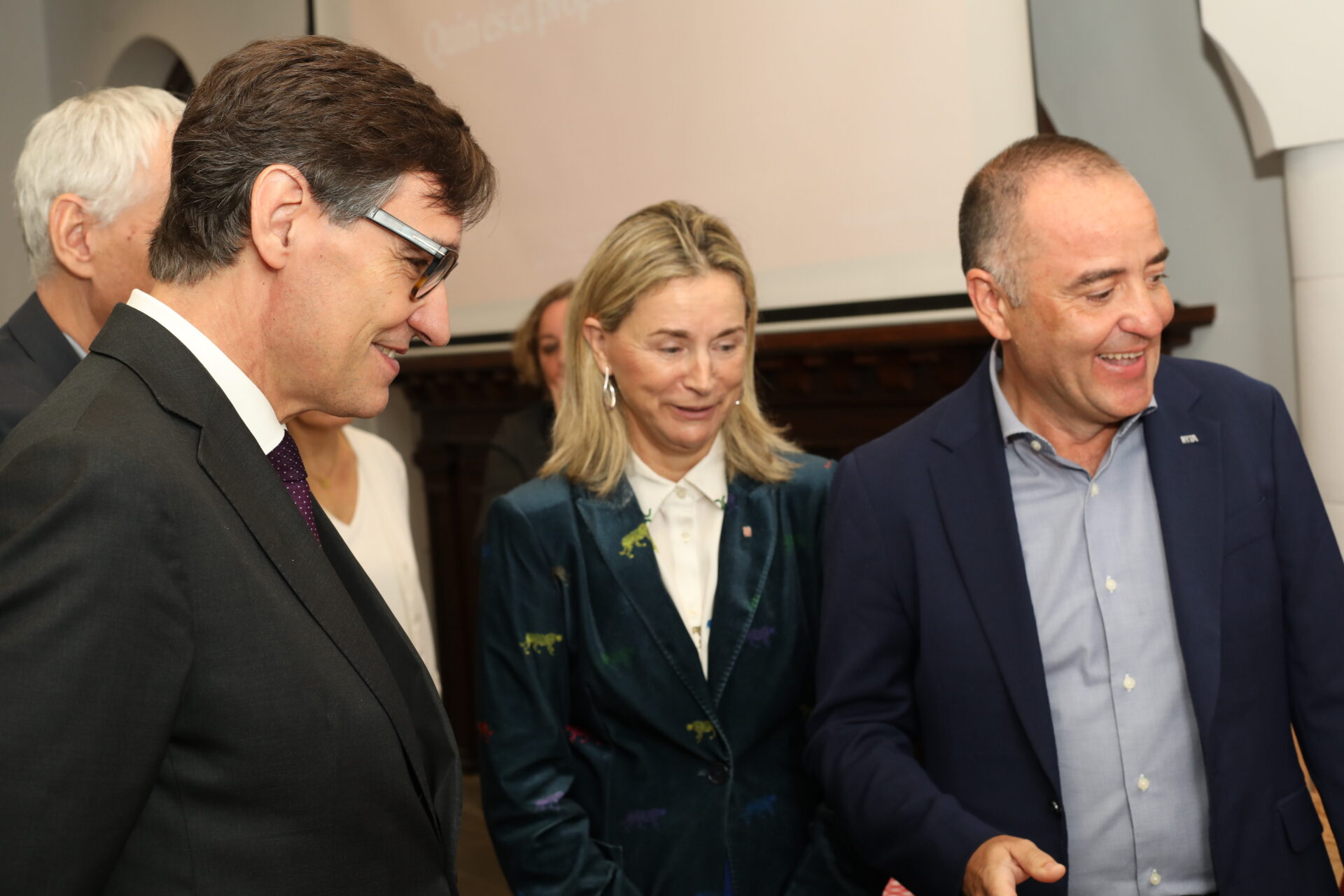
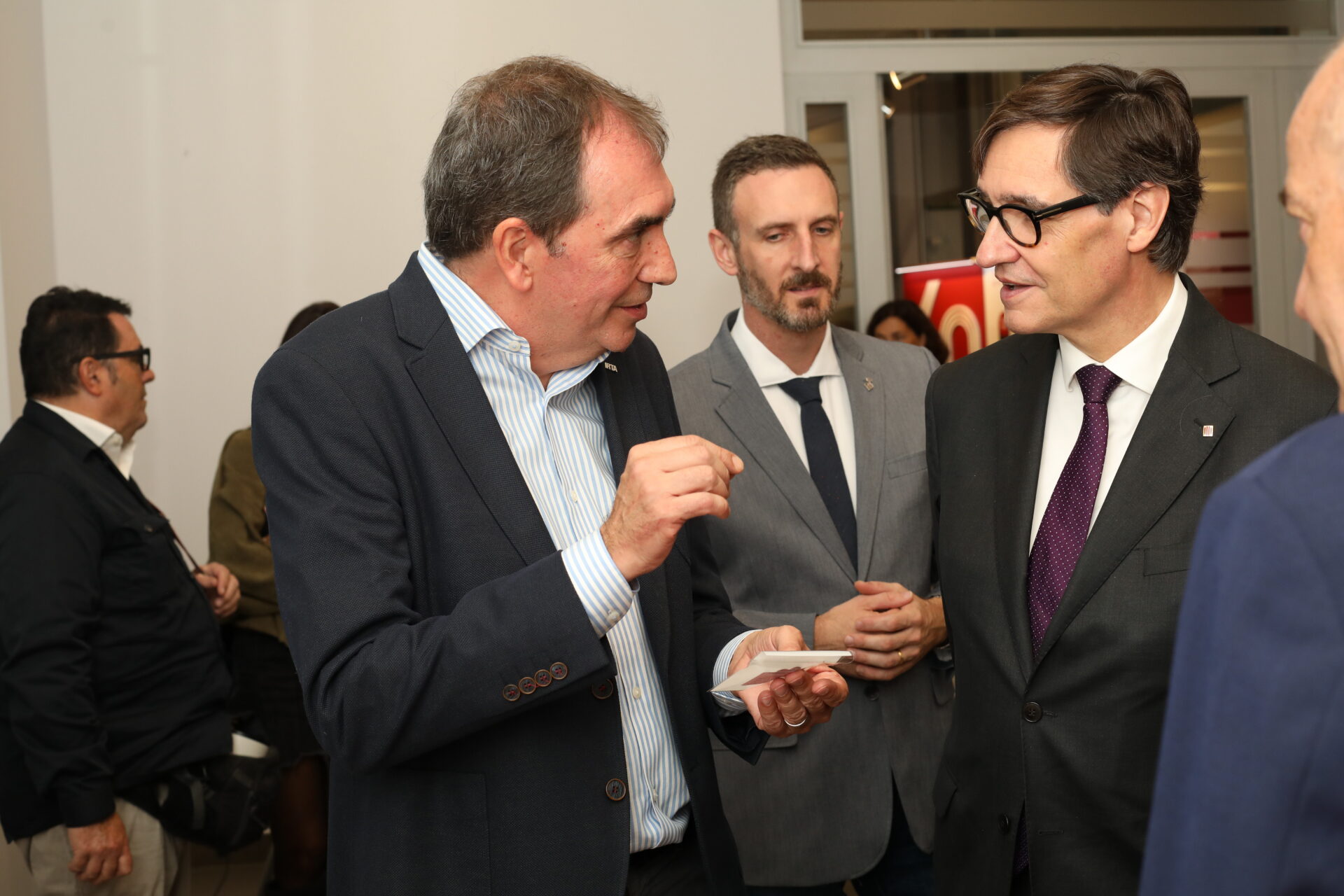
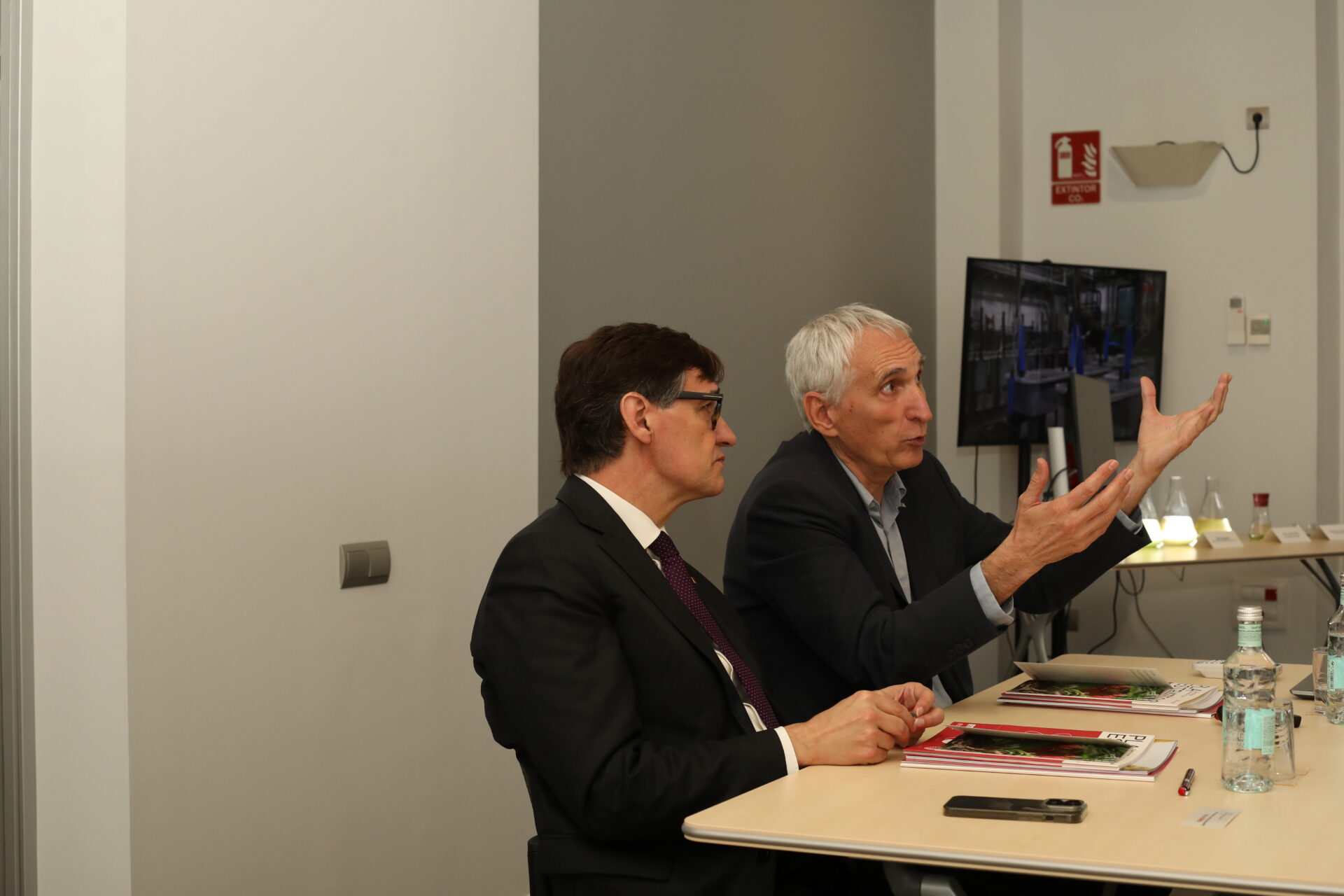
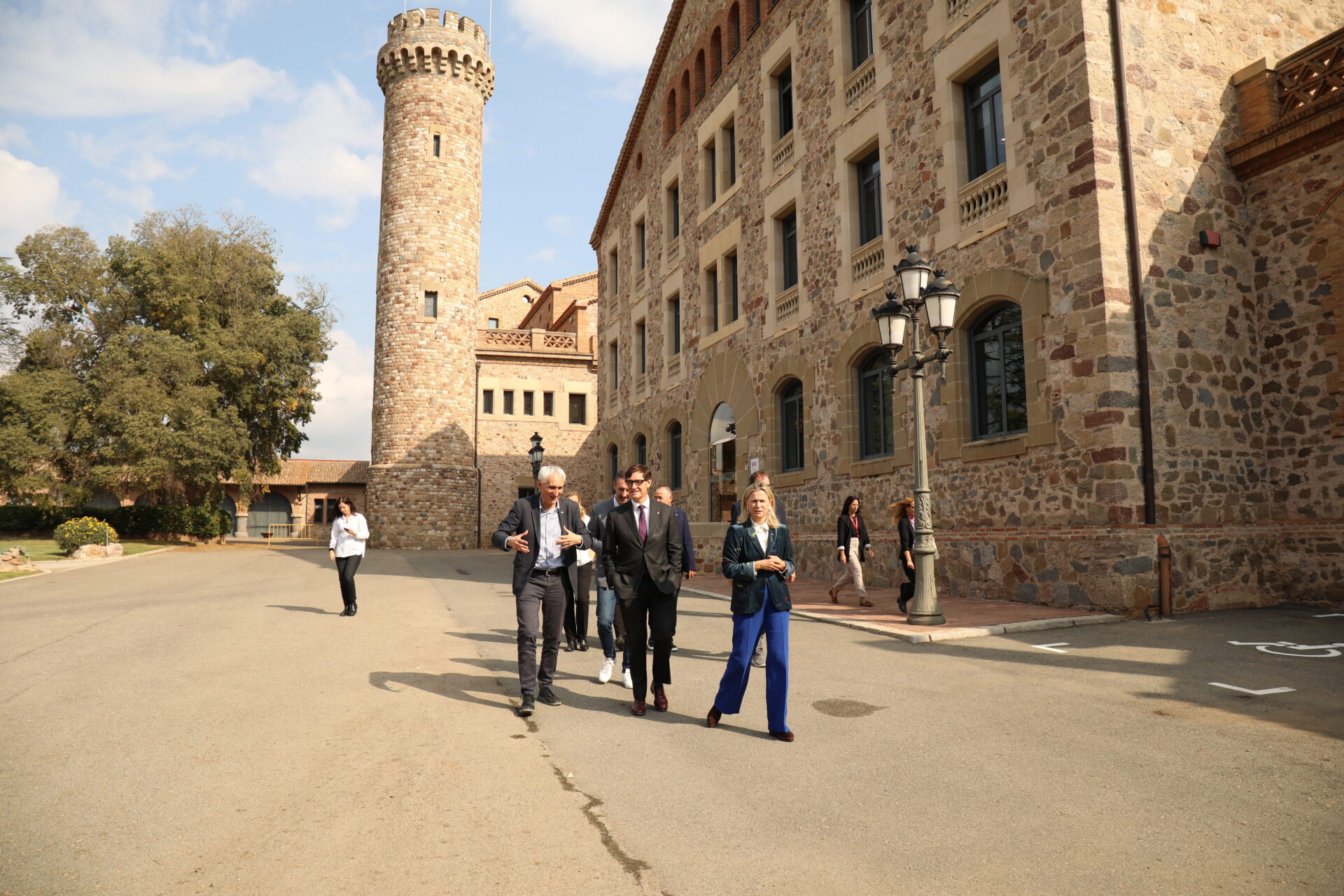
Within the framework of the 40th anniversary of IRTA, the president of the Generalitat, Salvador Illa, visited today our corporate headquarters, to learn first-hand about the research, innovation and future projects of this institution, among which stands out the construction of a new strategic infrastructure for global health in Catalonia that will be located in the Center for Research in Animal Health (IRTA-CReSA).
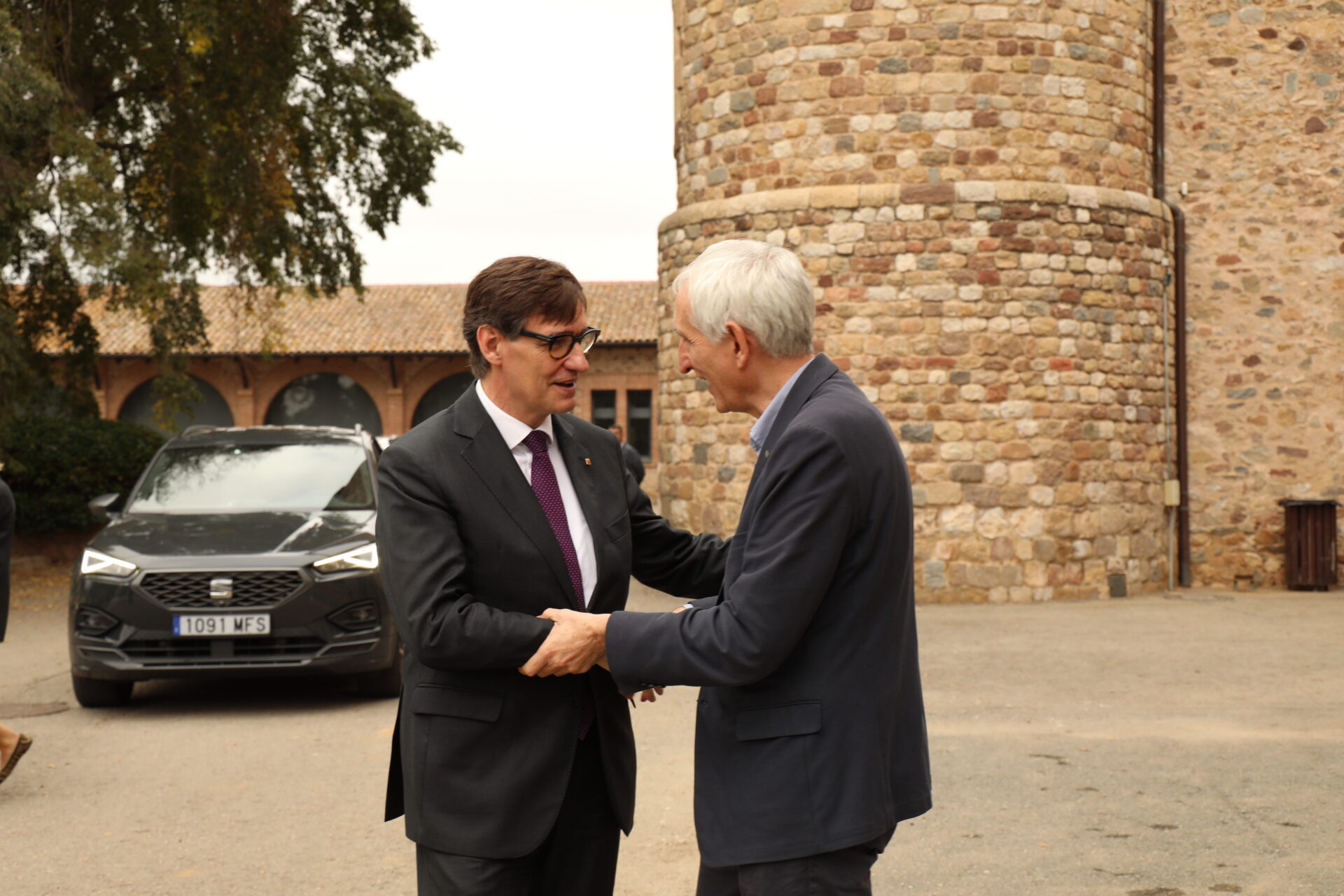
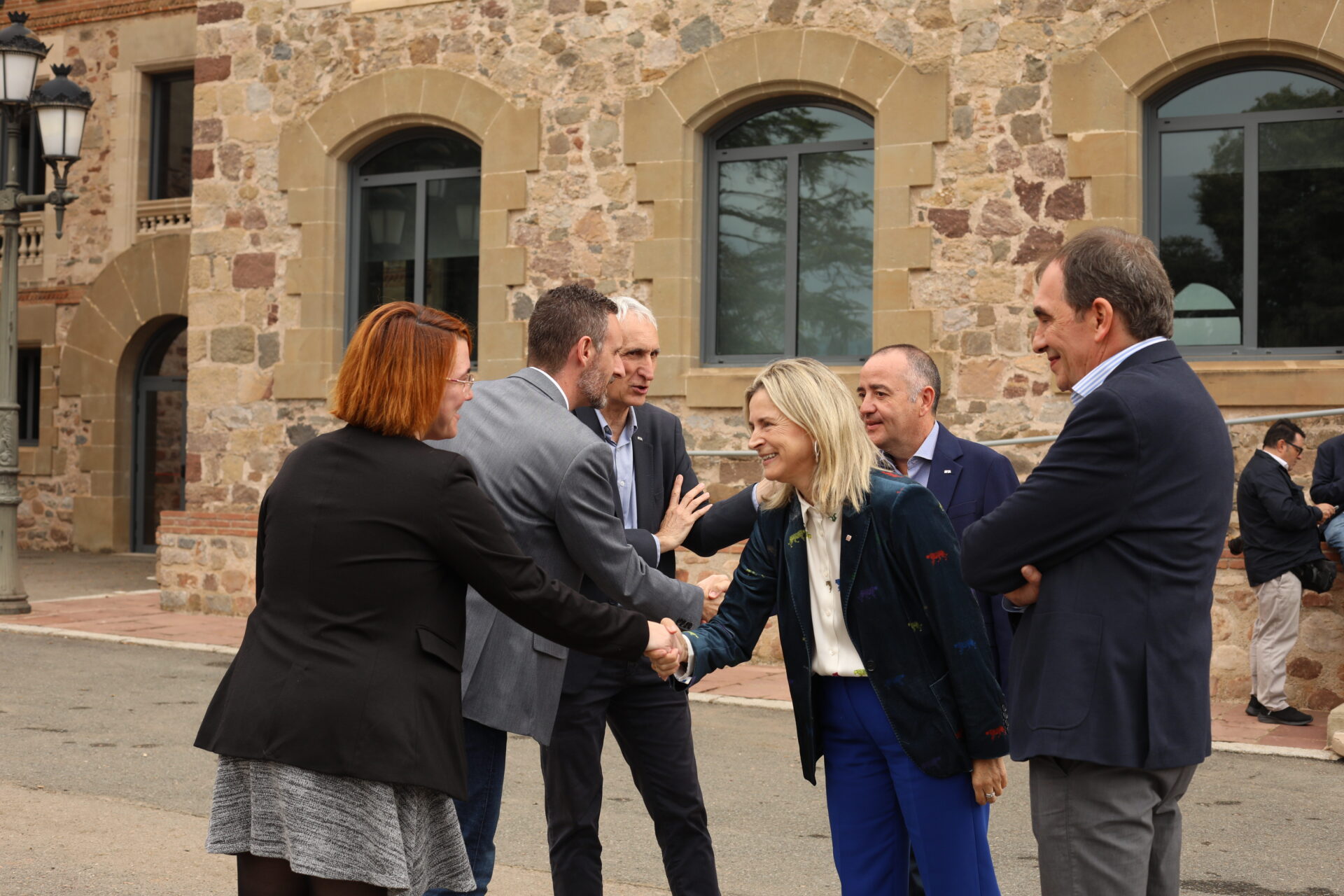
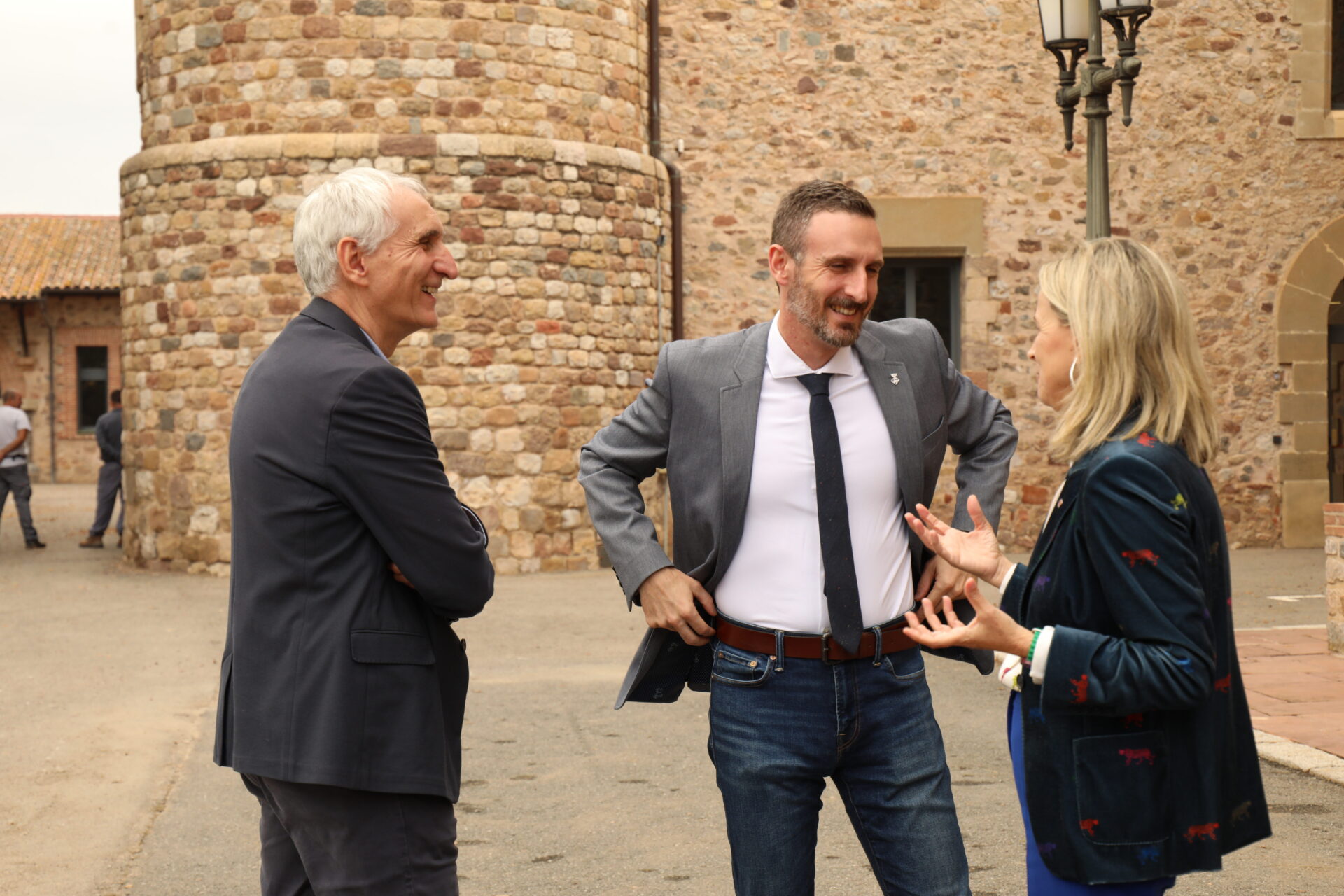
During the visit, the president was accompanied by the Secretary of Food of the Department of Agricultura, Ramaderia, Pesca i Alimentació, Rosa Cubel, by the mayor of Caldes de Montbui, Isidre Pineda, and by the general director of IRTA, Josep Usall, as well as by other representatives of the organization.
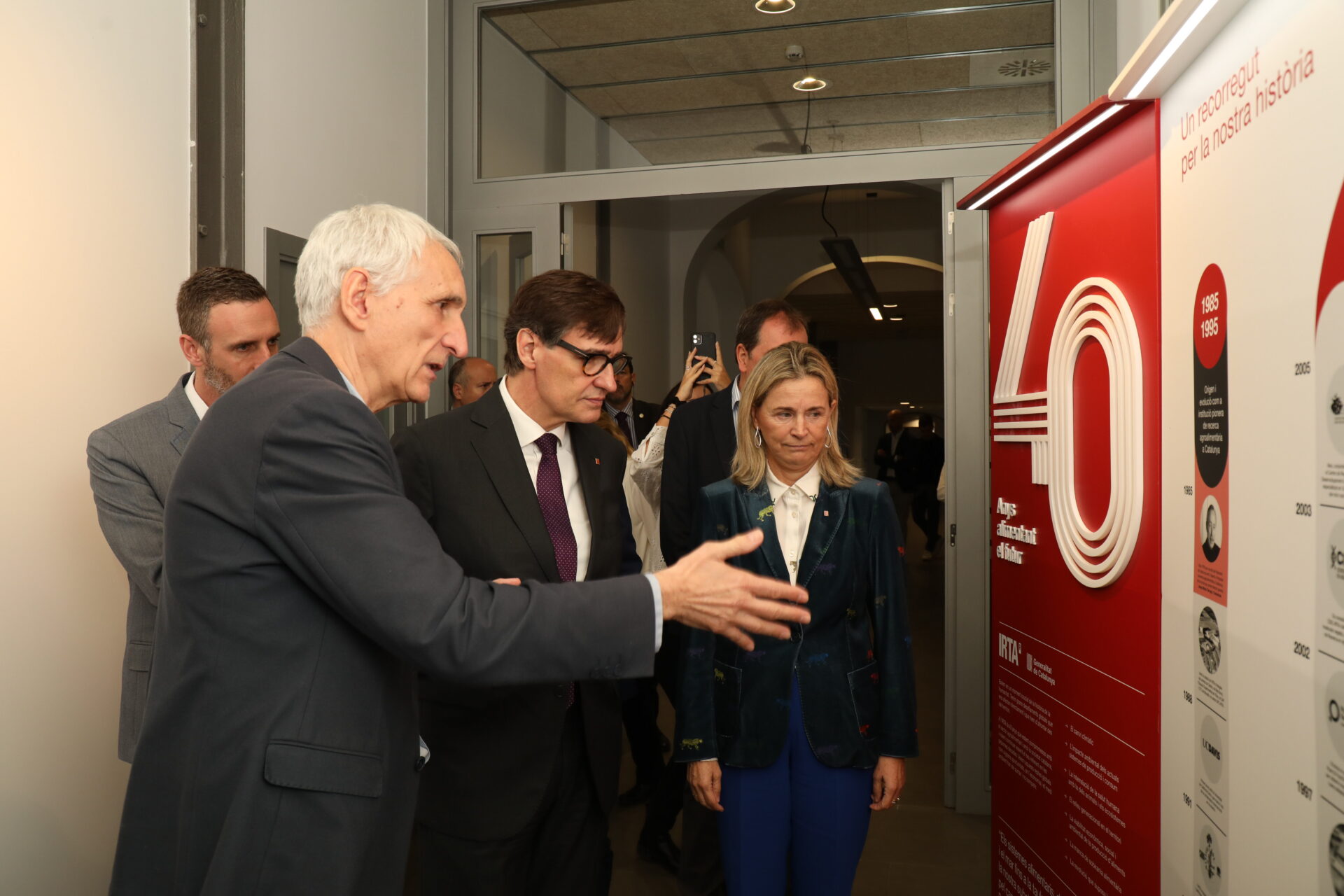
“We are proud to be able to explain to the first authority in Catalonia how we face, with a global perspective, the agri-food challenges of our territory, and what our priorities are for the next decade, among which are the construction of new infrastructures that we are convinced will be key to the country,” said Usall.
This is the case of the new experimental unit for the study of emerging and re-emerging infectious agents of biosafety level 3 of IRTA-CReSA, which begins this year at the UAB campus.
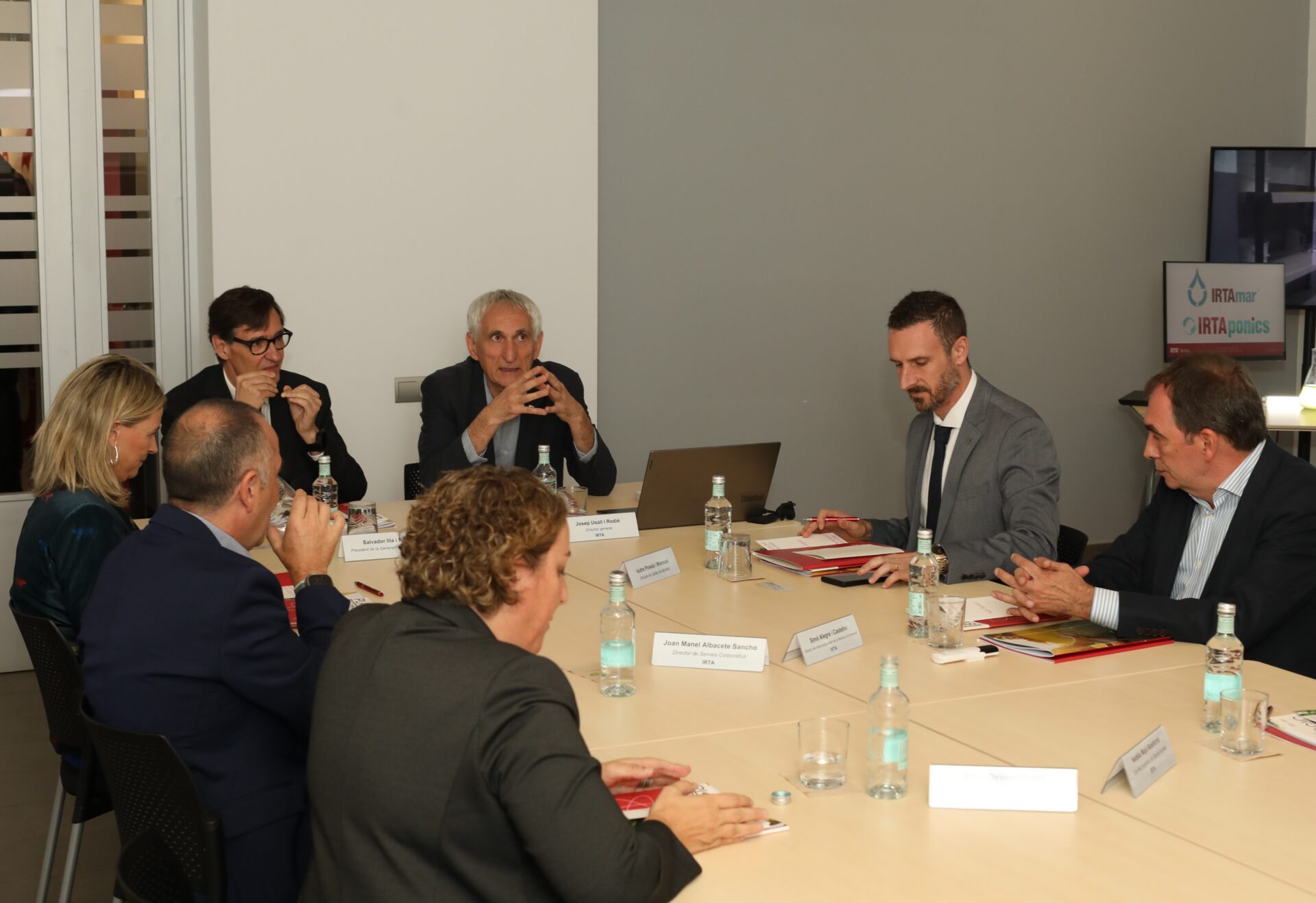
With an investment of approximately 25 million euros, it will allow research with pathogens such as zoonotic flus or coronaviruses, and with vector insects, such as dengue mosquitoes or West Nile virus. For this reason, it will be a unique facility in Spain, at the forefront of research in One Health.
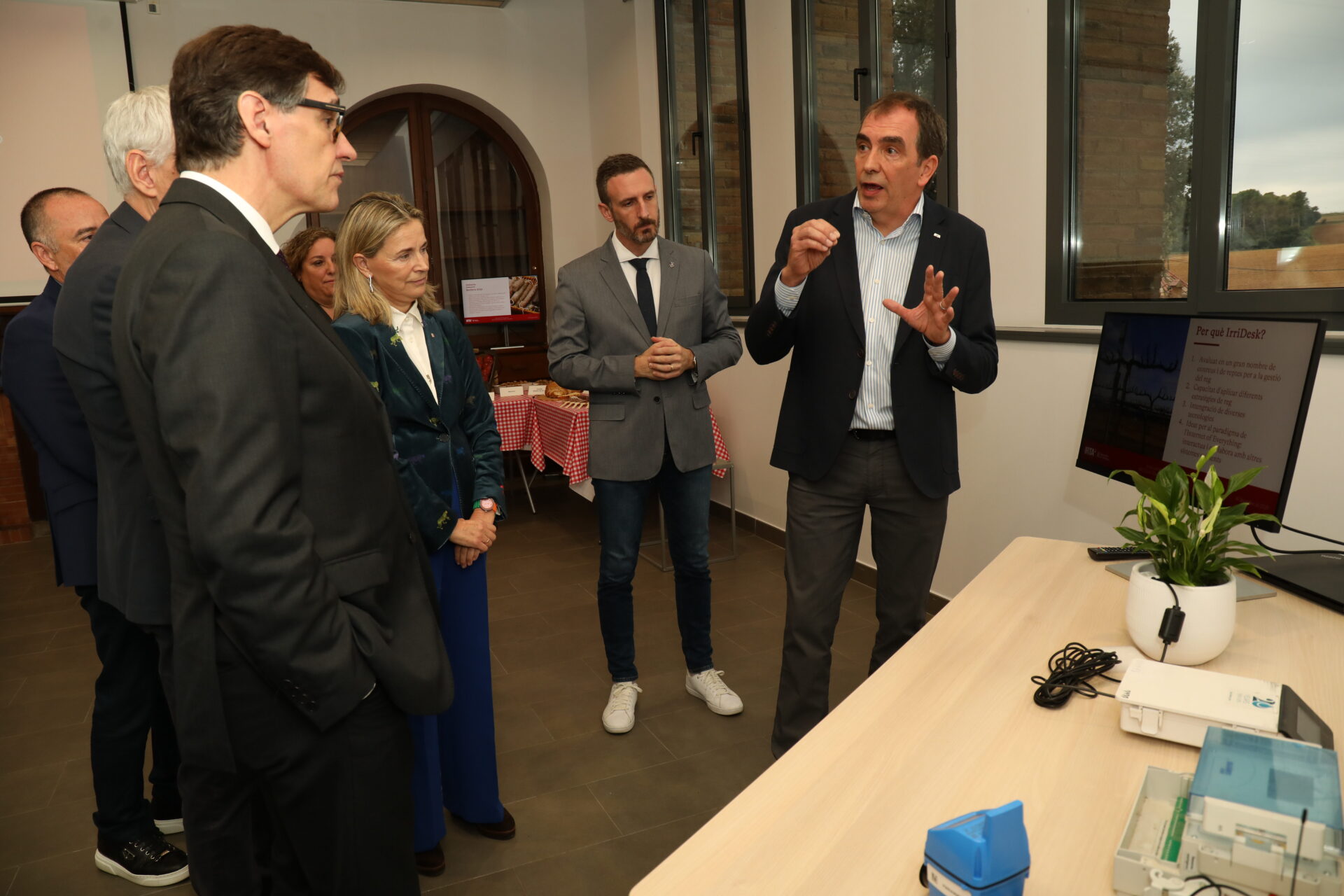
“In this way, we aspire to be the Biosafety HUB of Catalonia, which hosts all the research related to pathogens that research centers and companies in the territory need to do, working together for global health,” summarizes Usall.
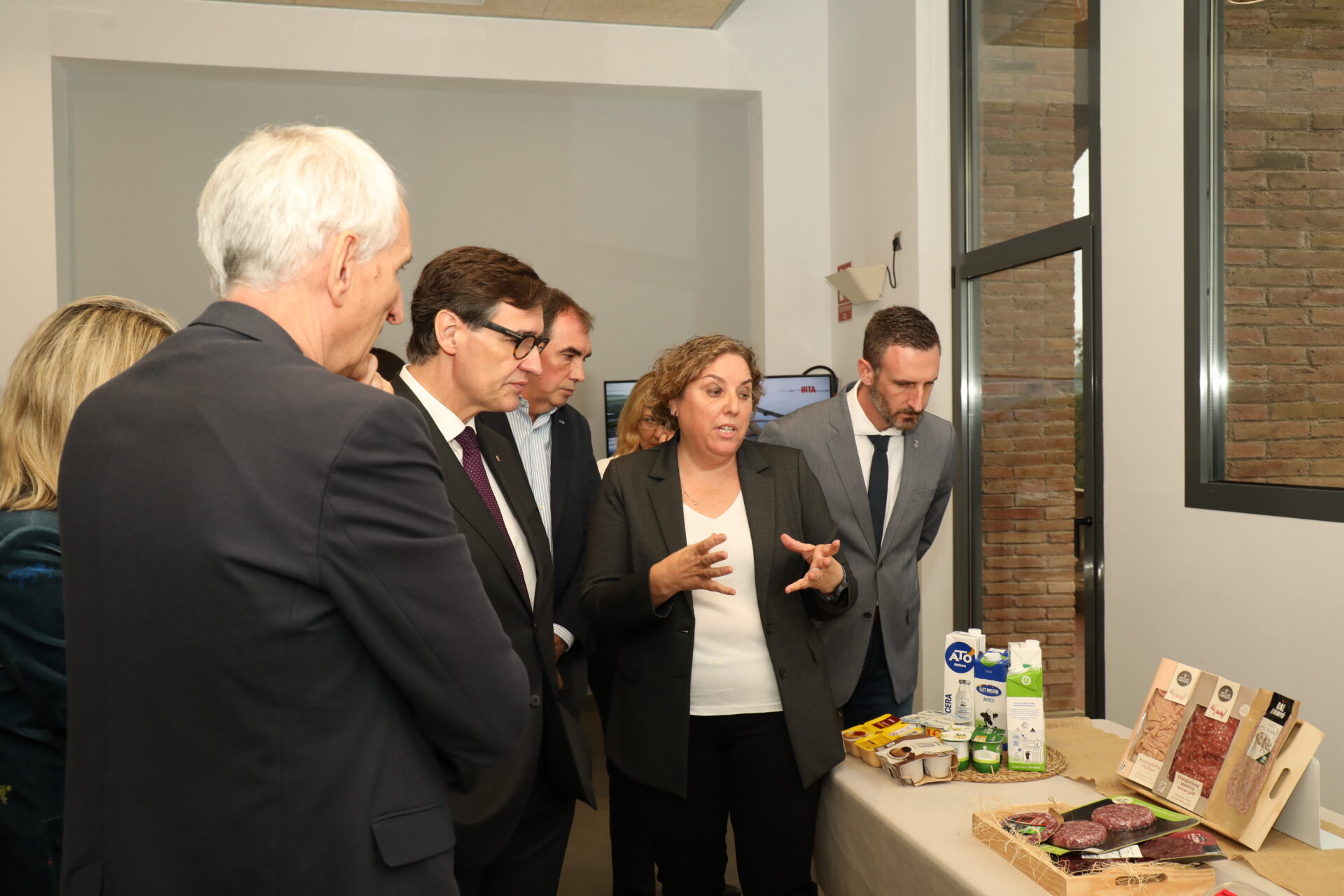
Likewise, the general director highlighted the construction, from 2027, of a new pig farm at IRTA Mas Bové (Reus) which will be a pilot space for innovation aimed at sustainability and global health. This infrastructure was created with the aim of being a meeting point for the pig sector, which is key to the Catalan economy.
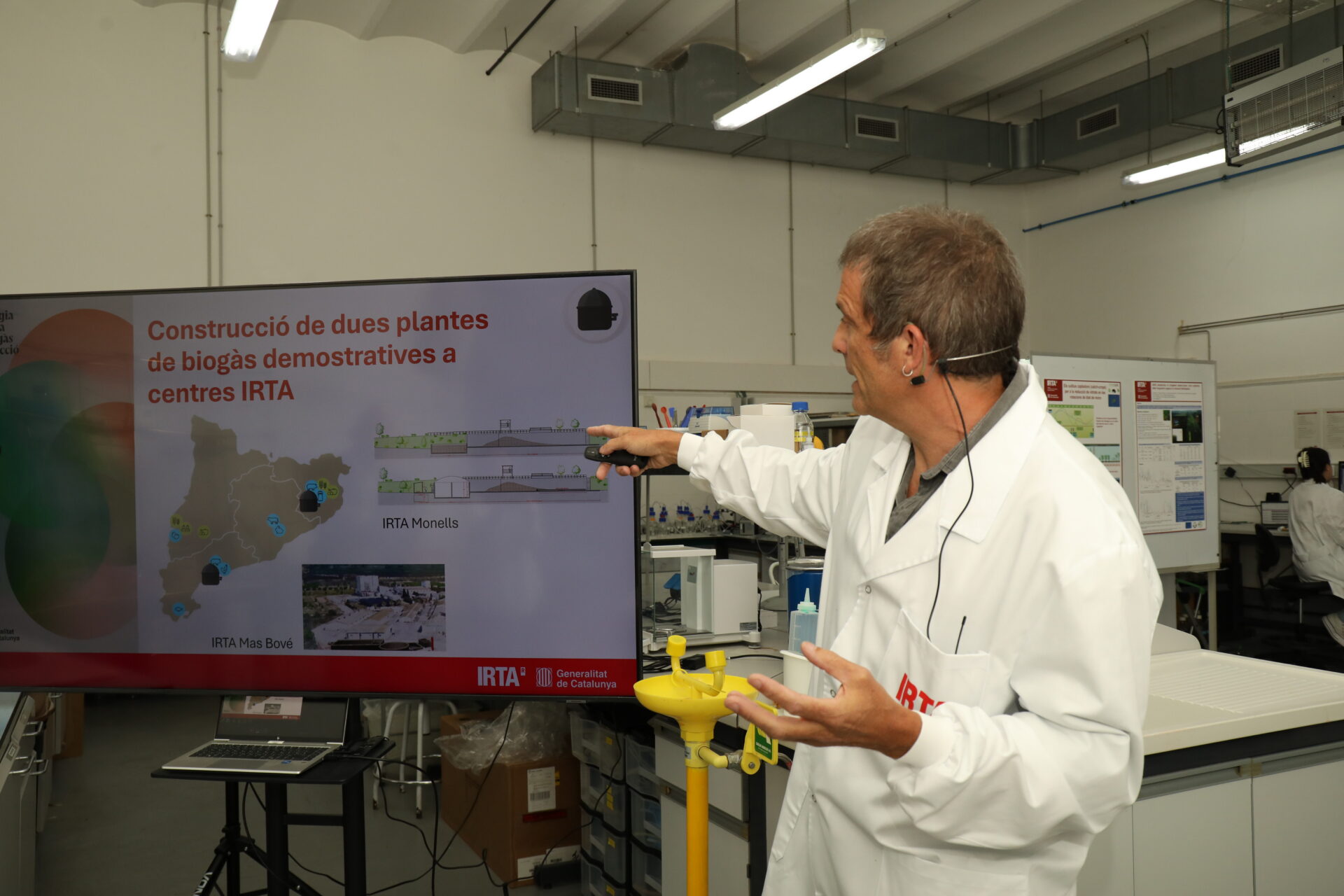
It is also in Mas Bové that IRTA will build one of the two biogas experimental plants that it projects within its bioenergy and sustainability strategy, framed in the Catalan biogas strategy 2024-2030.
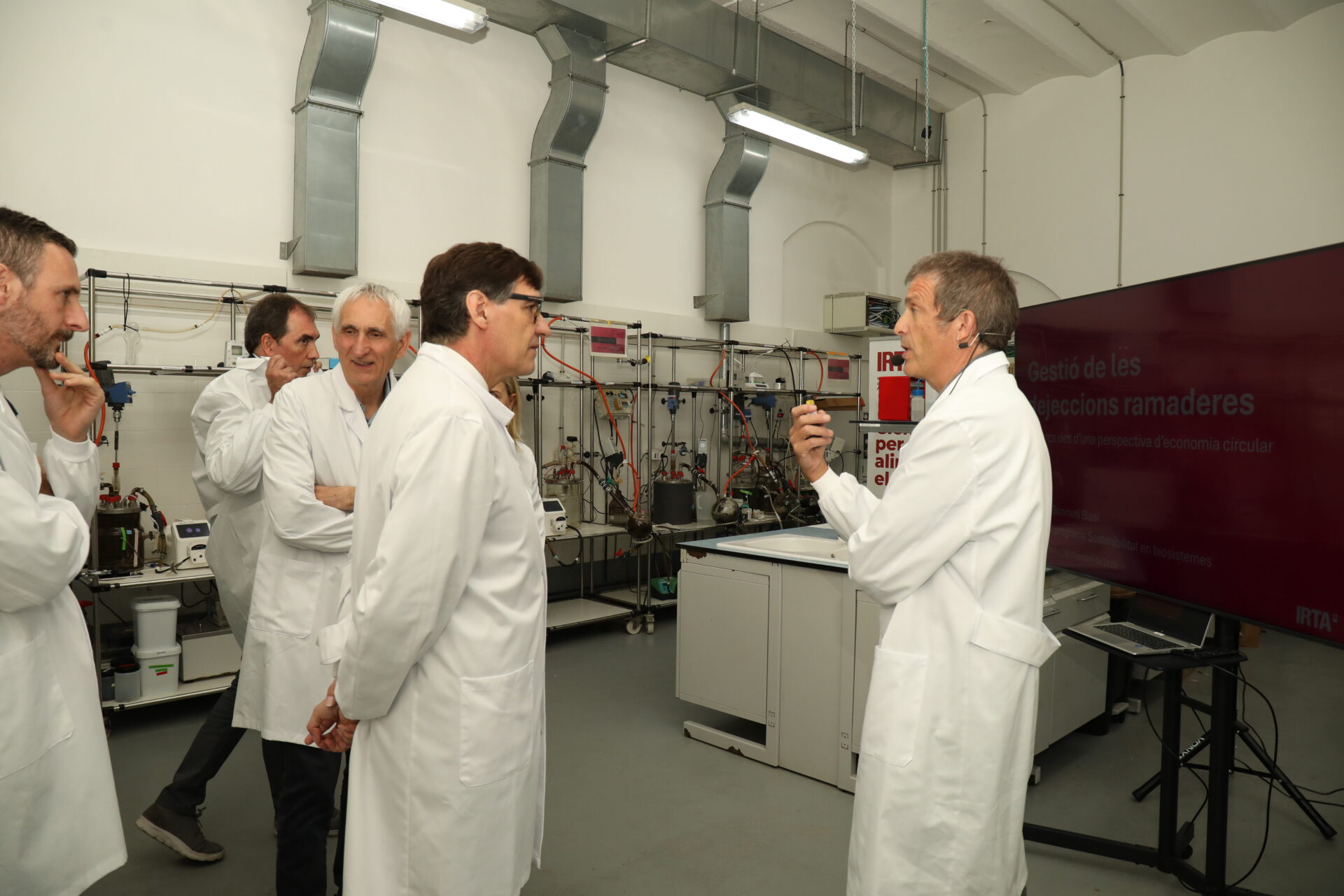
Both this plant, and the one to be built in Monells (Girona), where IRTA has a beef farm, will allow the recovery of livestock manure and other organic by-products to generate renewable energy and quality fertilizers.
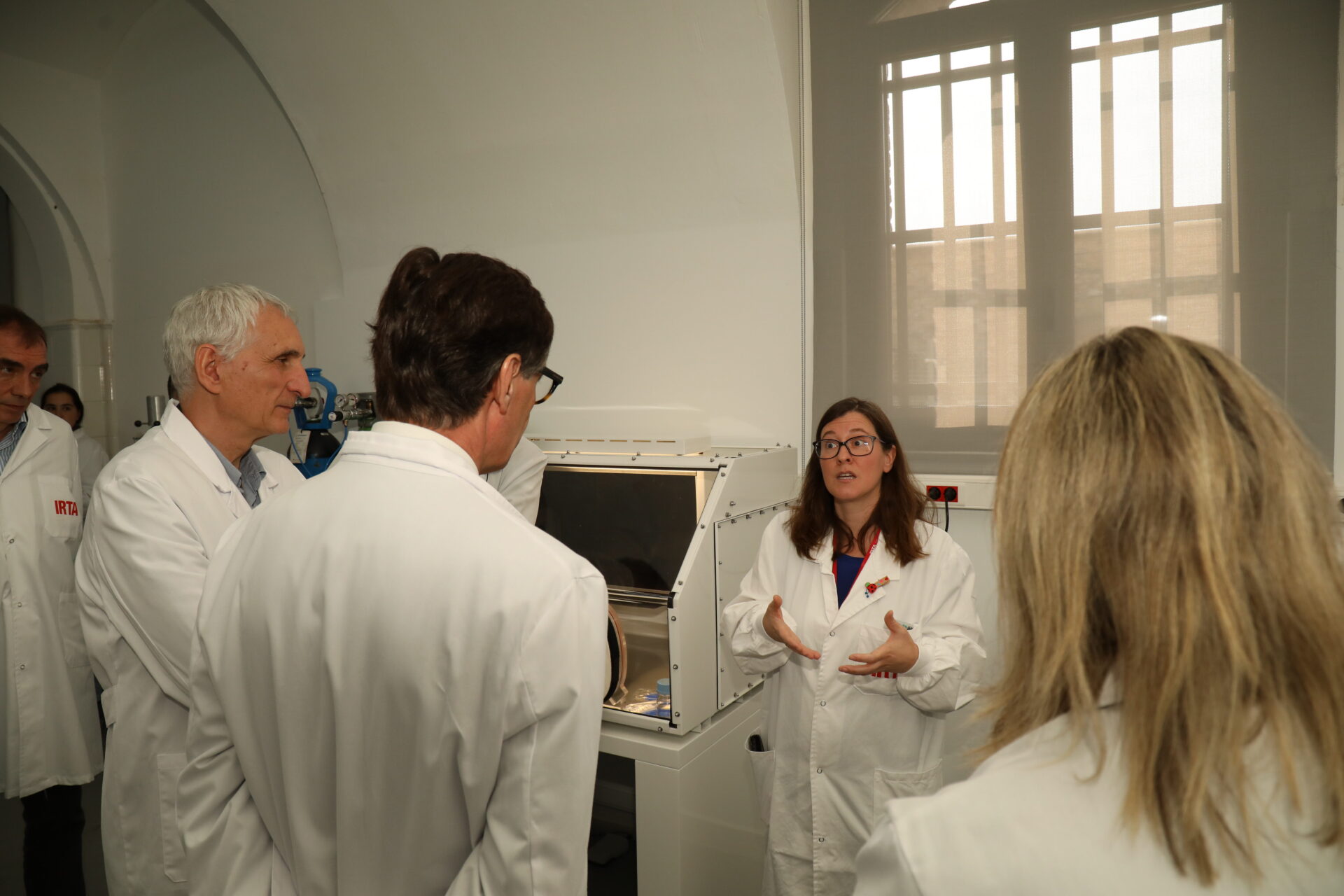
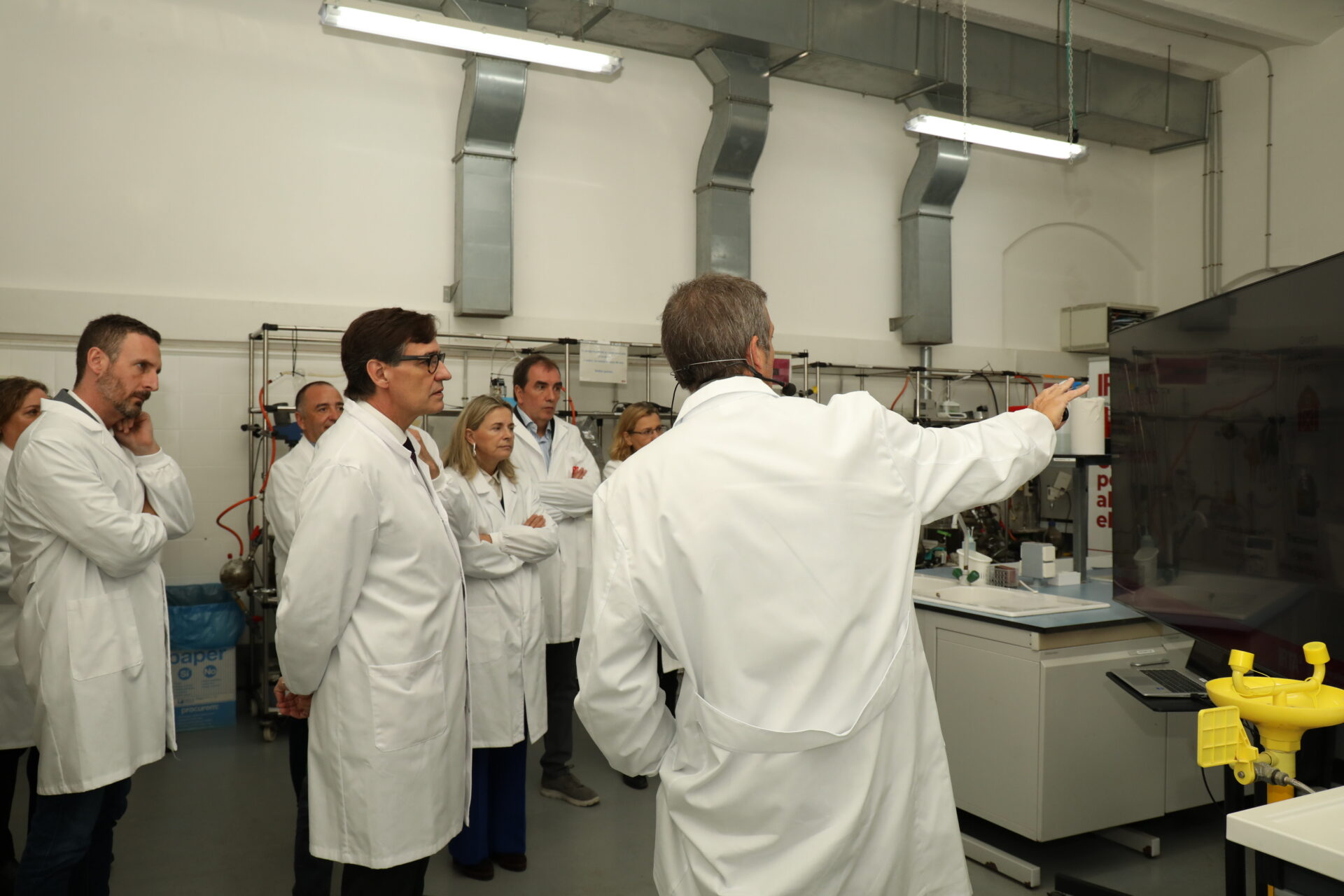
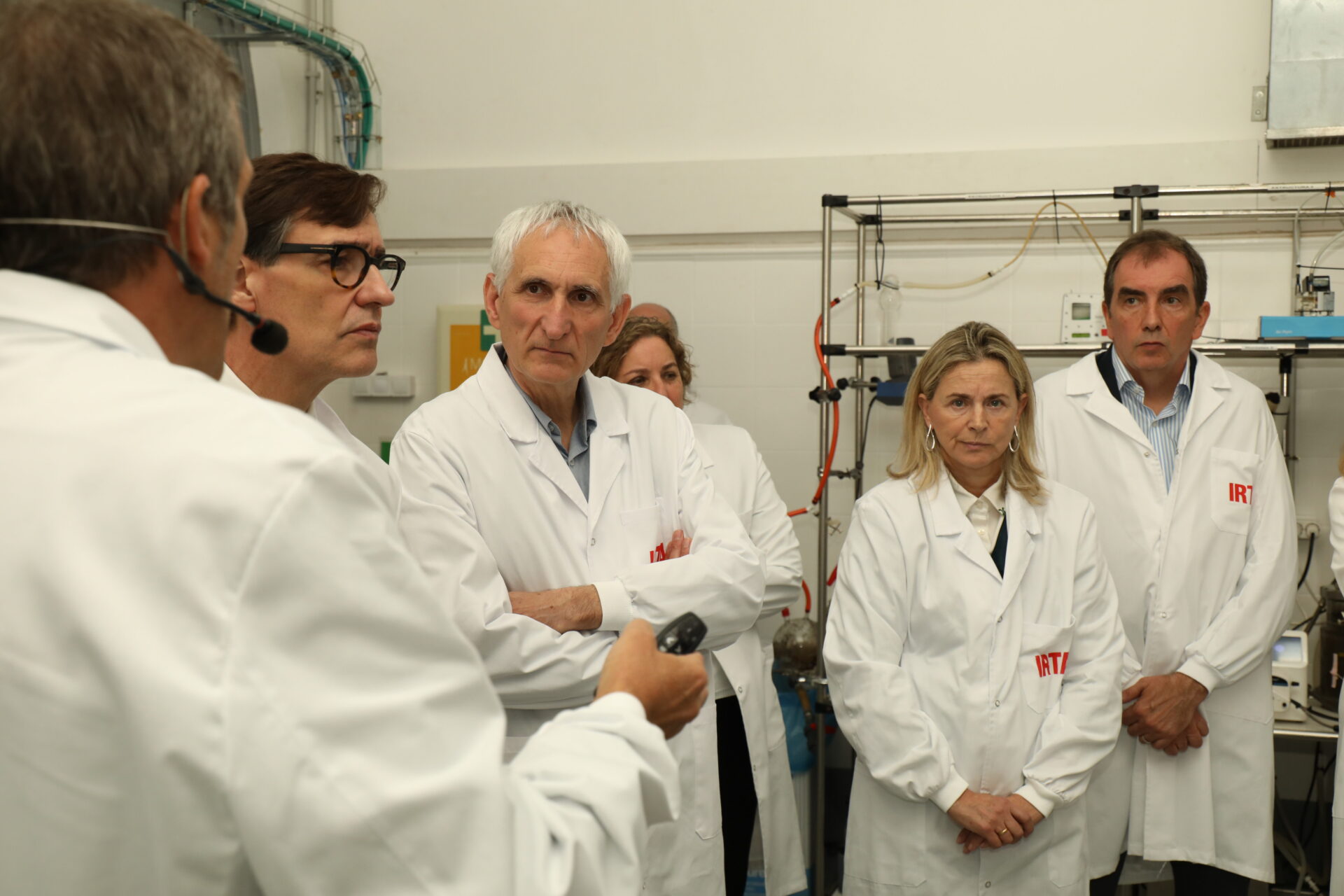
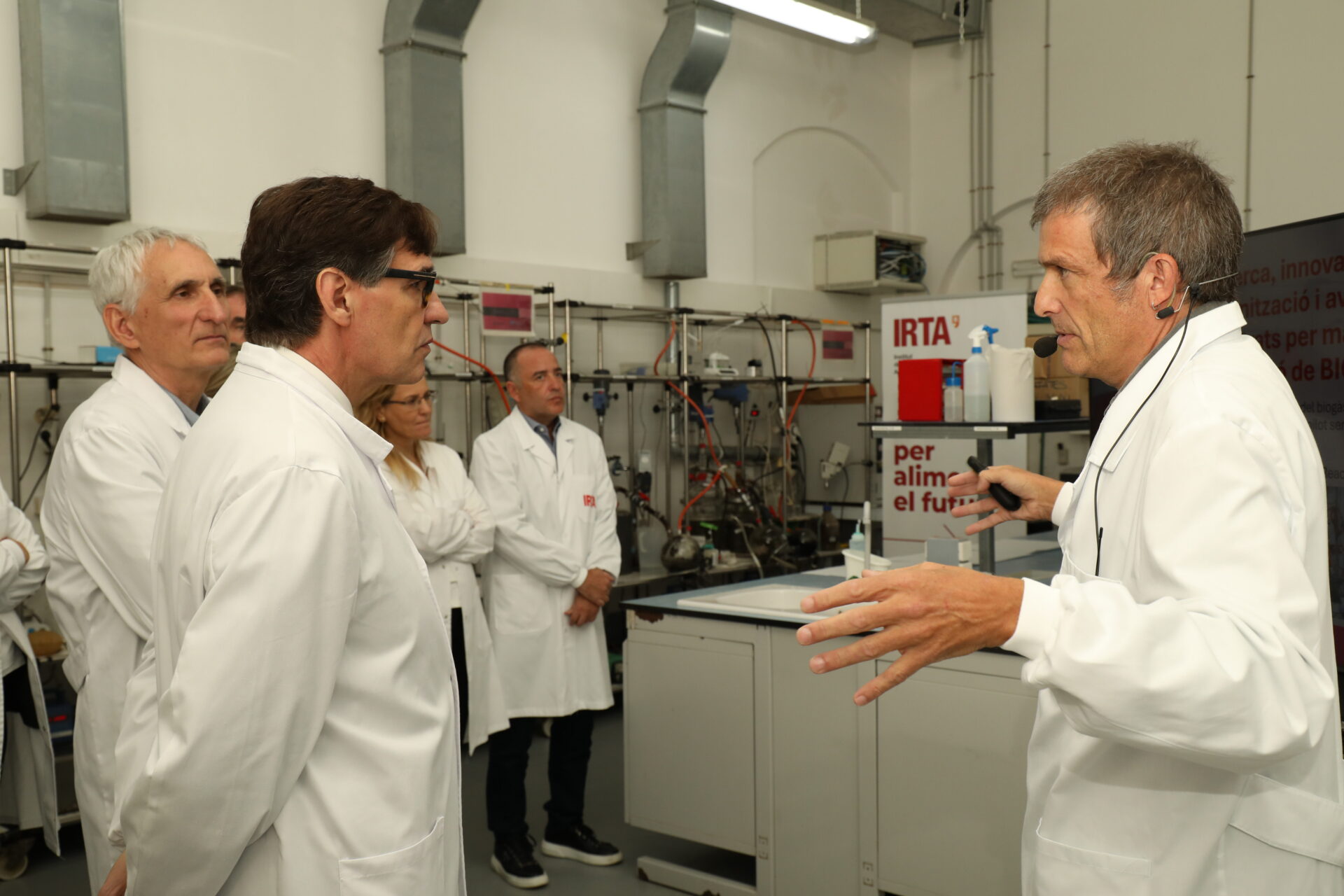
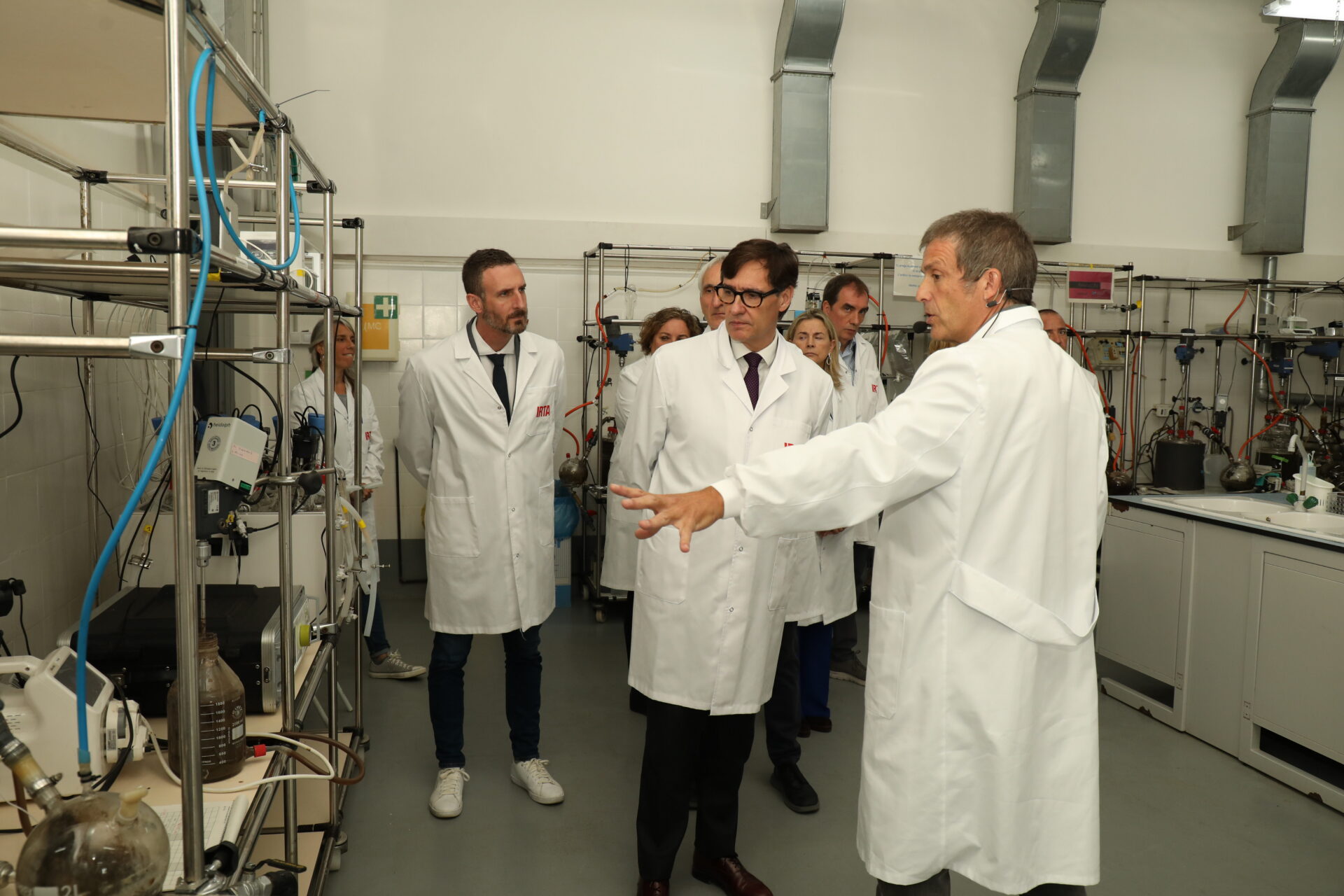
“These plants must serve both large and small companies in the agri-food sector to be able to fully assess their impact on the three pillars of sustainability: environmental, economic and also social,” said Usall, who during the meeting accompanied President Illa to get to know the IRTA bioprocess laboratory, where biogas research is carried out.
IRTA, which is part of the Catalan system of CERCA centres of excellence, works throughout the territory through around twenty specialised centres, while promoting high-impact international collaborations.
Recently, the institute has strengthened its alliance with the University of California, one of the most prestigious institutions in the world in agri-food research, with the aim of jointly facing the challenges of climate change, water management and the sustainability of Mediterranean food systems.
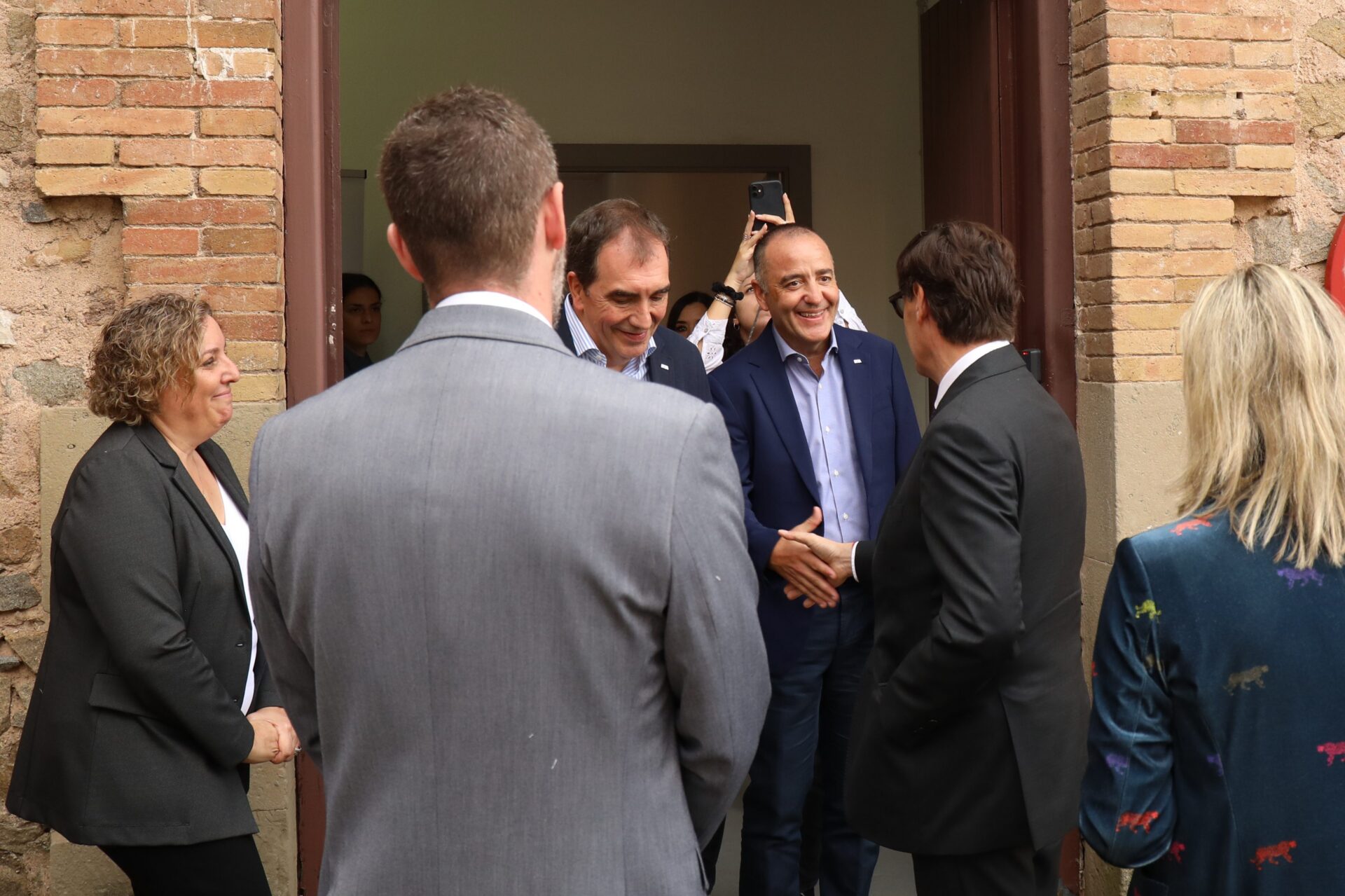
“We are more than a thousand professionals who work to respond to the great global challenges from our country, with applied and collaborative research to transform food systems for a sustainable welfare future”, concluded Usall.
We share a gallery of images of the visit:





Statistical genetics and pig breeding and genetics researcher