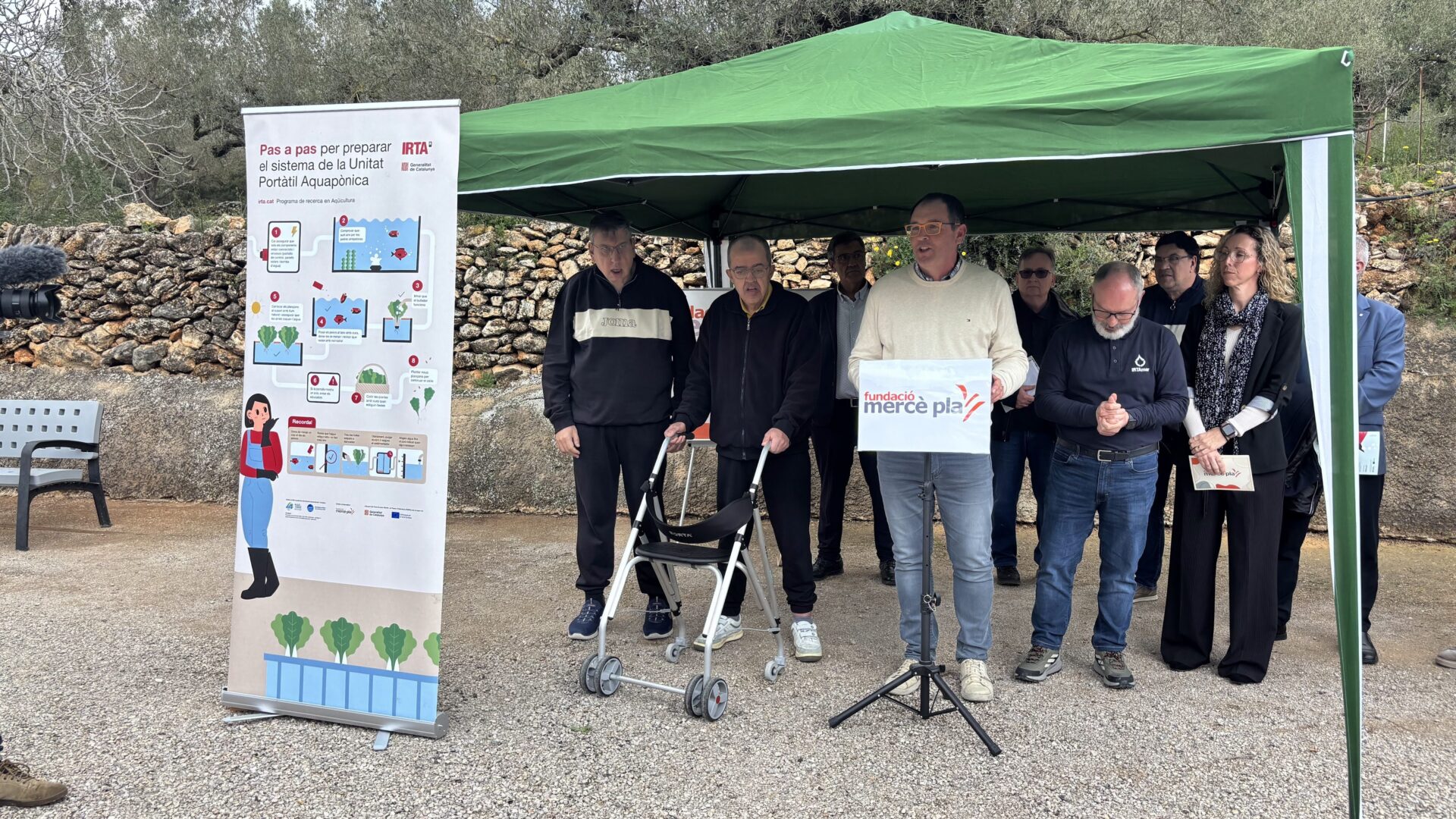
Last Monday, March 9, the Portable Aquaponic Unit (UPA) was presented at the Mercè Pla Foundation in Tortosa. This project, led by IRTA, has a strong educational and social focus. The event took place at the center’s facilities in Campredó and brought together more than 80 attendees, including users of the center, teachers, institutional representatives from the Terres de l’Ebre, and members of the educational community.
The main objective of the initiative is to facilitate the labor market integration of people with intellectual disabilities through an aquaponic unit designed for use in training and occupational environments, along with an inclusive and accessible guide as supporting material. The project connects scientific research with social action, bringing sustainable food production closer to groups with specific support needs.
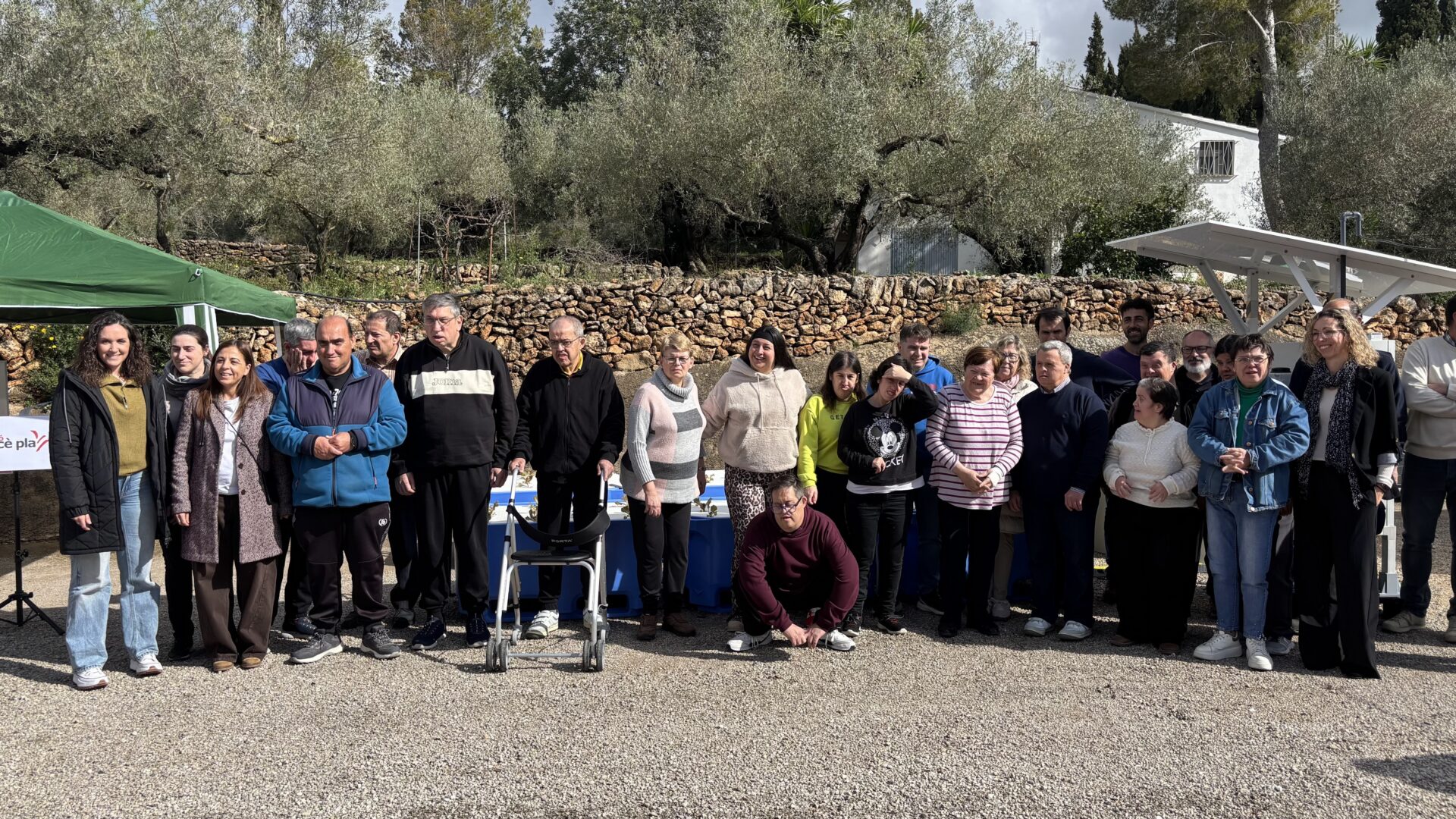
The event began with an institutional welcome by Tere Valldeperez, Head of Communications at the Mercè Pla Foundation, and Santiago Codinach, President of the Board, who thanked the authorities and attendees for their presence and highlighted the importance of initiatives that create real opportunities for the center’s users.
Next, IRTA researchers Cristóbal Aguilera and Enric Gisbert presented the Portable Aquaponic Unit, explaining to the Occupational Center users and teaching staff the fundamentals of aquaponics—a system that combines fish farming and plant cultivation in a closed, efficient, and sustainable water cycle. During the presentation, they also emphasized that this project represents a new line of work for IRTA, as it is the first time the institution has collaborated on a labor integration project with people with high support needs.
“For us, as an institution, creating and collaborating on this project has been very rewarding. It is the first time we have worked with people with high support needs on a labor integration project that allows them to develop skills and autonomy in a real working environment,” explained Aguilera and Gisbert.
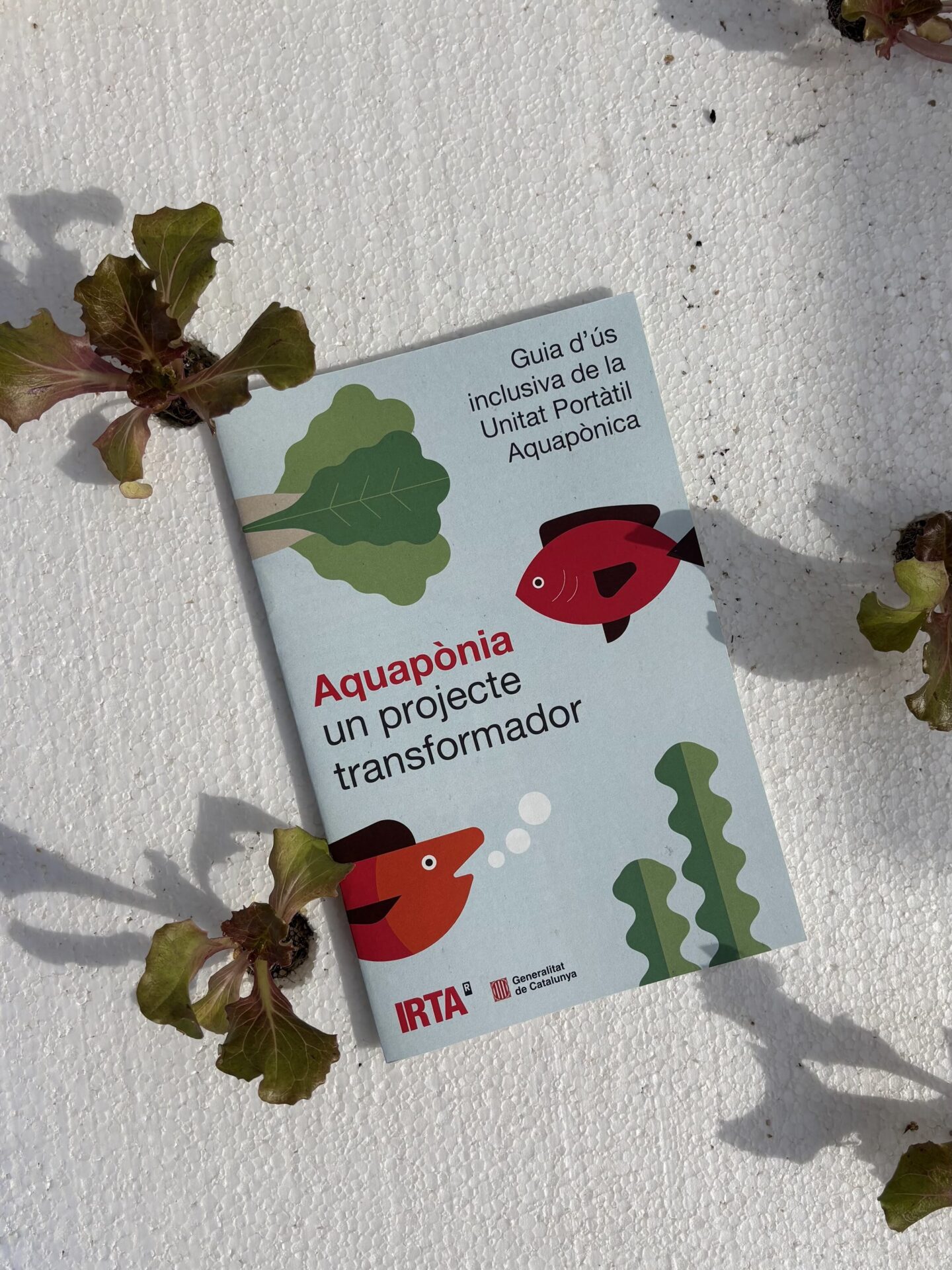
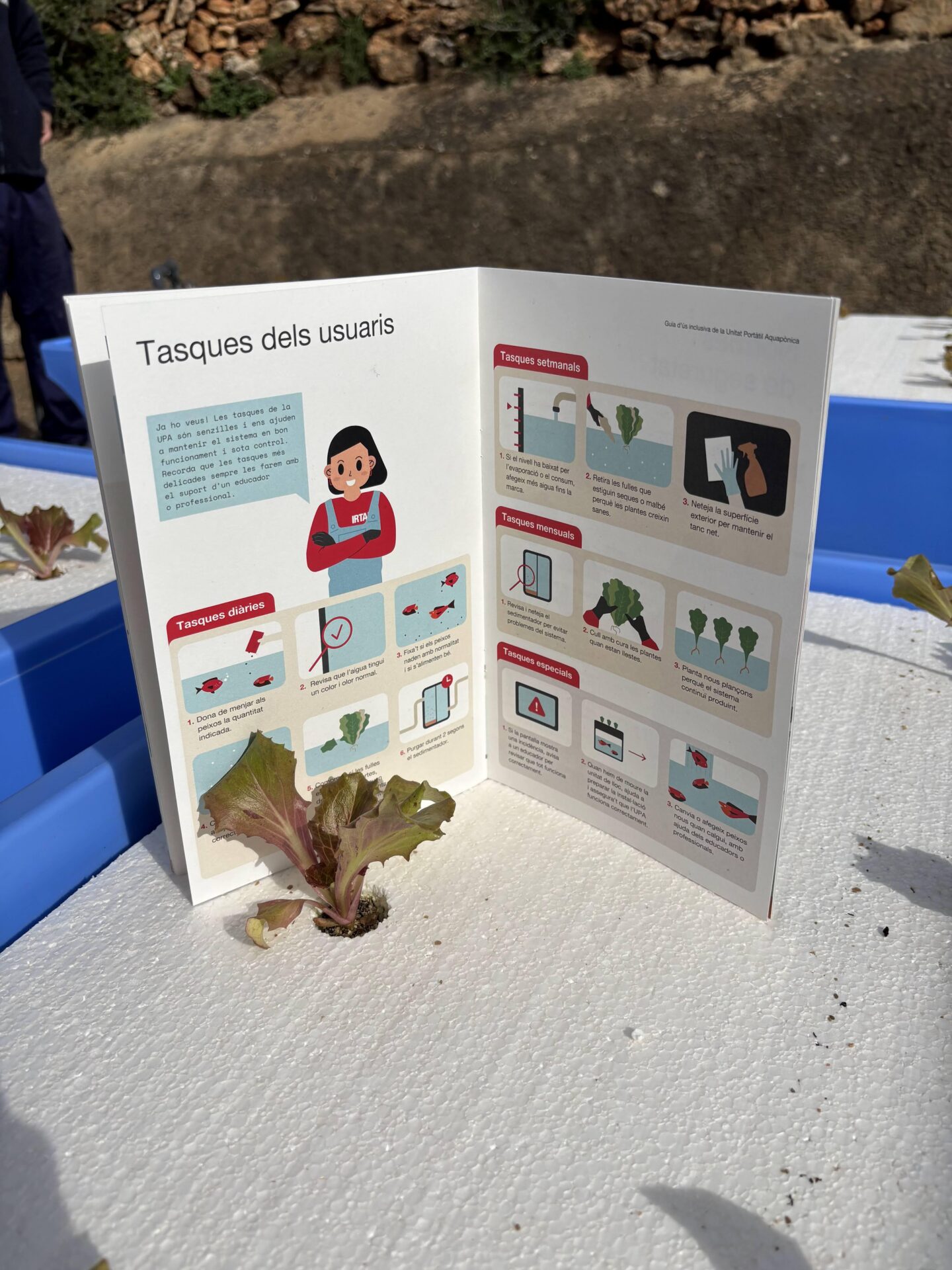
The researchers then introduced the Inclusive User Guide for the Portable Aquaponic Unit, an adapted tool that helps users understand how the system works and facilitates their participation in daily maintenance and cultivation tasks.
The closing remarks were delivered by Laura Beltran, Director General of the Mercè Pla Foundation, who highlighted the value of such initiatives: “For us, it is very important to create real opportunities for training and employment for the people we support at the center, and projects like IRTA’s help us move forward in this integration.”
Finally, two users from the Occupational Center shared their firsthand experiences working on the project and explained how it supports their learning process in a practical, inclusive way that creates real employment opportunities.
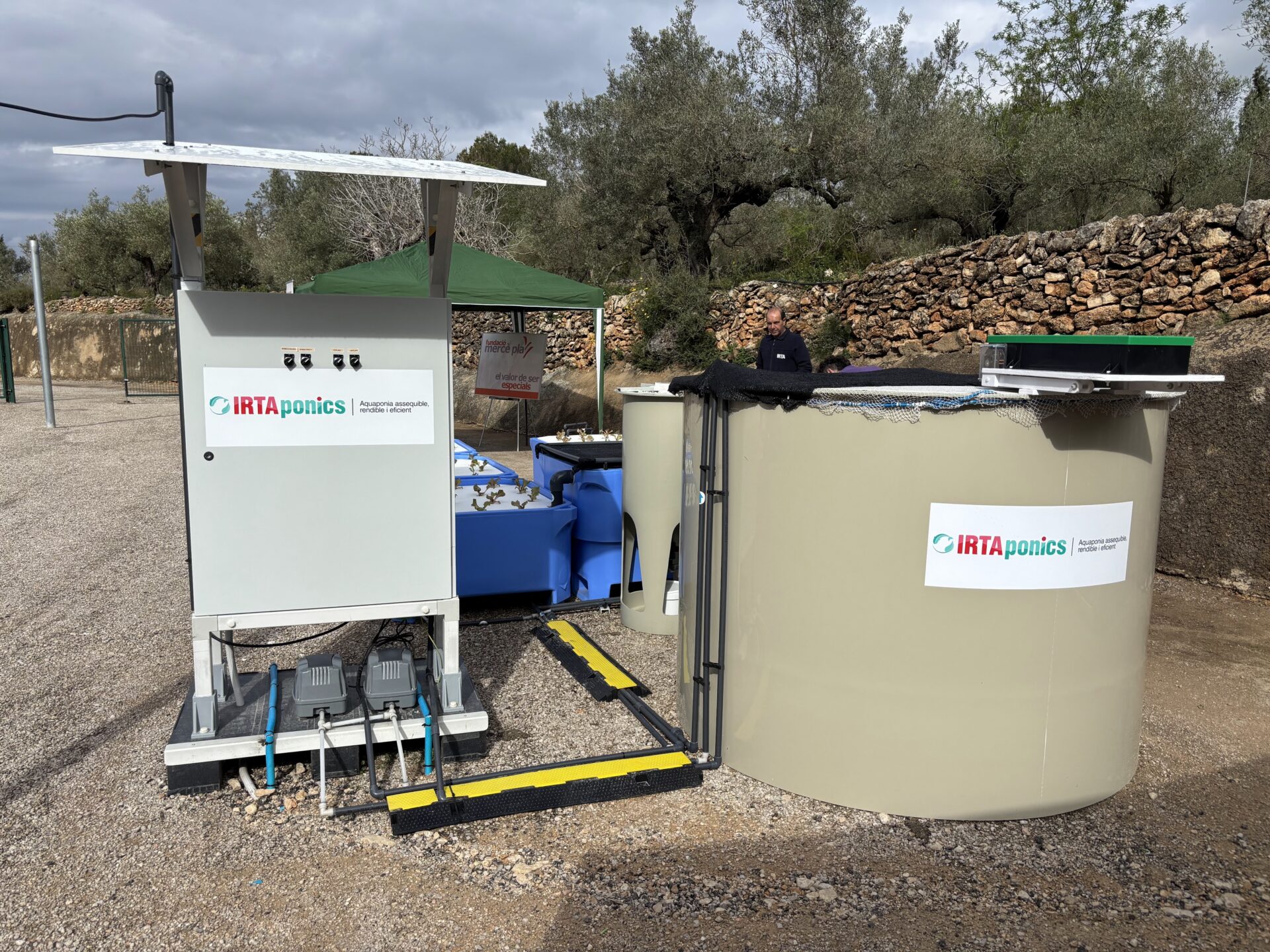
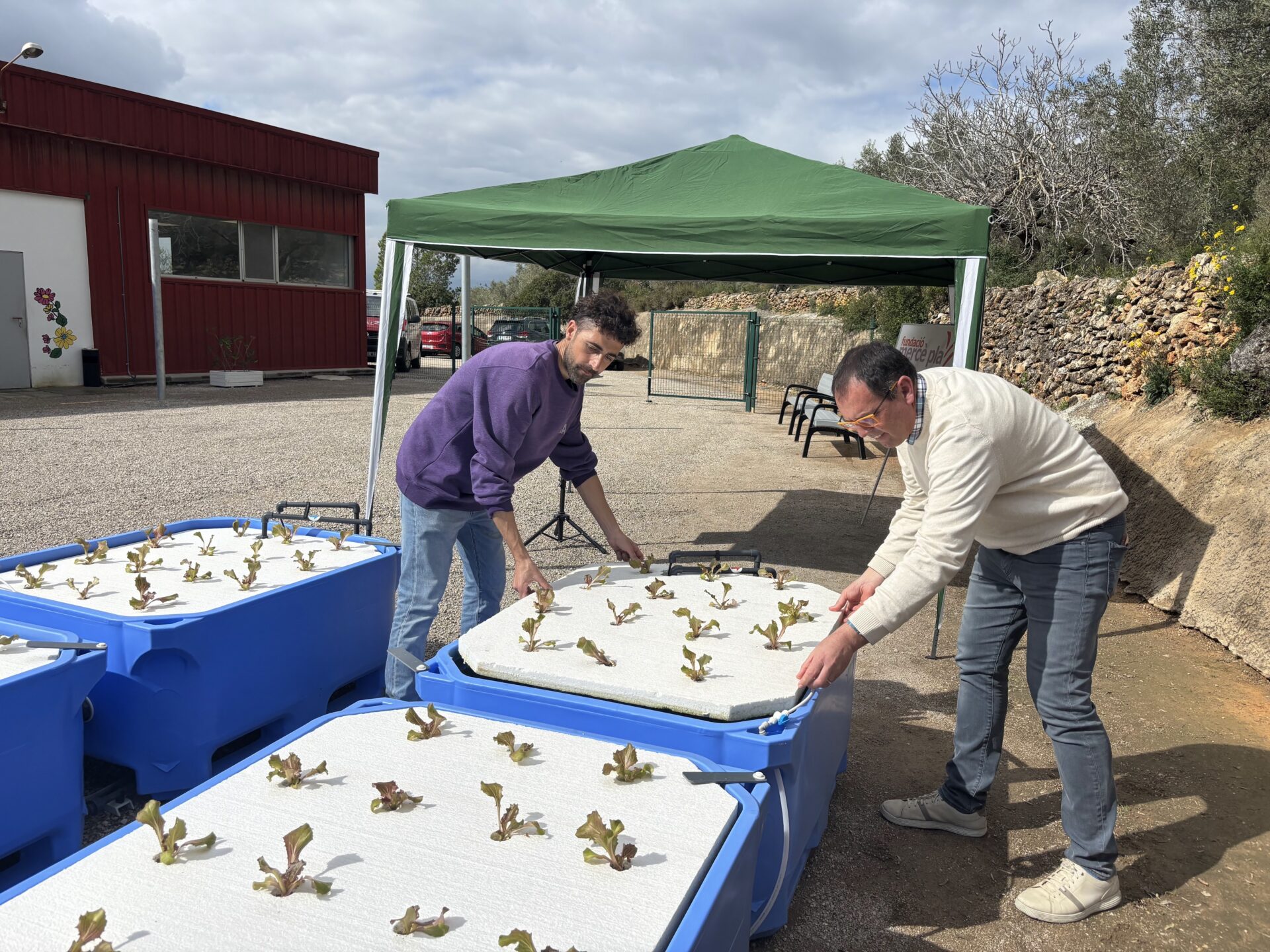
The Portable Aquaponic Unit is a technology developed by IRTA that reinforces the institution’s commitment to knowledge transfer and to building more sustainable, resilient, and inclusive production models in the region. In this regard, the project highlights the importance of promoting initiatives that combine innovation, sustainability, and social inclusion.
The project is part of IRTA’s Aquaculture Research Program and is included in an initiative funded by the European Maritime, Fisheries and Aquaculture Fund (EMFAF), with the support of the Government of Catalonia and the European Union, under Priority 3 to promote a sustainable blue economy and the development of fishing and aquaculture communities.